Tevlin Sarah, Pérez Héctor E, Crandall Raelene M, Fill Jennifer M
Department of Environmental Horticulture, University of Florida, Gainesville, Florida, United States of America.
School of Forest, Fisheries, and Geomatics Sciences, University of Florida, Gainesville, Florida, United States of America.
PLoS One. 2025 Jun 20;20(6):e0326596. doi: 10.1371/journal.pone.0326596. eCollection 2025.
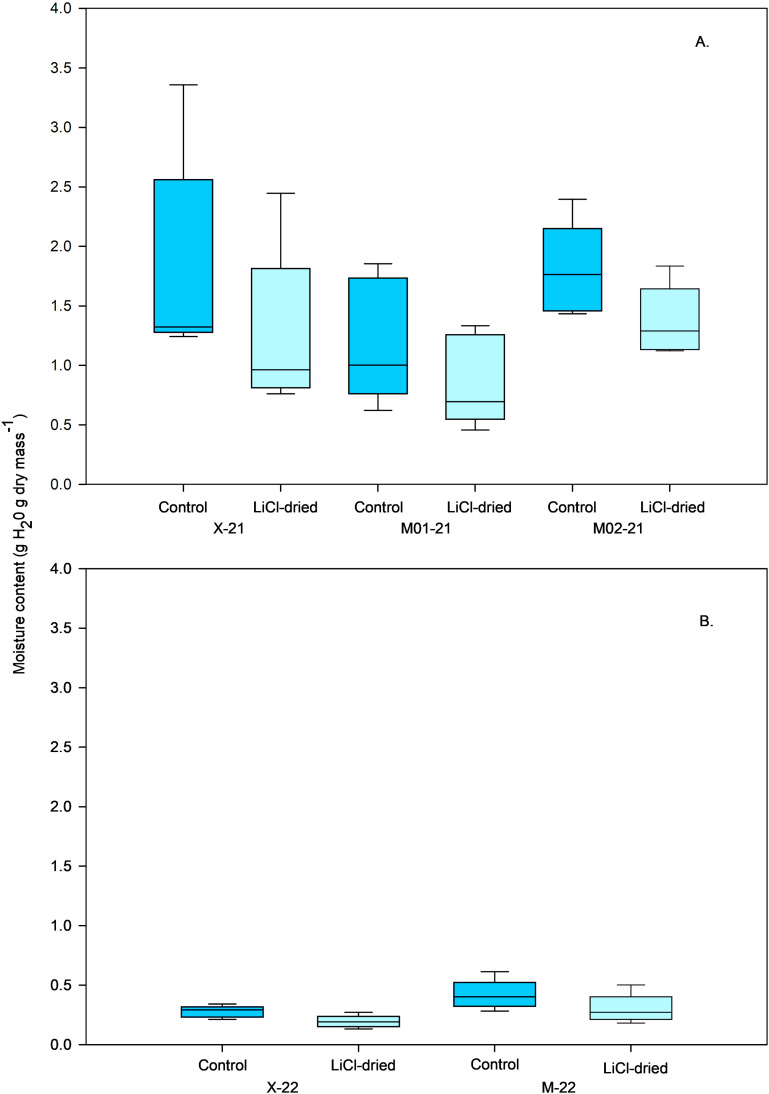
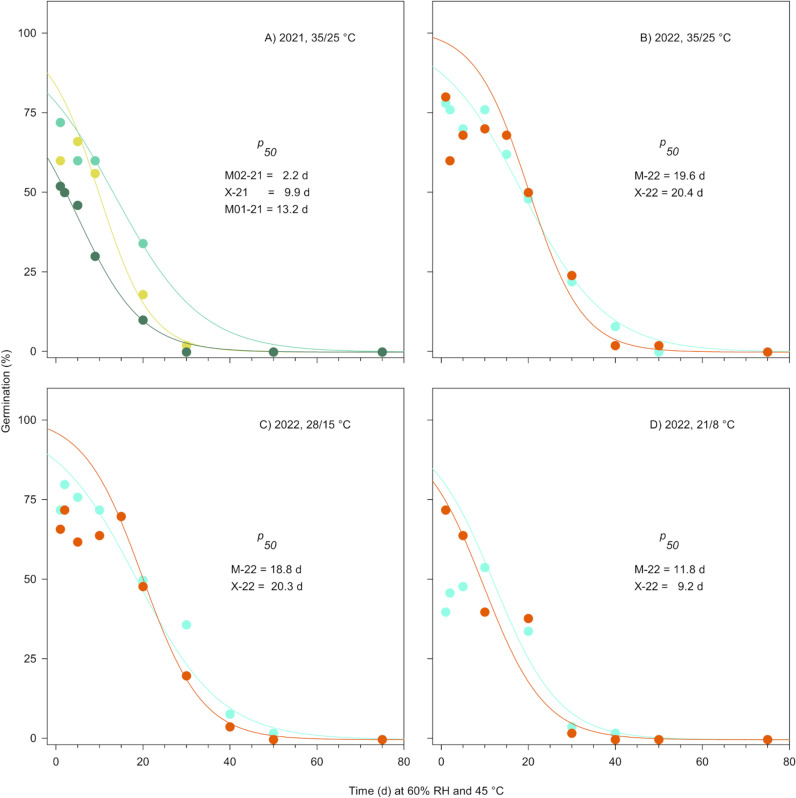
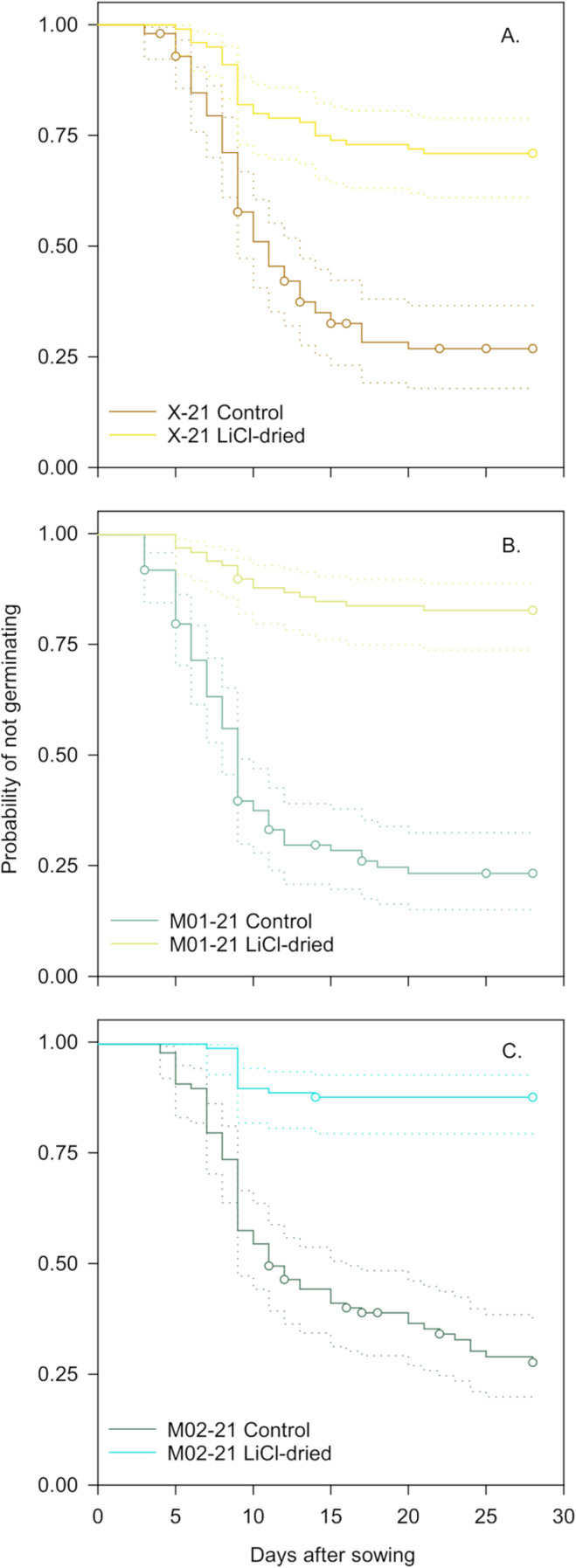
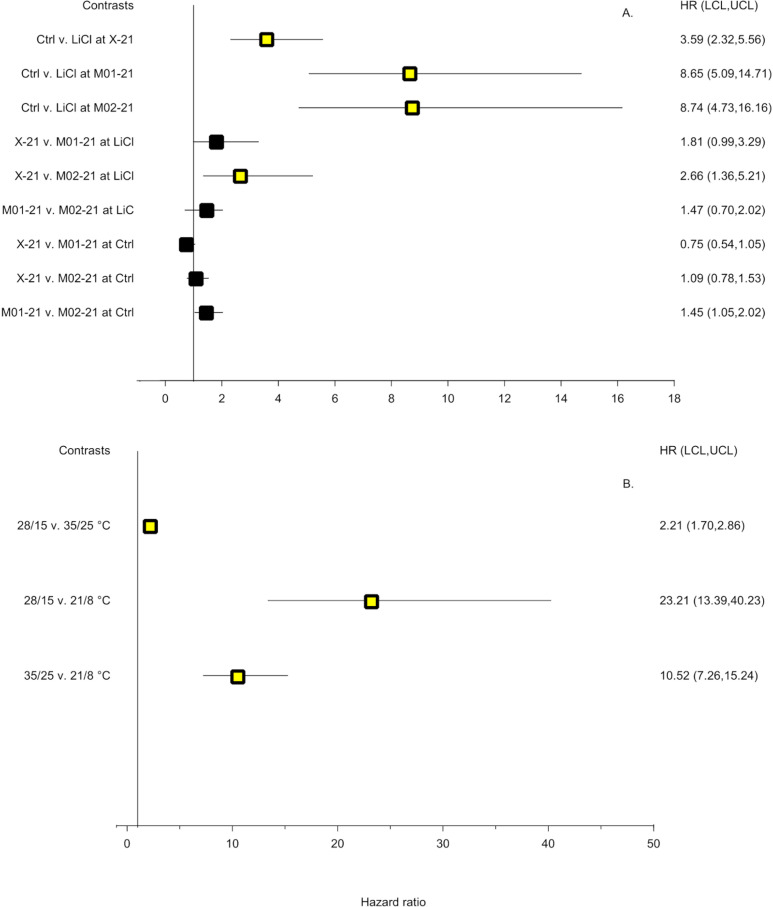
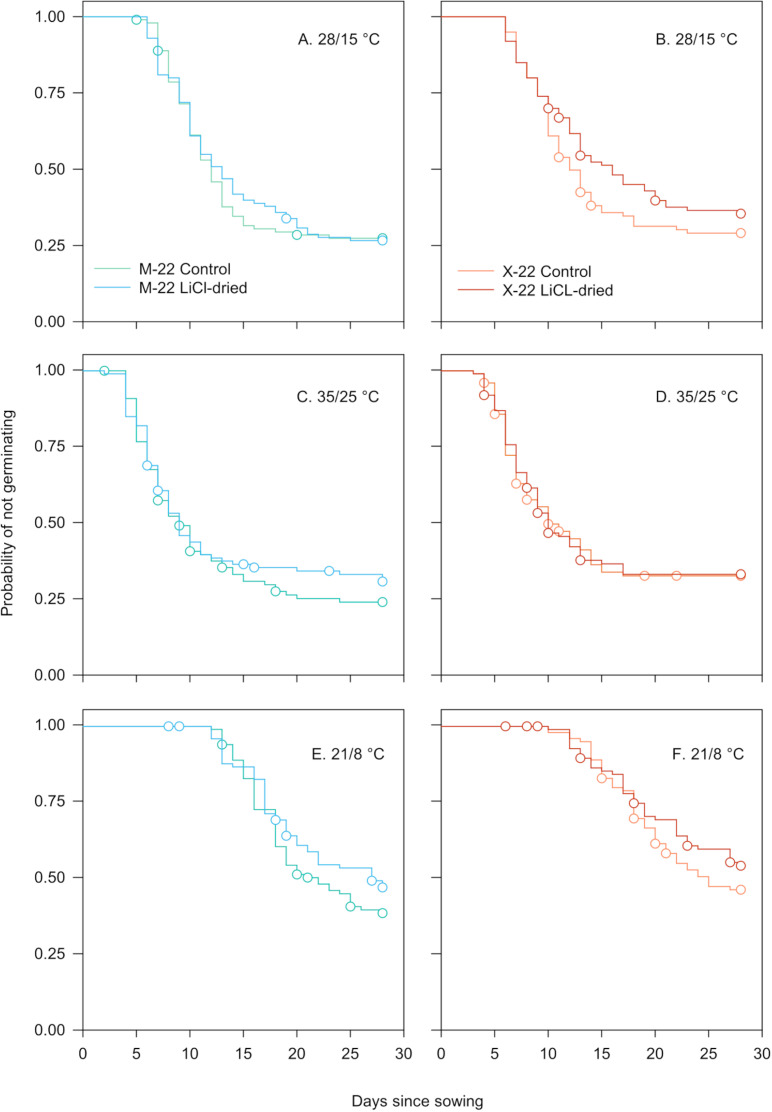
The successful preservation of seeds for future use depends on factors that maintain or limit seed viability. Yet, seed biology knowledge that would facilitate seed storage of most wild species used in ecosystem restoration is absent. This study characterized changes in seed water content, germination, desiccation tolerance, and relative storage longevity of Aristida beyrichiana (wiregrass), a focal restoration species, with respect to habitat of collection. We collected mature seeds from mesic and xeric habitats over two years then exposed these to desiccation stress sufficient for germplasm storage and aging stress (60% relative humidity, 45°C). We followed each method with germination assays at simulated seasonal temperatures. We analyzed germination responses along with production of normal and abnormal seedlings. We then modeled potential seed longevity and compared this against longevity of reference species. We found that wiregrass seeds display sufficient desiccation tolerance for ex situ storage and germinate preferentially under spring or fall and summer temperature conditions. The negligible to small effects of ecotype on these responses do not support the hypothesis that habitat of occurrence represents an adequate predictor of desiccation tolerance or germination response. However, seeds from both xeric and mesic habitats are estimated to be short-lived in storage. The contradiction between high desiccation tolerance yet short-lived nature of seeds implies that proper post-harvest seed handling, particularly regarding seed moisture management, is critical for maintaining seed viability. Further implications of this interesting seed physiology are discussed in the context of restoration.
种子的成功保存以供未来使用取决于维持或限制种子活力的因素。然而,目前缺乏有助于生态系统恢复中使用的大多数野生物种种子储存的种子生物学知识。本研究针对主要恢复物种贝氏三芒草(wiregrass),就采集生境而言,对其种子含水量、发芽率、脱水耐受性和相对储存寿命的变化进行了表征。我们在两年内从湿润和干旱生境收集成熟种子,然后将这些种子置于足以进行种质储存的脱水胁迫和老化胁迫(相对湿度60%,45°C)下。每种处理方法之后,我们在模拟季节温度下进行发芽试验。我们分析了发芽反应以及正常和异常幼苗的产生情况。然后,我们对潜在的种子寿命进行建模,并将其与参考物种的寿命进行比较。我们发现,三芒草种子表现出足够的脱水耐受性以供异地储存,并且在春季或秋季以及夏季温度条件下优先发芽。生态型对这些反应的影响可忽略不计或较小,这并不支持这样的假设,即种子出现的生境是脱水耐受性或发芽反应的充分预测指标。然而,来自干旱和湿润生境的种子在储存中估计寿命较短。种子高脱水耐受性与短寿命性质之间的矛盾意味着,收获后适当的种子处理,特别是关于种子水分管理,对于维持种子活力至关重要。在恢复的背景下讨论了这种有趣的种子生理学的进一步影响。