Chen Kai-Yun, Li Xu-Huan, Chen Dan, Qian Shi-da, Mei Run-Hong, Li Qian, Yu Xue-Feng, He Xi-Jing
Department of Orthopedic Surgery, Second Affiliated Hospital of Xi'an Jiaotong University, Xi'an, Shaanxi Province, China.
Affiliated Rehabilitation Hospital, Jiangxi Medical College, Nanchang University, Nanchang, Jiangxi, China.
PLoS One. 2025 Jun 20;20(6):e0325190. doi: 10.1371/journal.pone.0325190. eCollection 2025.
Steroid-induced osteonecrosis of the femoral head (SONFH) is a serious bone disease commonly seen in patients on long-term glucocorticoid therapy. Although statins have shown some efficacy in improving lipid metabolism, their efficacy in the treatment of SONFH remains limited. PPARγ inhibitors may enhance the efficacy of statins through several mechanisms. This study aims to investigate how PPARγ inhibitors may enhance the effects of statins in the treatment of SONFH by directly inhibiting apoptosis and indirectly modulating lipoprotein subfractions.
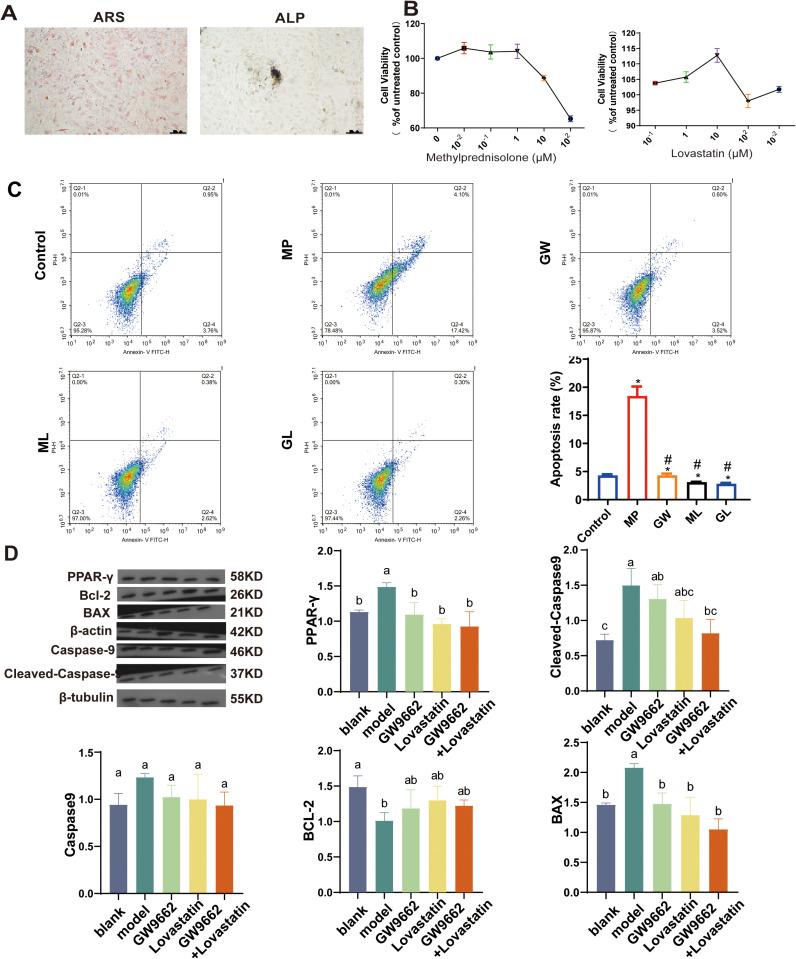
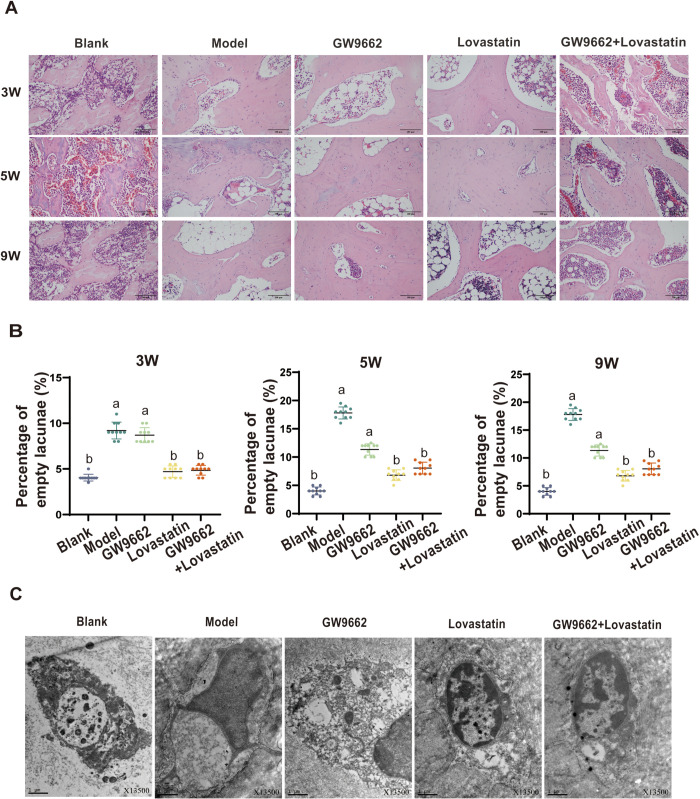
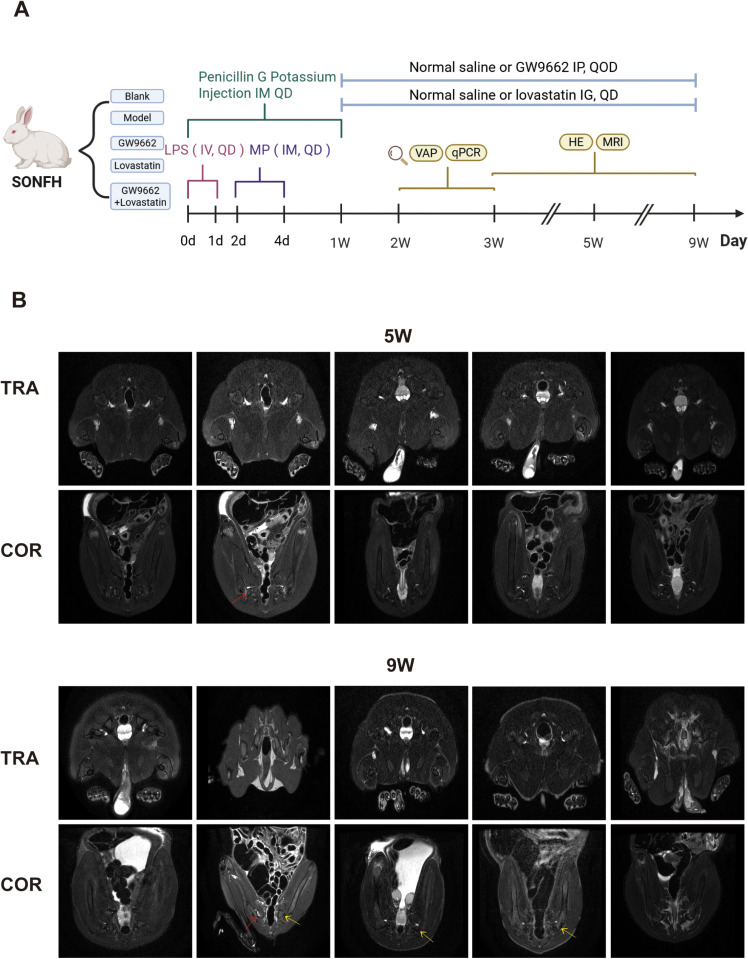
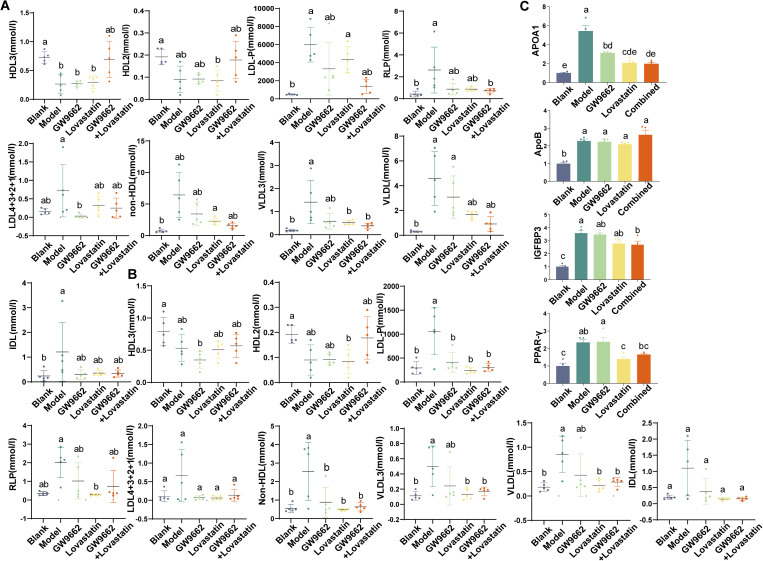
We first treated osteoblasts in vitro with high concentrations of hormones to simulate the SONFH environment. We then treated the cells with either the PPARγ inhibitor GW9662, the statin lovastatin, or a combination of both. We assessed cell proliferation and apoptosis using CCK-8, flow cytometry and Western blotting. We then established a SONFH rabbit model using high doses of methylprednisolone and lipopolysaccharide. The rabbits were randomly divided into four groups: control group, lovastatin group, GW9662 group and combination therapy group. We observed hip joint MRI before treatment, after 4 weeks of treatment, and 4 weeks after stopping treatment. We performed hematoxylin-eosin staining of the femoral head and analysed serum lipoprotein subfractions using VAP technology. In addition, we used quantitative polymerase chain reaction (qPCR) to analyse the expression of genes related to lipid metabolism at week 3.
In vitro experiments showed that both GW9662 and lovastatin effectively inhibited hormone-induced apoptosis. In the animal studies, imaging and pathological results showed that the progression of SONFH was slower in the combination therapy group than in the other groups. VAP analysis showed that the lovastatin group had disturbed lipoprotein subfractions at the fourth week after stopping treatment, while the combination therapy group had more stable lipoprotein subfractions.
PPARγ inhibitors significantly enhance the efficacy of statins in the treatment of SONFH by directly inhibiting apoptosis and indirectly modulating lipoprotein subfractions. These findings provide new insights into the clinical management of SONFH and suggest that combination therapy may be an effective strategy.
类固醇诱导的股骨头坏死(SONFH)是长期接受糖皮质激素治疗的患者中常见的一种严重骨病。尽管他汀类药物在改善脂质代谢方面已显示出一定疗效,但其在治疗SONFH方面的疗效仍然有限。过氧化物酶体增殖物激活受体γ(PPARγ)抑制剂可能通过多种机制增强他汀类药物的疗效。本研究旨在探讨PPARγ抑制剂如何通过直接抑制细胞凋亡和间接调节脂蛋白亚组分来增强他汀类药物在治疗SONFH中的作用。
我们首先在体外用高浓度激素处理成骨细胞,以模拟SONFH环境。然后我们用PPARγ抑制剂GW9662、他汀类药物洛伐他汀或两者联合处理细胞。我们使用CCK-8、流式细胞术和蛋白质印迹法评估细胞增殖和凋亡。然后我们用高剂量甲基强的松龙和脂多糖建立SONFH兔模型。将兔子随机分为四组:对照组、洛伐他汀组、GW9662组和联合治疗组。我们在治疗前、治疗4周后和停药4周后观察髋关节MRI。我们对股骨头进行苏木精-伊红染色,并使用VAP技术分析血清脂蛋白亚组分。此外,我们在第3周使用定量聚合酶链反应(qPCR)分析与脂质代谢相关的基因表达。
体外实验表明,GW9662和洛伐他汀均能有效抑制激素诱导的细胞凋亡。在动物研究中,影像学和病理学结果表明,联合治疗组SONFH的进展比其他组慢。VAP分析表明,洛伐他汀组在停药后第4周脂蛋白亚组分紊乱,而联合治疗组脂蛋白亚组分更稳定。
PPARγ抑制剂通过直接抑制细胞凋亡和间接调节脂蛋白亚组分,显著增强他汀类药物在治疗SONFH中的疗效。这些发现为SONFH的临床管理提供了新的见解,并表明联合治疗可能是一种有效的策略。