Deantonio Letizia, Borgonovo Giulia, Caverzasio Serena, Piliero Maria Antonietta, Canino Paola, Puliatti Andrea, Zilli Thomas, Valli Maria Carla, Richetti Antonella
Radiation Oncology, Oncology Institute of Southern Switzerland, EOC, Bellinzona, Switzerland; Faculty of Biomedical Sciences, Università della Svizzera Italiana, Lugano, Switzerland.
Radiation Oncology, Oncology Institute of Southern Switzerland, EOC, Bellinzona, Switzerland.
Breast. 2025 Jun 12;82:104513. doi: 10.1016/j.breast.2025.104513.
This randomized trial evaluated the efficacy and safety of the prophylactic use of a hyaluronic acid (HA) 0.2 %-containing cream to reduce acute radiodermatitis in breast cancer patients undergoing adjuvant radiotherapy (RT).
Candidates for conventionally-fractionated or hypofractionated adjuvant RT for unilateral stage I-III breast cancer were randomized 1:1 to the HA cream or neutral comparator applied twice daily from 14 days before starting until 14 days after completing local RT. The primary endpoint was the development of acute skin dermatitis of grade ≥2 according to RTOG scale at the end of RT.
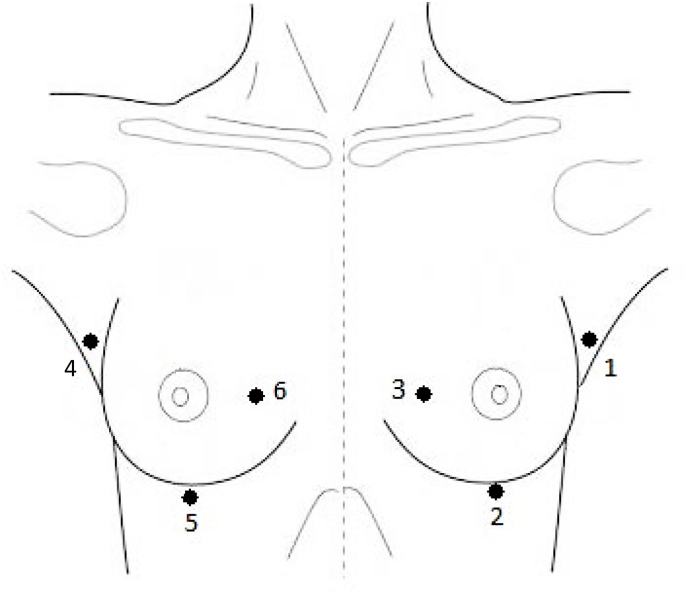
The study closed early after 86 of the planned 120 patients were enrolled because of an unexpectedly low frequency of acute skin toxicity. Cumulative acute grade ≥2 radiodermatitis was lower with the HA cream (21.1 %) than the comparator group (35.3 %) but did not reach statistical significance in the primary endpoint (p = 0.3). At the end of RT, acute dermatitis grade ≥1 occurred in 92 % of patients undergoing conventionally-fractionated RT and 50 % in the hypofractionation subgroup. Physician-based RTOG grading scale and quantitative assessment with skin reflectance spectrophotometry (SRS) measures were comparable in detecting skin toxicity. However, an increase in SRS values was detectable a week before the first signs of radiodermatitis were depicted using RTOG scores.
Compared to physician-based grading, SRS enabled earlier detection of skin toxicity and may be used as a valid and effective tool for assessing radiodermatitis. Prophylactic topical HA may help mitigate this toxicity; however adequately powered prospective trials are needed.
本随机试验评估了含0.2%透明质酸(HA)的乳膏预防性使用对降低接受辅助放疗(RT)的乳腺癌患者急性放射性皮炎的疗效和安全性。
单侧I - III期乳腺癌接受常规分割或大分割辅助放疗的候选患者按1:1随机分为HA乳膏组或中性对照剂组,从开始放疗前14天至完成局部放疗后14天,每天涂抹两次。主要终点是放疗结束时根据RTOG量表出现的≥2级急性皮肤炎。
由于急性皮肤毒性发生率意外较低,在计划纳入的120例患者中有86例入组后,该研究提前结束。HA乳膏组累积急性≥2级放射性皮炎(21.1%)低于对照组(35.3%),但在主要终点未达到统计学意义(p = 0.3)。放疗结束时,接受常规分割放疗的患者中有92%出现≥1级急性皮炎,大分割亚组中有50%出现。基于医生的RTOG分级量表和皮肤反射分光光度法(SRS)定量评估在检测皮肤毒性方面具有可比性。然而,在使用RTOG评分描述放射性皮炎的首个迹象前一周,即可检测到SRS值升高。
与基于医生的分级相比,SRS能够更早地检测皮肤毒性,可作为评估放射性皮炎的有效工具。预防性局部使用HA可能有助于减轻这种毒性;然而,需要有足够样本量的前瞻性试验。