Wachsmann Fabian Dominik, Fiehler Katja, Voudouris Dimitris
Experimental Psychology, Justus Liebig University, 35394, Giessen, Germany.
Sci Rep. 2025 Jun 20;15(1):20221. doi: 10.1038/s41598-025-06736-w.
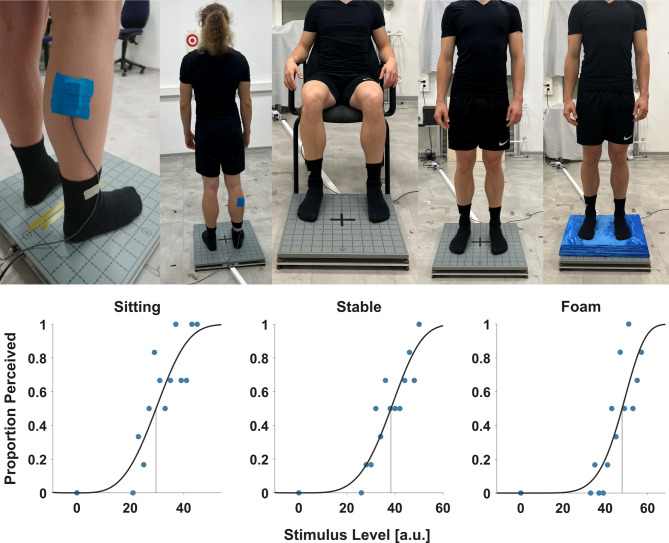
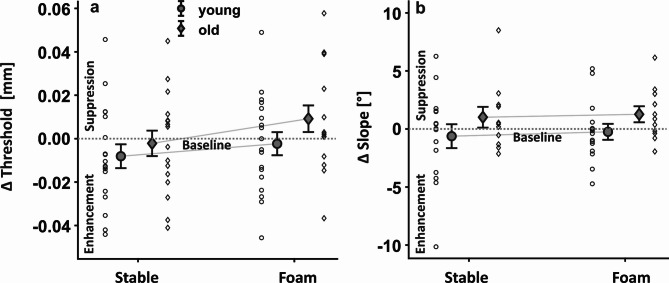
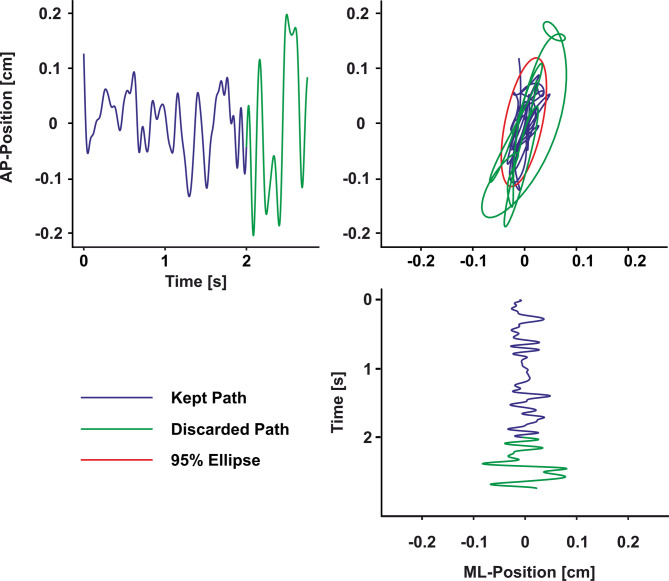
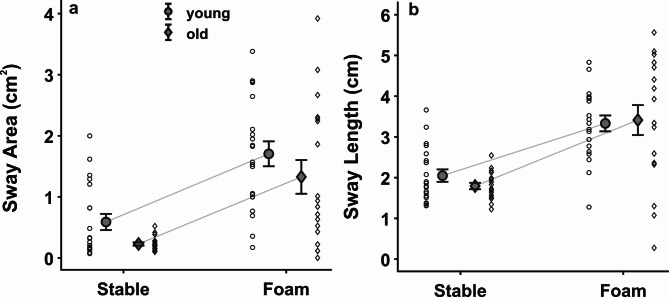
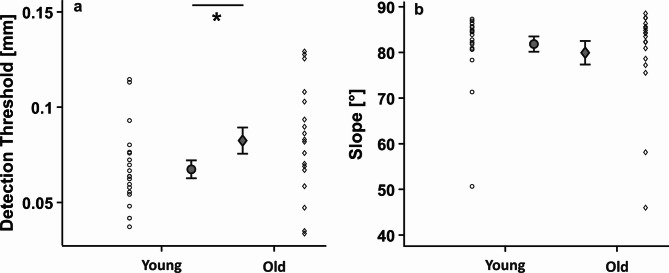
Balance control requires the continuous integration of feedback signals from several sensory organs with feedforward estimates about the state of the body. Such feedback signals are important for standing upright, as shown in increased and more variable sway patterns when sensory feedback is compromised, for instance when standing with eyes closed or on unstable surfaces that make cutaneous signals from the foot less reliable. Poorer sensory processing is also considered to arise during healthy aging due to a decrease of the reliability and transmission rate of feedback signals. Here, we are interested in how processing of tactile signals from the lower leg is modulated when balance control is challenged and how this interacts with age-related sensorimotor changes. We examined tactile sensitivity on the lower leg during sitting, standing on stable ground, and standing on unstable ground (foam). We quantified the center of pressure during the two standing conditions by determining the area of a 95% confidence interval ellipse as well as the total displacement of the center of pressure. Tactile sensitivity was assessed by asking participants to detect brief vibrotactile probes of various intensities to the lower leg. As expected, postural sway increased when standing on foam than stable ground for both age groups. When postural demands were minimal (sitting), tactile sensitivity was overall poorer in older than younger adults. Tactile perception was also poorer when standing on foam than on the stable ground, for both age groups. We conclude that increased postural demands reduce reliance on tactile signals from the lower limb in both young and older adults.
平衡控制需要将来自多个感觉器官的反馈信号与关于身体状态的前馈估计进行持续整合。这种反馈信号对于直立站立很重要,例如当感觉反馈受损时,如闭眼站立或站在不稳定表面上导致脚部皮肤信号不太可靠时,摇摆模式会增加且更具变异性。由于反馈信号的可靠性和传输速率下降,在健康衰老过程中也被认为会出现较差的感觉处理能力。在这里,我们感兴趣的是当平衡控制受到挑战时,来自小腿的触觉信号处理是如何被调节的,以及这与年龄相关的感觉运动变化是如何相互作用的。我们在坐着、站在稳定地面和站在不稳定地面(泡沫)上时检查了小腿的触觉敏感性。我们通过确定95%置信区间椭圆的面积以及压力中心的总位移来量化两种站立条件下的压力中心。通过要求参与者检测施加到小腿上的各种强度的短暂振动触觉探针来评估触觉敏感性。正如预期的那样,两个年龄组在站在泡沫上时的姿势摇摆都比站在稳定地面上时增加。当姿势需求最小时(坐着),老年人的触觉敏感性总体上比年轻人差。两个年龄组在站在泡沫上时的触觉感知也比站在稳定地面上时差。我们得出结论,姿势需求增加会降低年轻人和老年人对来自下肢触觉信号的依赖。