Gao Lin, Wu Shidi, Hu Bin, Zhang Qiuyu, Wu Yifei, Li Hui, Qian Ye, Huang Chengyu, Wen Xiangru, Li Hui, Cheng Aifang, Song Yuanjian, Ying Changjiang, Zhou Xiaoyan
The Graduate School, Xuzhou Medical University, Xuzhou, 221004, Jiangsu, China.
Jiangsu Key Laboratory of Brain Disease and Bioinformation, Research Center for Biochemistry and Molecular Biology, Xuzhou Medical University, Xuzhou, 221004, Jiangsu, China.
J Neuroinflammation. 2025 Jun 21;22(1):162. doi: 10.1186/s12974-025-03489-1.
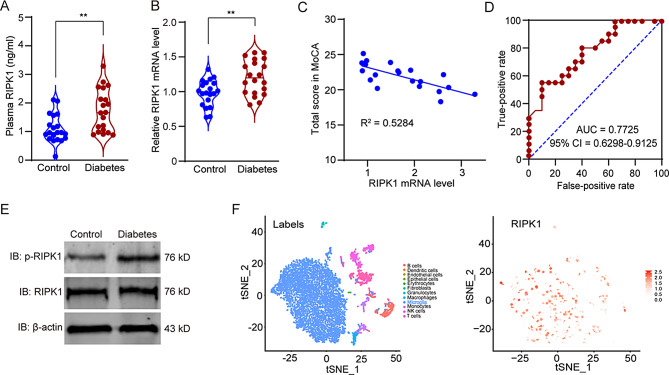
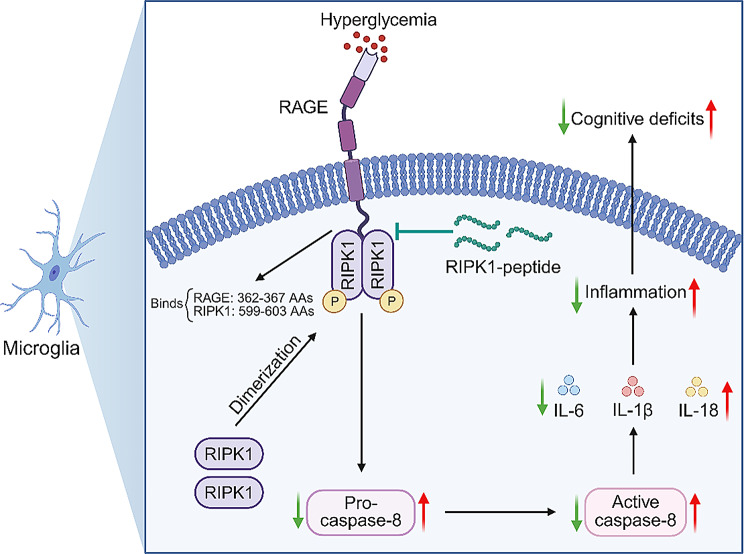
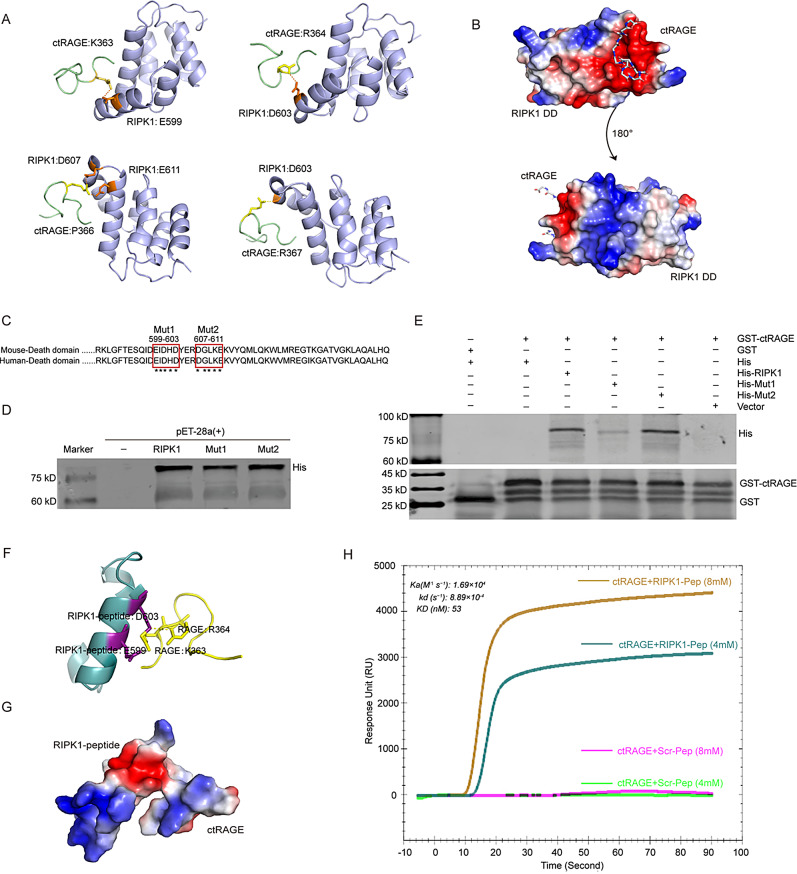
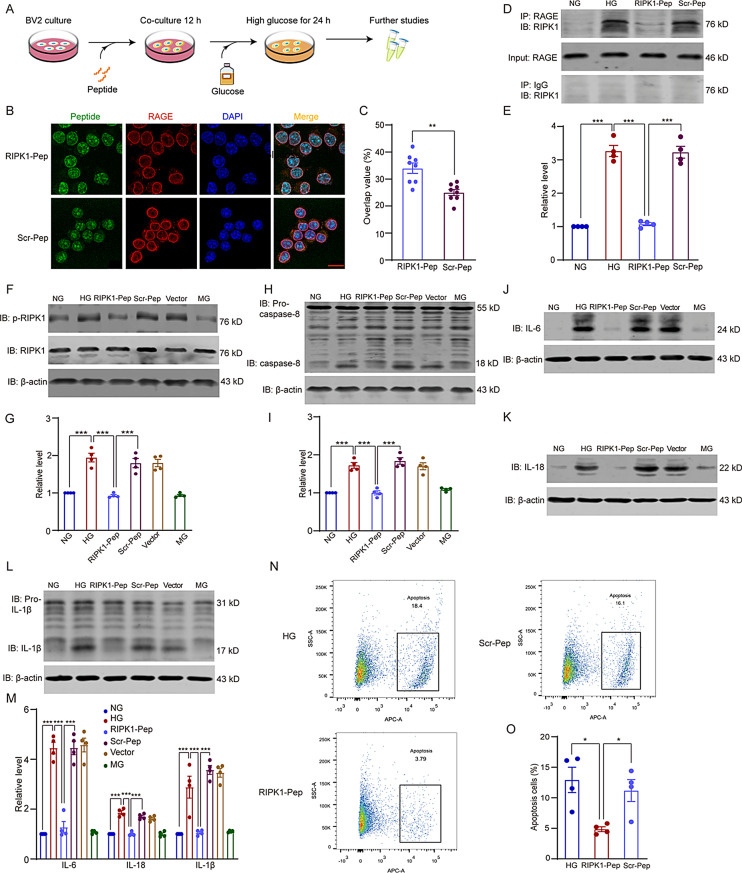
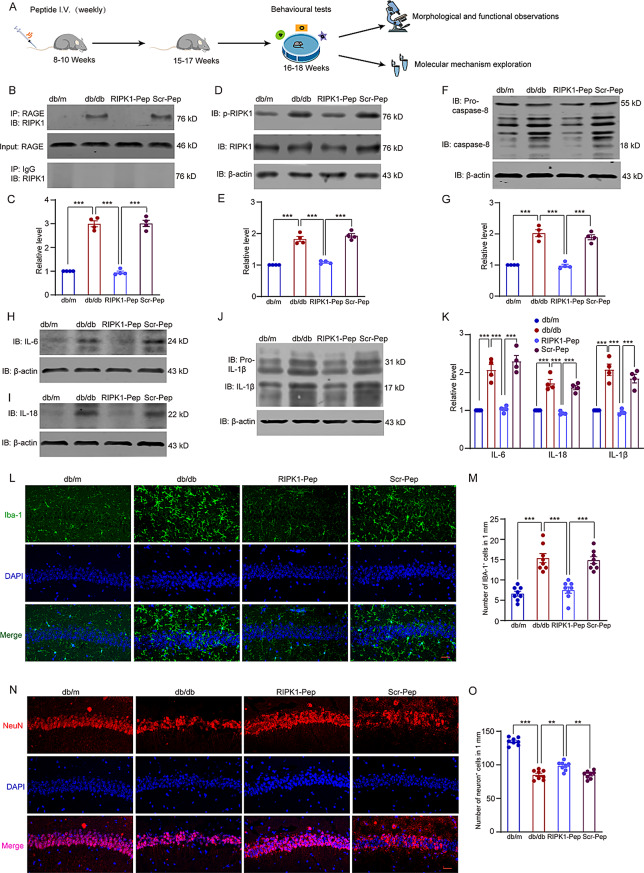
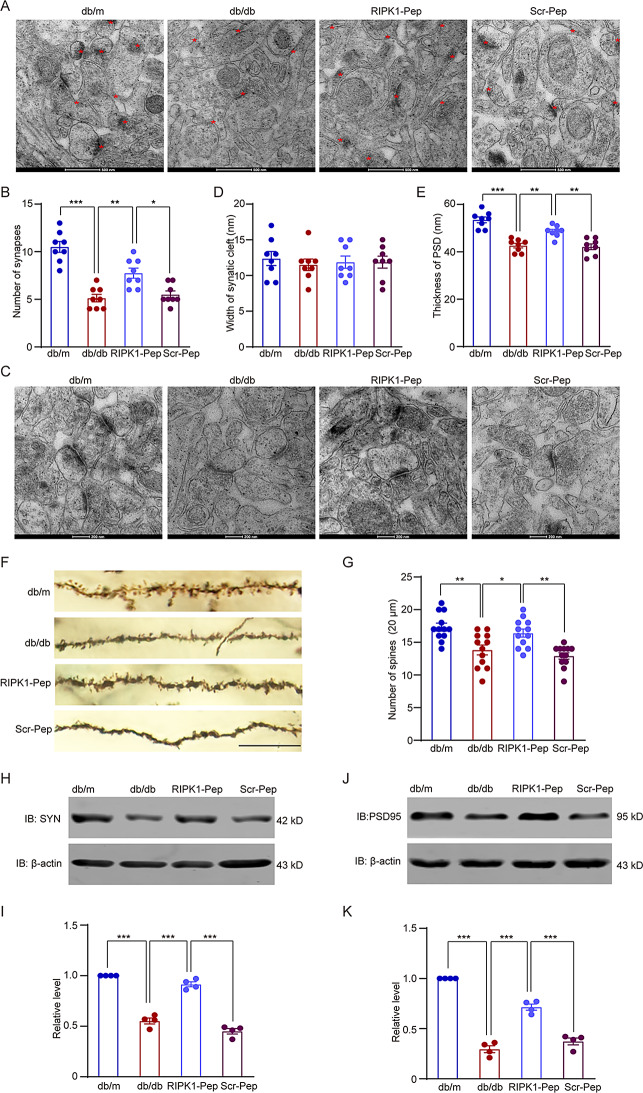
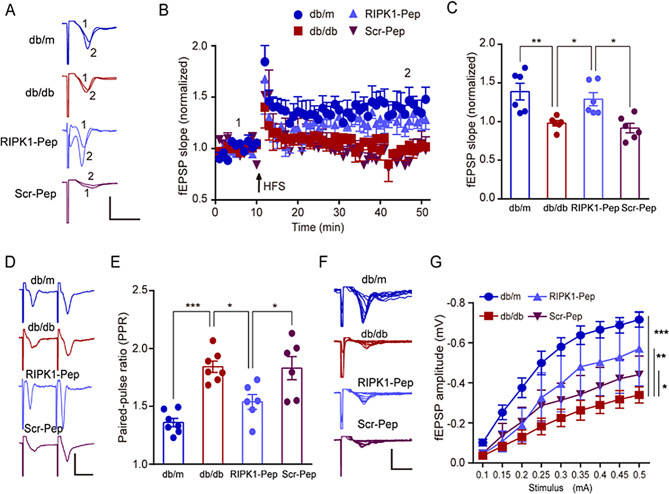
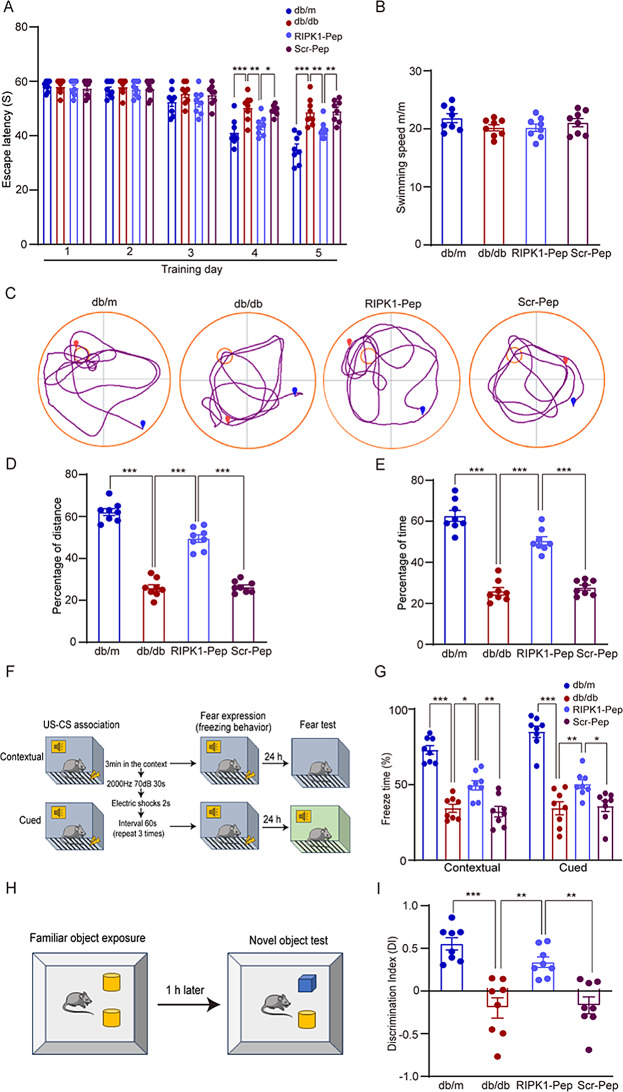
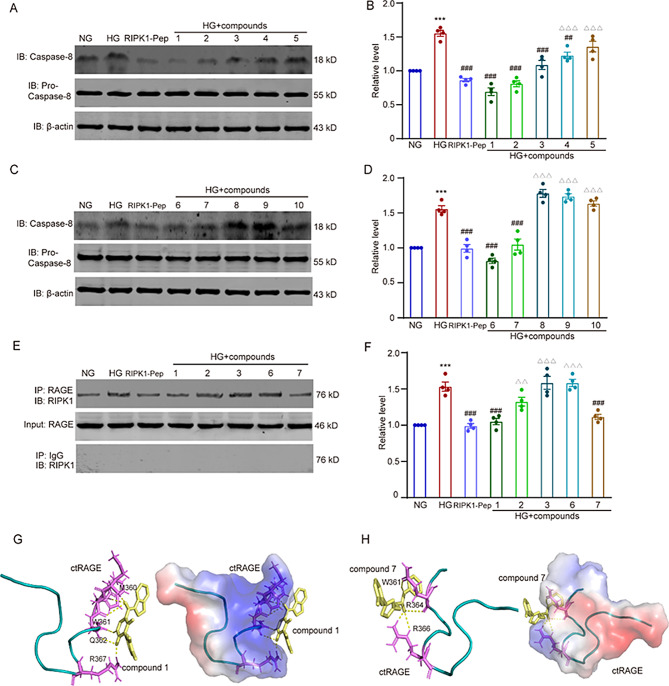
Microglial activation can cause neuroinflammation and the consequent neurological impairments play prominent roles in diabetes-associated cognitive deficits. Receptor-interacting protein kinase 1 (RIPK1) phosphorylation is involved in this deleterious microglial activation, but the exact molecular mechanisms are not clear. Here, RIPK1 expression was increased in diabetic patients with cognitive impairment. Furthermore, in diabetic mice, RIPK1 death domain directly binds to C-terminal of the receptor for advanced glycation end products (ctRAGE) could regulate RIPK1 phosphorylation in microglia. This RAGE-RIPK1 complex activates inflammatory signaling, resulting in cascades that ultimately promote cognitive impairment in diabetic mice. An engineered brain-targeting RIPK1 peptide blocked binding of RIPK1 to RAGE, which inhibited RIPK1 phosphorylation, decreased neuroinflammation, improved neuronal morphology and function, and prevented diabetes-associated cognitive deficits in mice. This study uncovers a previously unknown mechanism of neuroinflammation and suggests a novel therapeutic avenue for treating cognitive deficits induced by hyperglycemia.
小胶质细胞激活可导致神经炎症,随之而来的神经功能障碍在糖尿病相关的认知缺陷中起重要作用。受体相互作用蛋白激酶1(RIPK1)磷酸化参与了这种有害的小胶质细胞激活,但确切的分子机制尚不清楚。在这里,RIPK1在患有认知障碍的糖尿病患者中表达增加。此外,在糖尿病小鼠中,RIPK1死亡结构域直接与晚期糖基化终末产物受体(ctRAGE)的C末端结合,可调节小胶质细胞中RIPK1的磷酸化。这种RAGE-RIPK1复合物激活炎症信号,导致一系列反应,最终促进糖尿病小鼠的认知障碍。一种经过设计的脑靶向RIPK1肽阻断了RIPK1与RAGE的结合,抑制了RIPK1磷酸化,减少了神经炎症,改善了神经元形态和功能,并预防了小鼠糖尿病相关的认知缺陷。这项研究揭示了一种以前未知的神经炎症机制,并为治疗高血糖诱导的认知缺陷提出了一条新的治疗途径。