Sun Jia, Zhang Lixin, Gong Zhaotang, Ma Hongling, Wu Dan, Wu Rihan, Siri Guleng
Department of Pharmacy, Inner Mongolia People's Hospital, Hohhot, Inner Mongolia Autonomous Region, China.
Department of Pharmacy, Baotou Medical College, Baotou, Inner Mongolia Autonomous Region, China.
Front Cell Infect Microbiol. 2025 Jun 6;15:1579558. doi: 10.3389/fcimb.2025.1579558. eCollection 2025.
Sepsis-induced coagulopathy (SIC) is a common disease in patients with sepsis. It denotes higher mortality rates and a poorer prognosis in these patients. This study aimed to develop a practical machine learning (ML) model for the prediction of the risk of SIC in critically ill patients with sepsis.
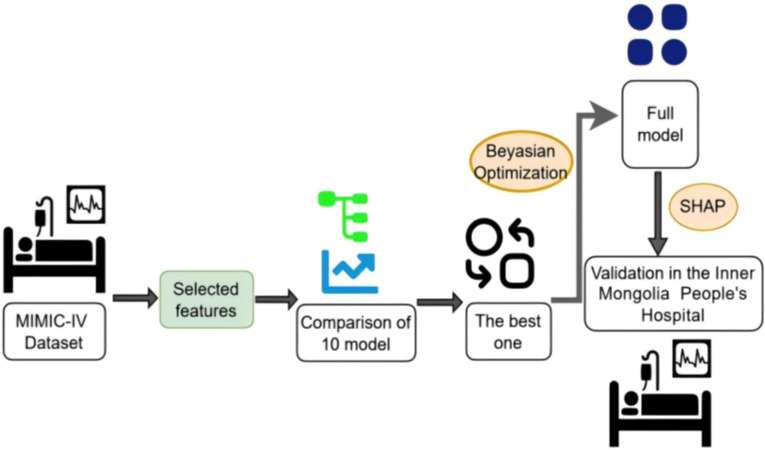
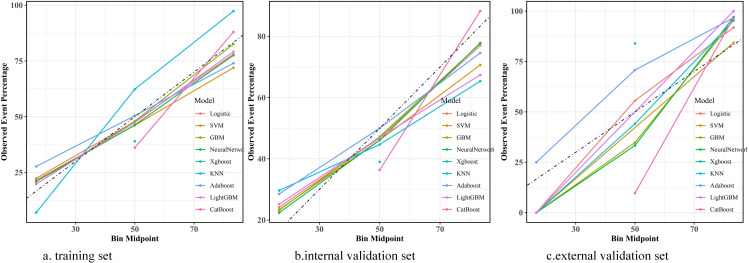
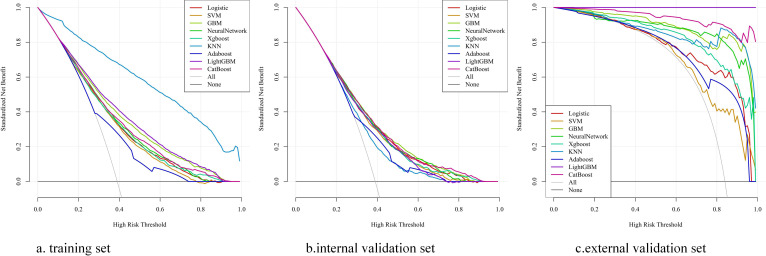
In this retrospective cohort study, patients were extracted from the Medical Information Mart for Intensive Care IV (MIMIC-IV) database and the Inner Mongolia Autonomous Region People's Hospital database. Sepsis and SIC were defined based on the Sepsis-3 criteria and the criteria developed based on the International Society of Thrombosis and Haemostasis (ISTH), respectively. We compared nine ML models using the Sequential Organ Failure Assessment (SOFA) score in terms of SIC prediction ability. Optimal model selection was based on the superior performance metrics exhibited by the model on the training dataset, the internal validation dataset, and the external validation dataset.
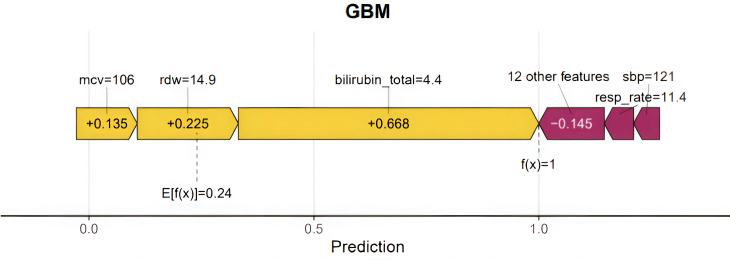
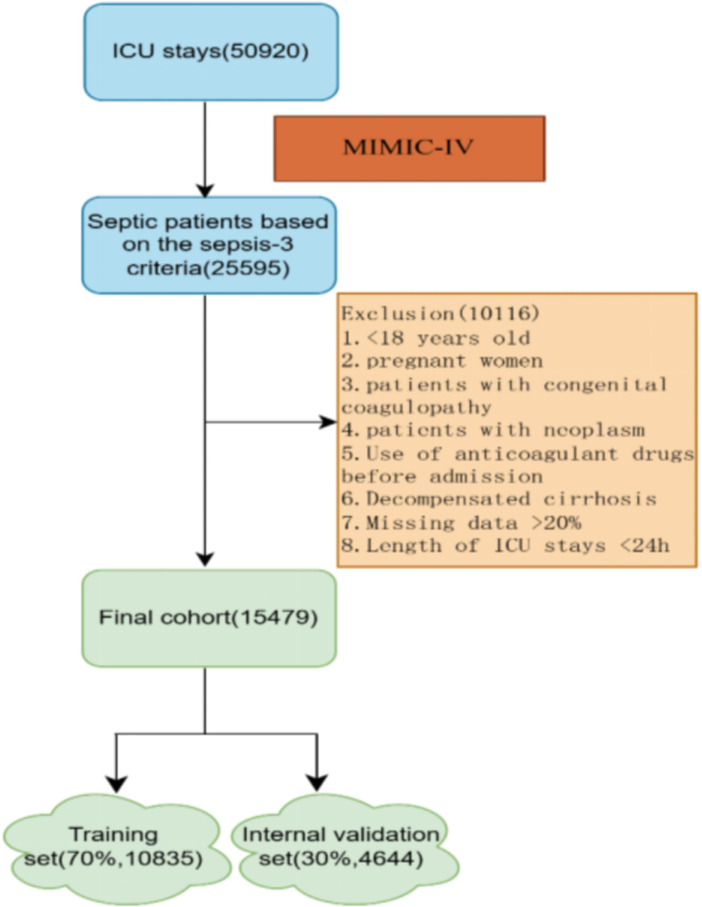
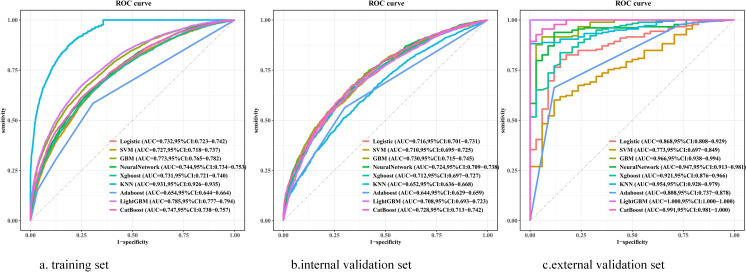
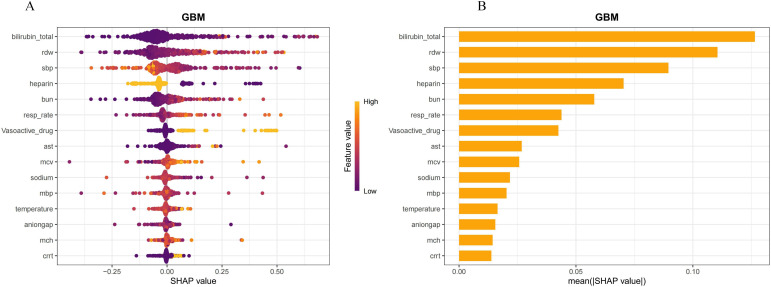
Of the 15,479 patients in MIMIC-IV included in the final cohort, a total of 6,036 (38.9%) patients developed SIC during sepsis. We selected 17 features to construct ML prediction models. The gradient boosting machine (GBM) model was deemed optimal as it achieved high predictive accuracy and reliability across the training, internal, and external validation datasets. The areas under the curve of the GBM model were 0.773 (95%CI = 0.765-0.782) in the training dataset, 0.730 (95%CI = 0.715-0.745) in the internal validation dataset, and 0.966 (95%CI = 0.938-0.994) in the external validation dataset. The Shapley Additive Explanations (SHAP) values illustrated the prediction results, indicating that total bilirubin, red cell distribution width (RDW), systolic blood pressure (SBP), heparin, and blood urea nitrogen (BUN) were risk factors for progression to SIC in patients with sepsis.
We developed an optimal and operable ML model that was able to predict the risk of SIC in septic patients better than the SOFA scoring models.
脓毒症诱导的凝血病(SIC)是脓毒症患者中的常见病症。它表明这些患者的死亡率更高且预后更差。本研究旨在开发一种实用的机器学习(ML)模型,用于预测重症脓毒症患者发生SIC的风险。
在这项回顾性队列研究中,患者从重症监护医学信息集市IV(MIMIC-IV)数据库和内蒙古自治区人民医院数据库中提取。脓毒症和SIC分别根据Sepsis-3标准和基于国际血栓与止血学会(ISTH)制定的标准进行定义。我们使用序贯器官衰竭评估(SOFA)评分比较了九个ML模型在SIC预测能力方面的表现。最佳模型选择基于模型在训练数据集、内部验证数据集和外部验证数据集上表现出的优越性能指标。
在最终队列纳入的MIMIC-IV中的15479例患者中,共有6036例(38.9%)患者在脓毒症期间发生SIC。我们选择了17个特征来构建ML预测模型。梯度提升机(GBM)模型被认为是最佳模型,因为它在训练、内部和外部验证数据集中均实现了较高的预测准确性和可靠性。GBM模型在训练数据集中的曲线下面积为0.773(95%CI = 0.765 - 0.782),在内部验证数据集中为0.730(95%CI = 0.715 - 0.745),在外部验证数据集中为0.966(95%CI = 0.938 - 0.994)。Shapley值加法解释(SHAP)值说明了预测结果,表明总胆红素、红细胞分布宽度(RDW)、收缩压(SBP)、肝素和血尿素氮(BUN)是脓毒症患者进展为SIC的危险因素。
我们开发了一种最佳且可操作的ML模型,该模型能够比SOFA评分模型更好地预测脓毒症患者发生SIC的风险。