Majeed Abdul-Jawad J, Head Dennis, D Raman Jay
Urology, Penn State College of Medicine, Hershey, USA.
Cureus. 2025 May 23;17(5):e84674. doi: 10.7759/cureus.84674. eCollection 2025 May.
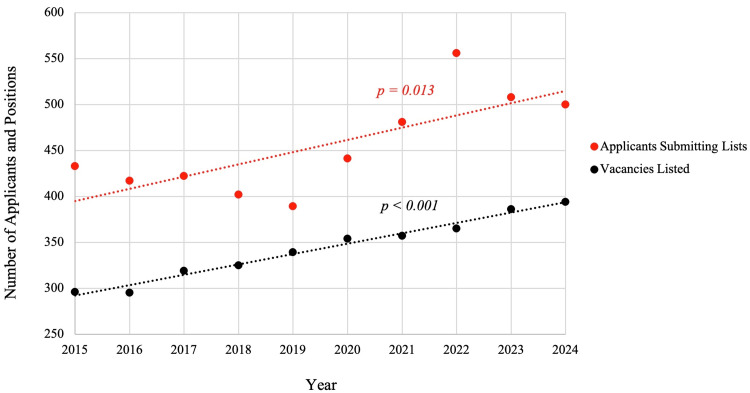
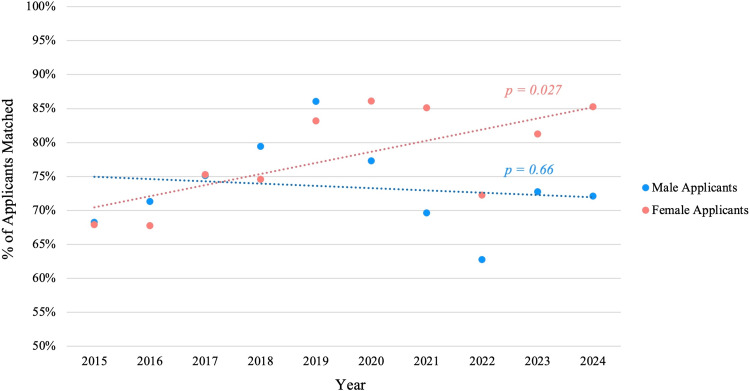
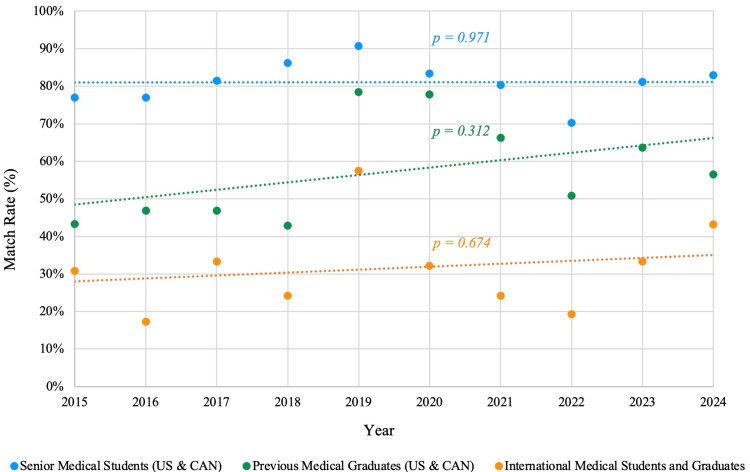
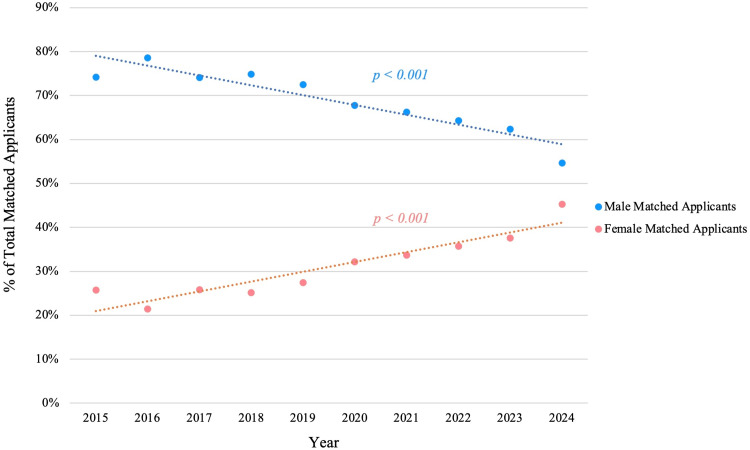
Introduction Urology residency positions in the United States are filled through an early, independent match process administered by the American Urological Association (AUA). As a highly competitive specialty, understanding long-term trends in matching outcomes and applicant demographics is essential for workforce planning and equity. This study analyzed trends in match rates, applicant characteristics, and training capacity from 2015 to 2024. Methods Publicly available AUA match data from 2015 to 2024 were analyzed. Variables included applicant counts, residency positions, match rates, medical training status, sex, and race/ethnicity for 2024. Statistical analyses included linear regression, correlation, Chi-square tests, and ANOVA to assess trends and subgroup differences. Results Residency positions increased by 33% over the study period (296 in 2015 to 394 in 2024, +11 per year, p<0.001), with applicants rising from 433 to 500 (+13 per year, p=0.01). The overall match rate averaged 75% (±5.7%) and remained stable over time. First-time medical seniors had significantly higher match rates (81%) than previous graduates (59%) and international graduates (33%) (p<0.001). The number of female applicants nearly doubled, comprising 40.6% of the 2024 pool, with match rates exceeding those of males in recent cycles. In 2024, Black and Hispanic applicants had lower match rates compared to their White and Asian peers. Conclusion The urology match has grown but remains highly competitive. While gender diversity has improved, racial and ethnic disparities have persisted. Continued expansion of residency positions and targeted diversity initiatives are essential to address workforce shortages and promote equity in urological training.
引言
美国泌尿外科住院医师职位通过美国泌尿外科协会(AUA)管理的早期独立匹配程序来填补。作为一个竞争激烈的专业,了解匹配结果和申请人人口统计学的长期趋势对于劳动力规划和公平性至关重要。本研究分析了2015年至2024年的匹配率、申请人特征和培训能力趋势。
方法
分析了2015年至2024年AUA公开的匹配数据。变量包括2024年的申请人数量、住院医师职位、匹配率、医学培训状态、性别和种族/民族。统计分析包括线性回归、相关性分析、卡方检验和方差分析,以评估趋势和亚组差异。
结果
在研究期间,住院医师职位增加了33%(从2015年的296个增加到2024年的394个,每年增加11个,p<0.001),申请人从433人增加到500人(每年增加13人,p=0.01)。总体匹配率平均为75%(±5.7%),且随时间保持稳定。首次申请的医学大四学生的匹配率(81%)显著高于往届毕业生(59%)和国际毕业生(33%)(p<0.001)。女性申请人数量几乎翻了一番,占2024年申请人总数的40.6%,在最近几个周期中匹配率超过男性。2024年,黑人和西班牙裔申请人的匹配率低于白人和亚裔同龄人。
结论
泌尿外科匹配规模有所扩大,但竞争依然激烈。虽然性别多样性有所改善,但种族和民族差异仍然存在。持续扩大住院医师职位并实施有针对性的多样性举措对于解决劳动力短缺问题和促进泌尿外科培训的公平性至关重要。