Liu Chao, Xu Sheng, Liu Yuanyuan, Lu Zhixing, Yang Jianrong
Departments of Gastrointestinal, Hernia and Enterofistula Surgery, The People's Hospital of Guangxi Zhuang Autonomous Region, Nannning, Guangxi Province, China.
Department of General Surgery, The First Affiliated Hospital of Jinan University, Guangzhou, Guangdong Province, China.
PeerJ. 2025 Jun 18;13:e19522. doi: 10.7717/peerj.19522. eCollection 2025.
Dysregulated cellular metabolism is one of the major causes of colorectal cancer (CRC), including mitochondrial fission. Therefore, this study focuses on the specific regulatory mechanisms of mitochondrial dysfunction on CRC, which will provide theoretical guidance for CRC in the future.
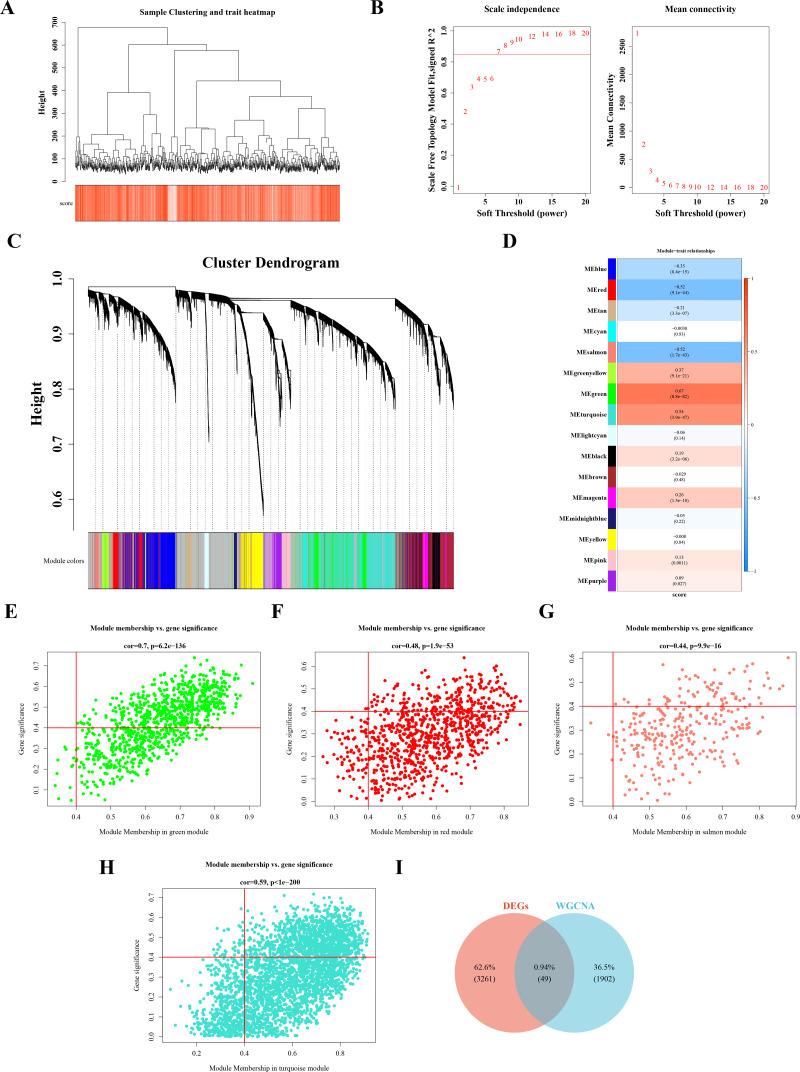
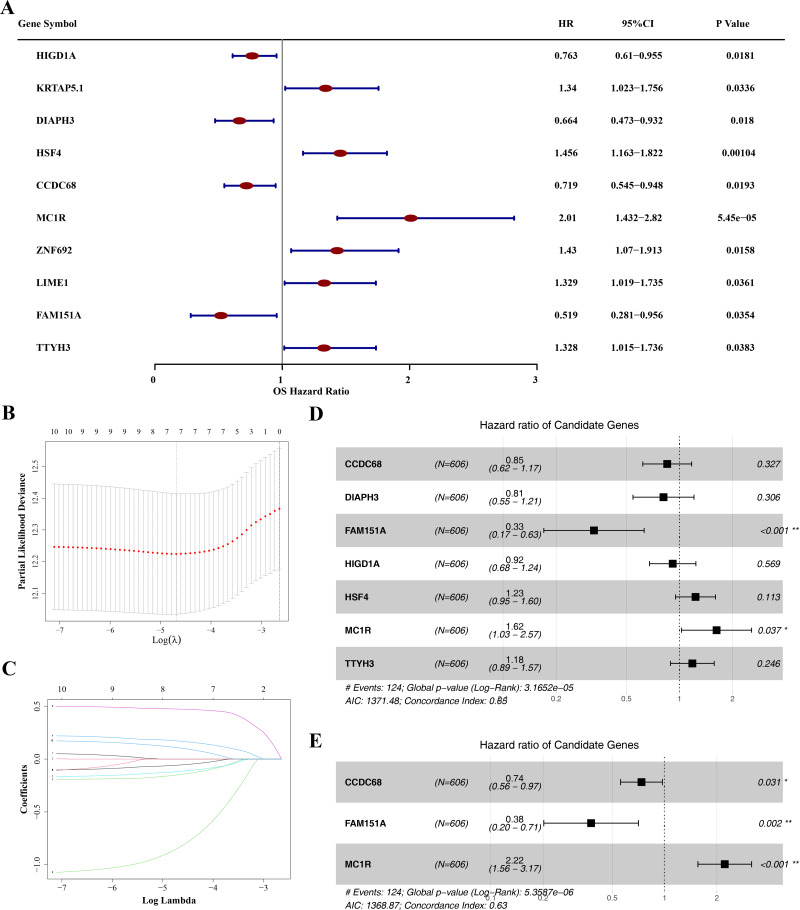
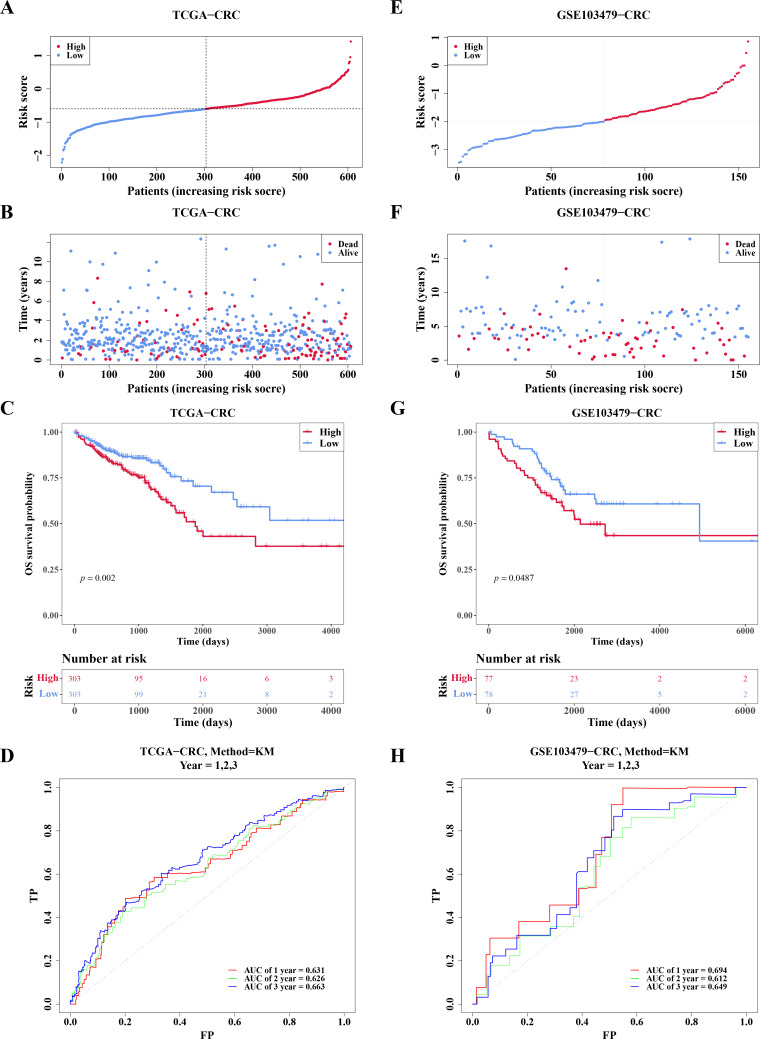
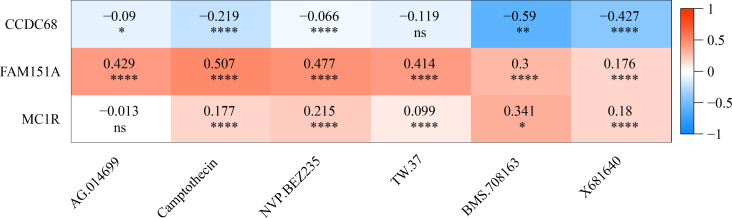
The Cancer Genome Atlas (TCGA)-CRC dataset, GSE103479 dataset and 40 mitochondrial fission-related genes (MFRGs) were downloaded in this study. The differentially expressed genes (DEGs) were analyzed in TCGA-CRC samples. Using MFRGs scores as traits, key module genes associated with its scores were screened by weighted gene co-expression network analysis (WGCNA). Then, differentially expressed MFRGs (DE-MFRGs) were obtained by intersecting DEGs and key module genes. Next, DE-MFRGs were subjected to univariate Cox, least absolute shrinkage and selection operator (LASSO), multivariate Cox and stepwise regression analysis to scree hub genes and to construct the risk model. The risk model was validated in GSE103479. Finally, the hub genes were comprehensively investigated through a multi-faceted approach encompassing clinical characteristic analysis, Gene Set Enrichment Analysis (GSEA), immune infiltration analysis, and drug sensitivity prediction. Subsequently, the expression levels of the identified key genes were validated utilizing quantitative real-time fluorescence PCR (qRT-PCR), reinforcing the findings and ensuring their accuracy.
The 49 DE-MFRGs were gained by intersecting 3,310 DEGs and 1,952 key module genes. Then, , and were screened as hub genes. Also, the risk model validated in GSE103479 showed that the higher the risk score, the worse the survival of CRC patients. Furthermore, T/N/M stages were differences in risk scores between subgroups of clinical characteristics. The memory CD4+ T cell and plasma cell were more significant differences in the low-risk group samples. The 51 drugs were showed a better response in the high-risk group patients. RT-qPCR validation results showed that and were down-regulated in CRC, while was up-regulated, consistent with the validation set results. And and showed highly significant difference between CRC and normal samples ( < 0.0001).
In this study, we found , and as potential hub genes in CRC, and analyzed the molecular mechanism of mitochondrial affecting CRC, which would provide theoretical reference value for CRC.
细胞代谢失调是包括线粒体分裂在内的结直肠癌(CRC)的主要原因之一。因此,本研究聚焦于线粒体功能障碍对CRC的具体调控机制,这将为未来的CRC研究提供理论指导。
本研究下载了癌症基因组图谱(TCGA)-CRC数据集、GSE103479数据集以及40个线粒体分裂相关基因(MFRGs)。对TCGA-CRC样本中的差异表达基因(DEGs)进行分析。以MFRGs评分作为特征,通过加权基因共表达网络分析(WGCNA)筛选与其评分相关的关键模块基因。然后,通过DEGs与关键模块基因的交集获得差异表达的MFRGs(DE-MFRGs)。接下来,对DE-MFRGs进行单变量Cox、最小绝对收缩和选择算子(LASSO)、多变量Cox和逐步回归分析,以筛选枢纽基因并构建风险模型。在GSE103479中验证该风险模型。最后,通过包括临床特征分析、基因集富集分析(GSEA)、免疫浸润分析和药物敏感性预测在内的多方面方法对枢纽基因进行全面研究。随后,利用定量实时荧光PCR(qRT-PCR)验证所鉴定关键基因的表达水平,强化研究结果并确保其准确性。
通过3310个DEGs与1952个关键模块基因的交集获得49个DE-MFRGs。然后,筛选出 、 和 作为枢纽基因。此外,在GSE103479中验证的风险模型表明,风险评分越高,CRC患者的生存率越差。此外,T/N/M分期在临床特征亚组之间的风险评分存在差异。记忆性CD4+T细胞和浆细胞在低风险组样本中的差异更为显著。51种药物在高风险组患者中显示出更好的反应。RT-qPCR验证结果表明, 在CRC中下调,而 上调,与验证集结果一致。并且 和 在CRC与正常样本之间显示出高度显著差异( < 0.0001)。
在本研究中,我们发现 、 和 是CRC中的潜在枢纽基因,并分析了线粒体影响CRC的分子机制,这将为CRC提供理论参考价值。