Department of Medicine, Queen's University, Kingston, ON K7L 3N6, Canada.
Cells. 2023 Jul 20;12(14):1897. doi: 10.3390/cells12141897.
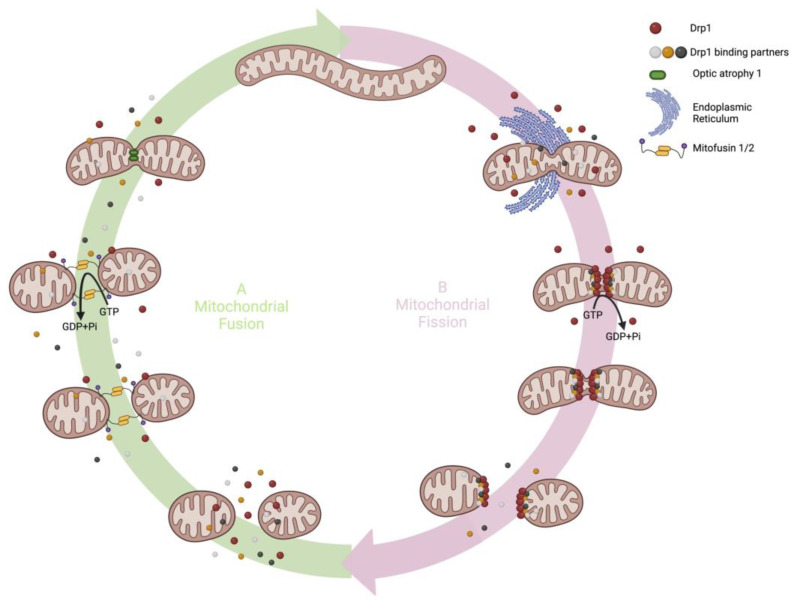
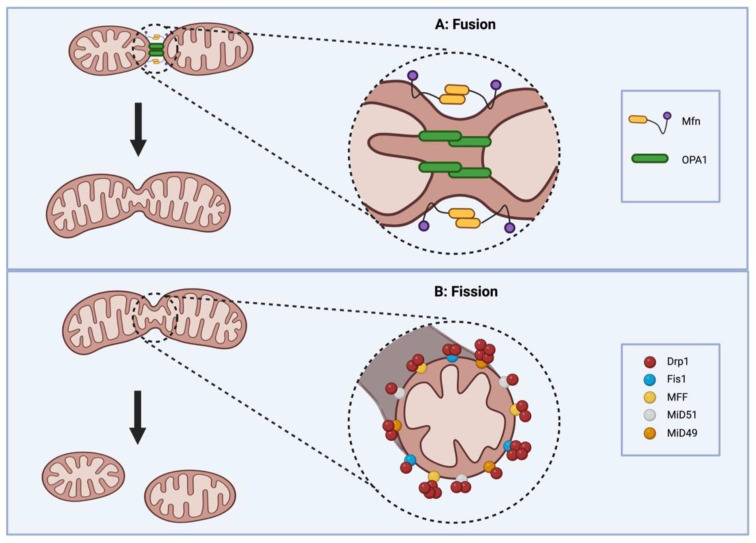
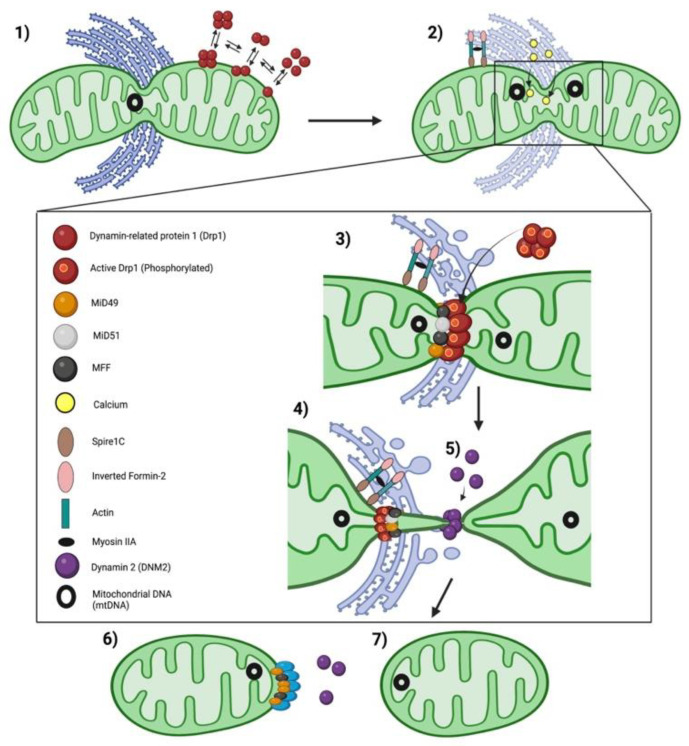
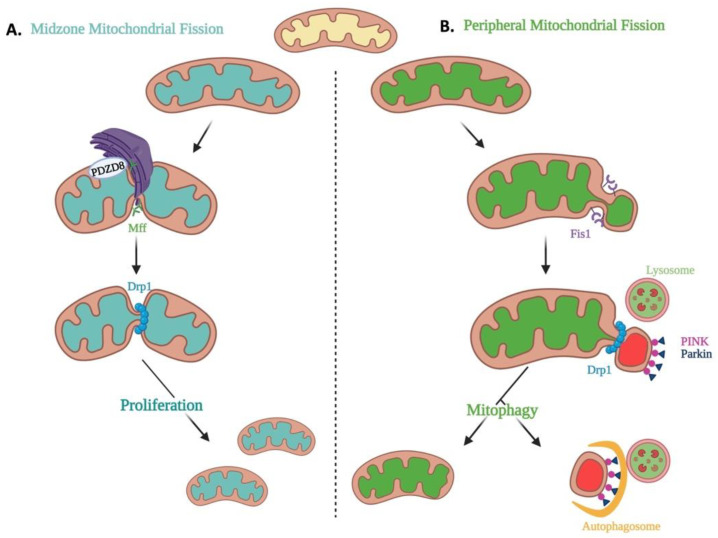
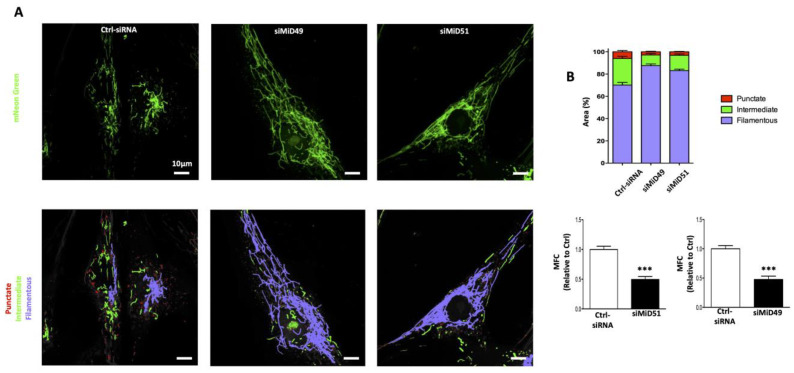
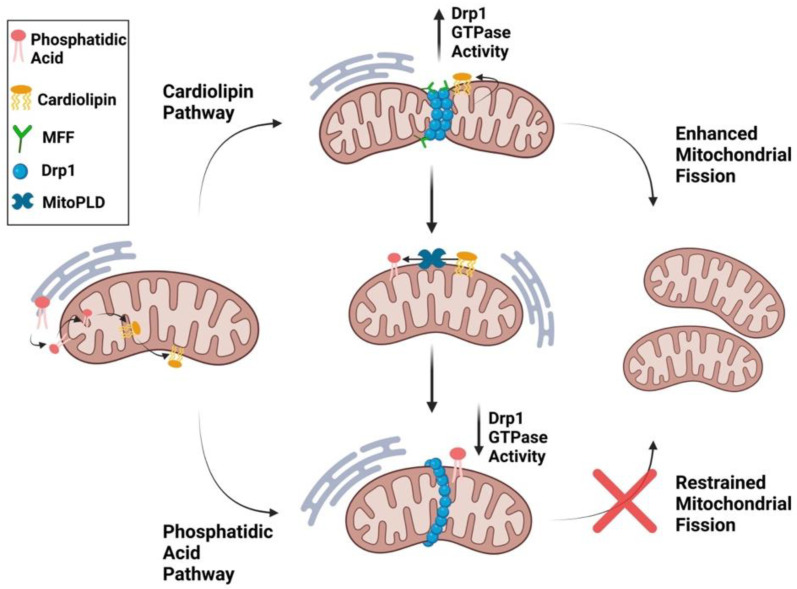
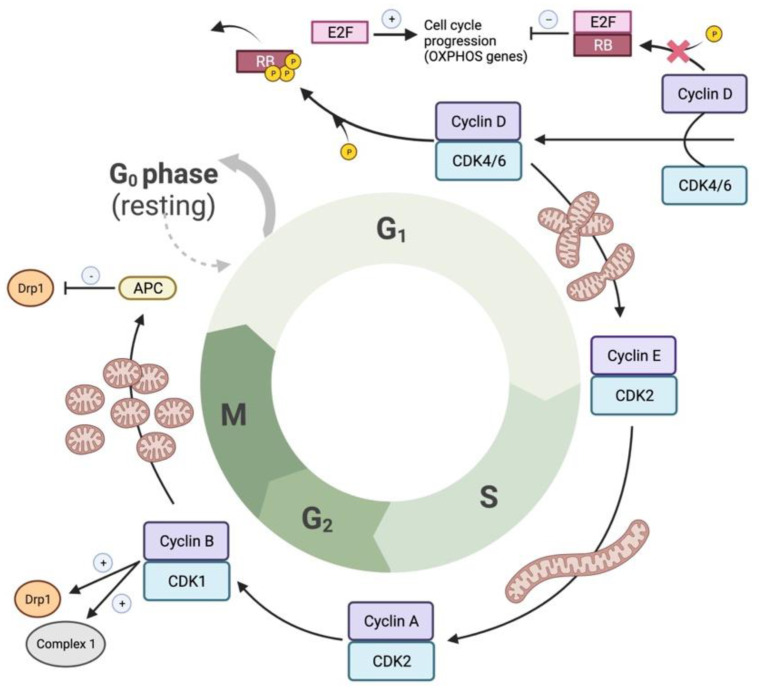
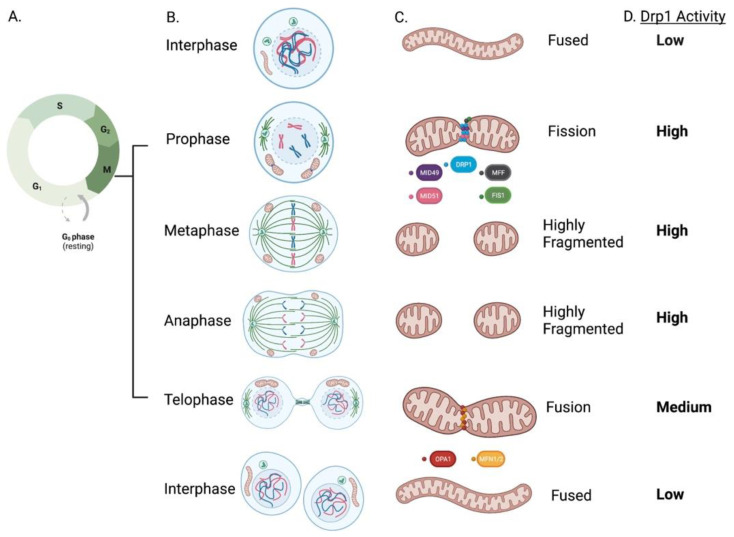
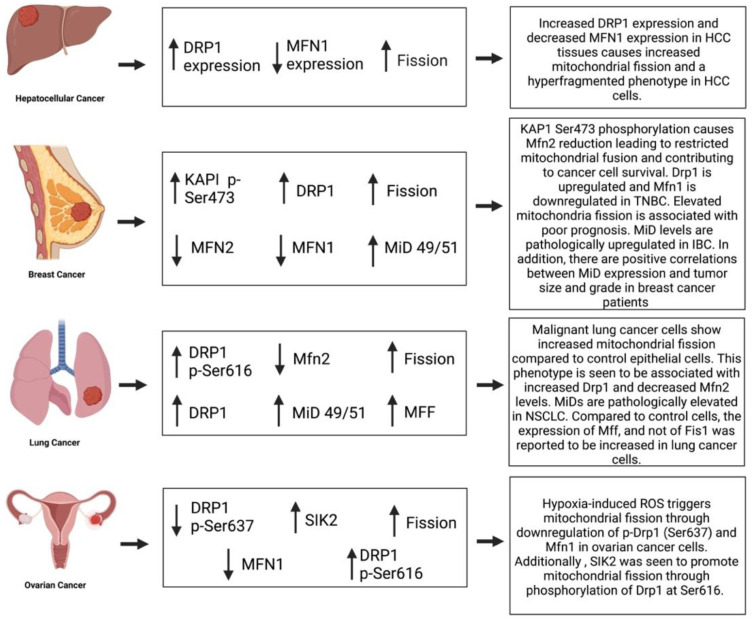
Mitochondria, which generate ATP through aerobic respiration, also have important noncanonical functions. Mitochondria are dynamic organelles, that engage in fission (division), fusion (joining) and translocation. They also regulate intracellular calcium homeostasis, serve as oxygen-sensors, regulate inflammation, participate in cellular and organellar quality control and regulate the cell cycle. Mitochondrial fission is mediated by the large GTPase, dynamin-related protein 1 (Drp1) which, when activated, translocates to the outer mitochondrial membrane (OMM) where it interacts with binding proteins (Fis1, MFF, MiD49 and MiD51). At a site demarcated by the endoplasmic reticulum, fission proteins create a macromolecular ring that divides the organelle. The functional consequence of fission is contextual. Physiological fission in healthy, nonproliferating cells mediates organellar quality control, eliminating dysfunctional portions of the mitochondria via mitophagy. Pathological fission in somatic cells generates reactive oxygen species and triggers cell death. In dividing cells, Drp1-mediated mitotic fission is critical to cell cycle progression, ensuring that daughter cells receive equitable distribution of mitochondria. Mitochondrial fusion is regulated by the large GTPases mitofusin-1 (Mfn1) and mitofusin-2 (Mfn2), which fuse the OMM, and optic atrophy 1 (OPA-1), which fuses the inner mitochondrial membrane. Mitochondrial fusion mediates complementation, an important mitochondrial quality control mechanism. Fusion also favors oxidative metabolism, intracellular calcium homeostasis and inhibits cell proliferation. Mitochondrial lipids, cardiolipin and phosphatidic acid, also regulate fission and fusion, respectively. Here we review the role of mitochondrial dynamics in health and disease and discuss emerging concepts in the field, such as the role of central versus peripheral fission and the potential role of dynamin 2 (DNM2) as a fission mediator. In hyperproliferative diseases, such as pulmonary arterial hypertension and cancer, Drp1 and its binding partners are upregulated and activated, positing mitochondrial fission as an emerging therapeutic target.
线粒体通过有氧呼吸产生 ATP,也具有重要的非典型功能。线粒体是动态细胞器,参与分裂(分裂)、融合(连接)和易位。它们还调节细胞内钙稳态,充当氧传感器,调节炎症,参与细胞和细胞器的质量控制,并调节细胞周期。线粒体分裂由大型 GTPase,DRP1( dynamin-related protein 1 )介导,当被激活时,DRP1 易位到外线粒体膜(OMM),在那里它与结合蛋白(Fis1、MFF、MiD49 和 MiD51)相互作用。在由内质网标记的部位,分裂蛋白形成一个大分子环,将细胞器分裂。分裂的功能后果是上下文相关的。在健康、非增殖细胞中的生理性分裂介导细胞器质量控制,通过线粒体自噬消除线粒体的功能障碍部分。体细胞中的病理性分裂会产生活性氧并引发细胞死亡。在分裂细胞中,DRP1 介导的有丝分裂分裂对于细胞周期进展至关重要,确保子细胞均等分配线粒体。线粒体融合由大型 GTPase 线粒体融合蛋白 1(Mfn1)和线粒体融合蛋白 2(Mfn2)调节,它们融合外线粒体膜,以及视神经萎缩蛋白 1(OPA-1),它融合内线粒体膜。线粒体融合介导互补,这是一种重要的线粒体质量控制机制。融合也有利于氧化代谢、细胞内钙稳态和抑制细胞增殖。线粒体脂质,心磷脂和磷脂酸,分别调节分裂和融合。在这里,我们回顾了线粒体动力学在健康和疾病中的作用,并讨论了该领域的新出现概念,例如中央与外周分裂的作用以及动力蛋白 2(DNM2)作为分裂介质的潜在作用。在增殖性疾病中,如肺动脉高压和癌症,DRP1 及其结合伙伴上调和激活,提出线粒体分裂作为一个新的治疗靶点。