Qazi Sohail, Aslami Jahan, Wang David, Akhavan Sam
Allegheny General Hospital, Pittsburgh, Pennsylvania, U.S.A.
Drexel University College of Medicine, Philadelphia, Pennsylvania, U.S.A.
Arthrosc Tech. 2025 Jan 31;14(5):103433. doi: 10.1016/j.eats.2025.103433. eCollection 2025 May.
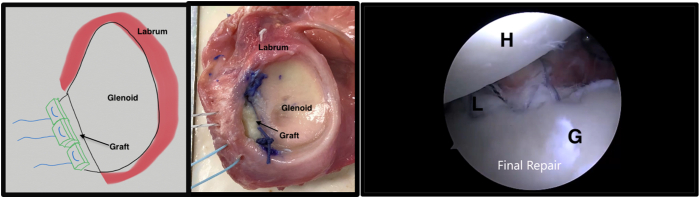
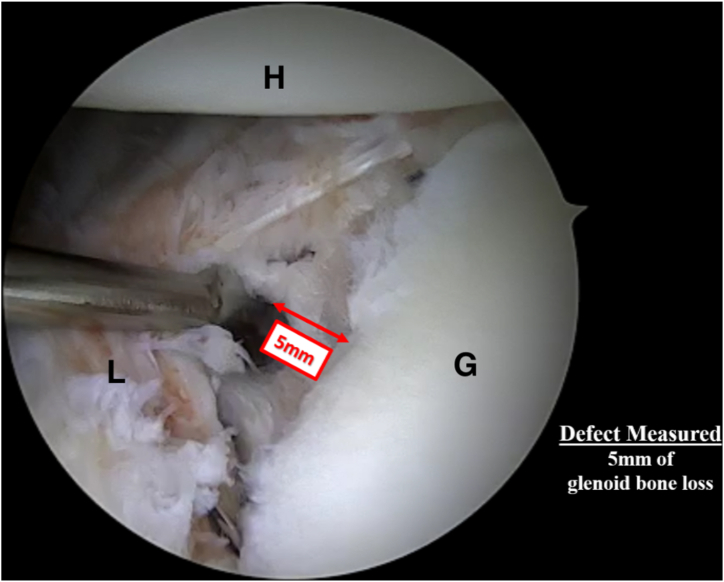
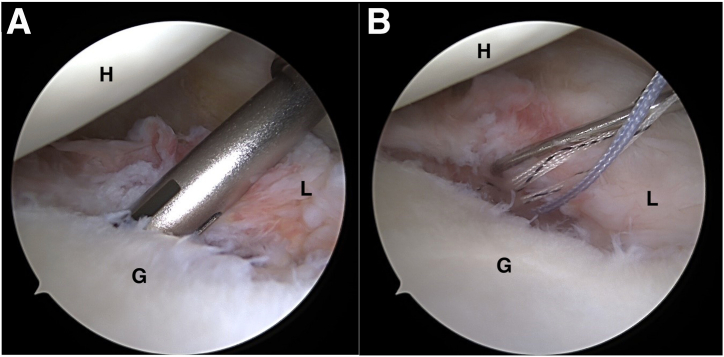
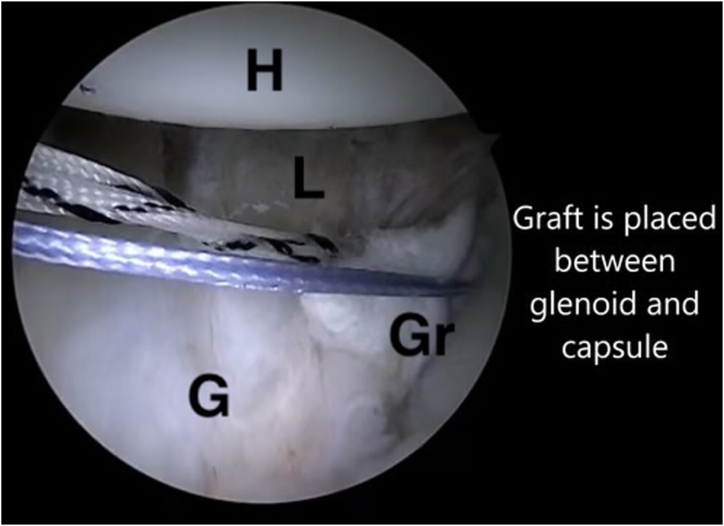
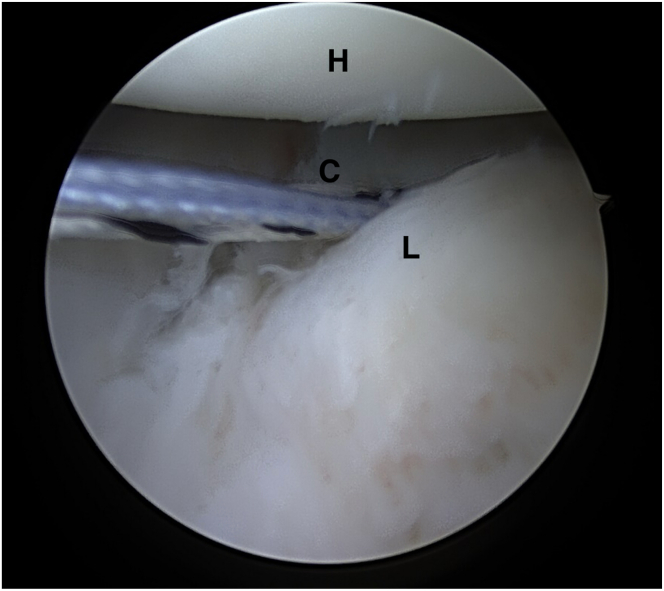
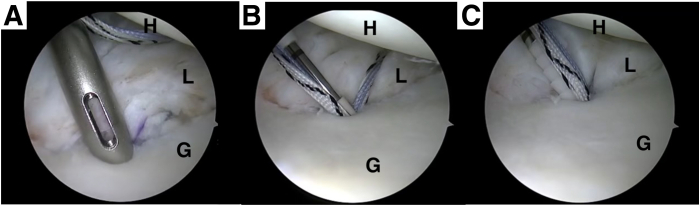
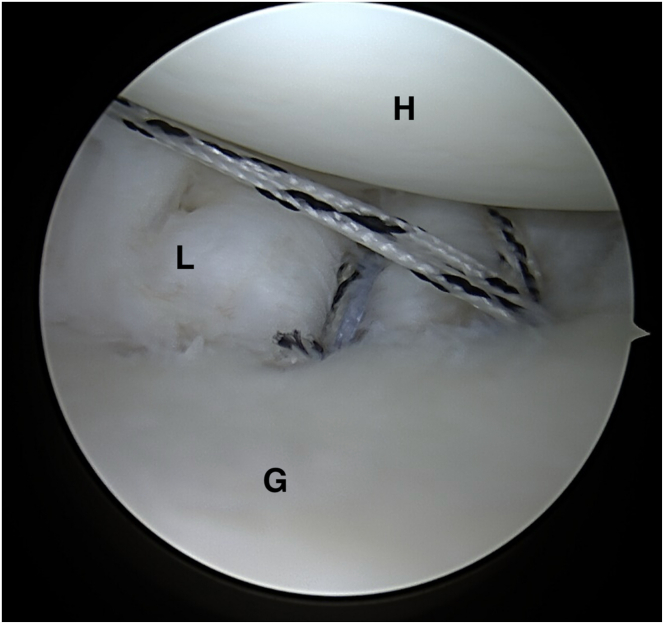
A treatment gap exists in the treatment of shoulder instability with subcritical bone loss. In this population, standard arthroscopic labral repairs have been associated with high failure rates. Bone block procedures are associated with low rates of recurrent instability but are associated with a high complication rate and subsequent long-term degenerative changes, making its use less than optimal in subcritical bone loss. We describe the arthroscopic "labral scaffold" technique using dermal allograft with labral reconstruction to address subcritical glenoid bone loss. This technique utilizes a dermal allograft to augment the bony deficit to better restore more native glenohumeral biomechanics with a double-row labral repair and subsequent labral reconstruction.
在治疗伴有亚临界骨量丢失的肩关节不稳时存在治疗差距。在这一人群中,标准的关节镜下盂唇修复术失败率较高。骨块手术复发性不稳发生率较低,但并发症发生率高且随后会出现长期退行性改变,因此在亚临界骨量丢失的情况下使用并不理想。我们描述了一种关节镜下“盂唇支架”技术,即使用同种异体真皮进行盂唇重建,以解决亚临界肩胛盂骨量丢失问题。该技术利用同种异体真皮增加骨缺损,通过双排盂唇修复及随后的盂唇重建更好地恢复更接近天然的盂肱生物力学。