Sun Yi-Min, Kuang Jun-Liang, Zhang Hui-Heng, Xia Xi-Xi, Wang Jie-Yi, Zheng Dan, Zhou Ke-Jun, Tang Ya-Jun, Zhao Ai-Hua, Jia Wei, Xie Guo-Xiang, Zheng Xiao-Jiao
Center for Translational Medicine, Shanghai Key Laboratory of Diabetes Mellitus, Shanghai Sixth People's Hospital Affiliated to Shanghai Jiao Tong University School of Medicine, Shanghai 200233, China.
Human Metabolomics Institute, Inc., Shenzhen 518109, Guangdong Province, China.
World J Diabetes. 2025 Jun 15;16(6):103616. doi: 10.4239/wjd.v16.i6.103616.
Traditional Chinese medicine offers many valuable remedies for maintaining blood glucose homeostasis in patients with type 2 diabetes mellitus. Bile powder (BP) is a powdered form of bile derived from pigs. It has been used historically in various medicinal applications. Currently, the therapeutic potential of BP in regulating glucose homeostasis remains unclear. Bile acids (BAs) are increasingly recognized for their role in glucose metabolism particularly through the modulation of glucagon-like peptide-1 (GLP-1).
To investigate BP effects on glucose homeostasis and elucidate its mechanistic role through GLP-1 and farnesoid X receptor (FXR) signaling.
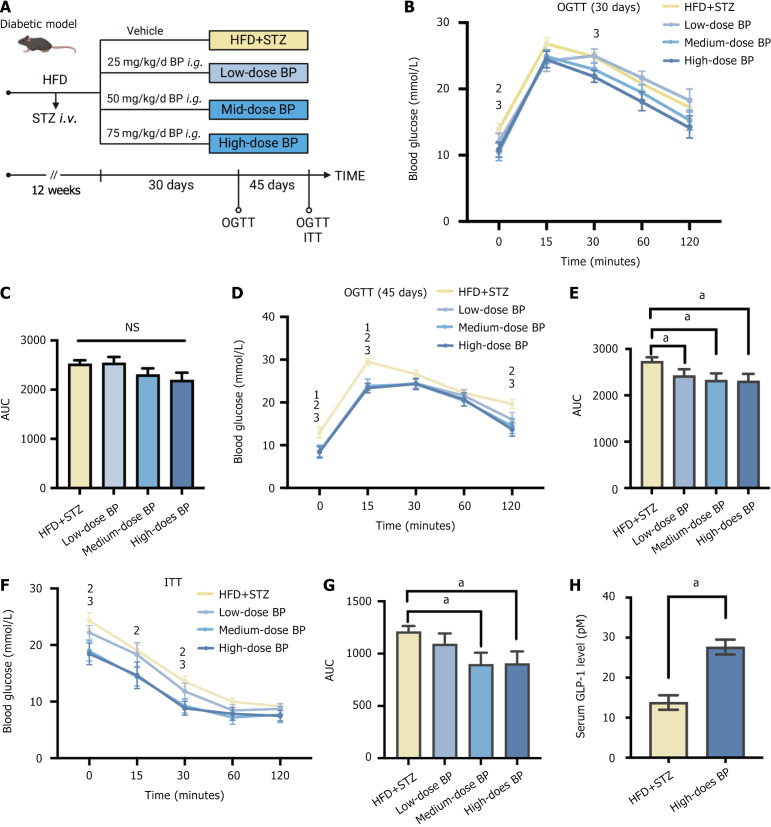
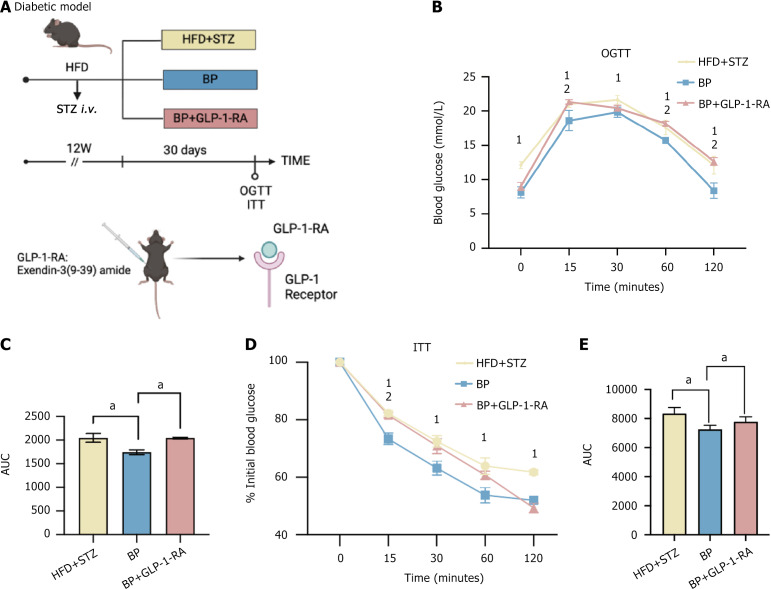
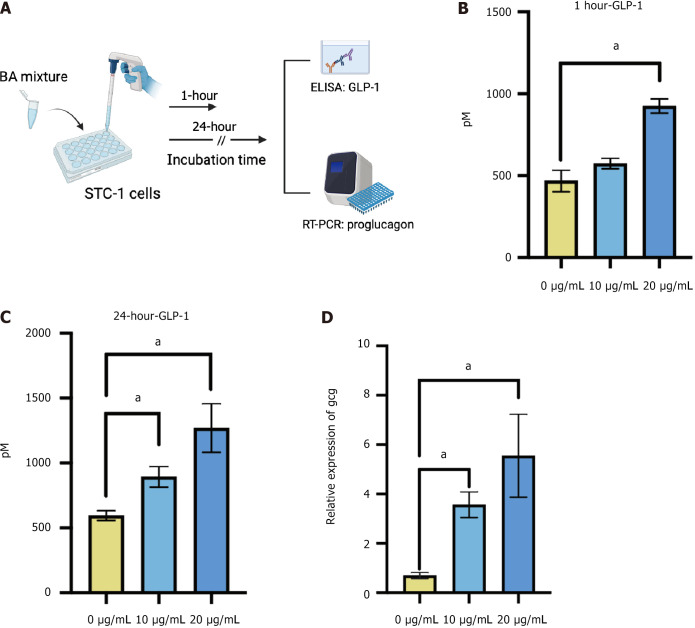
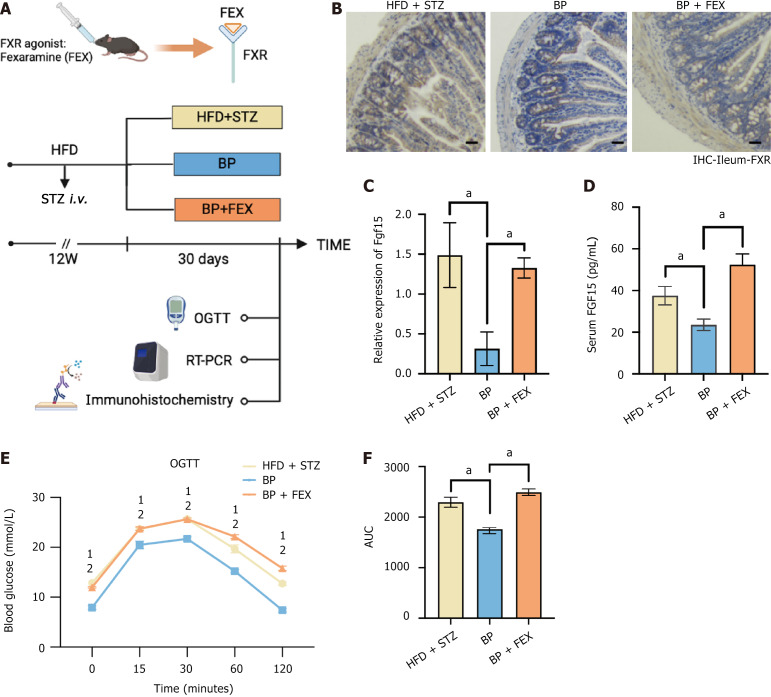
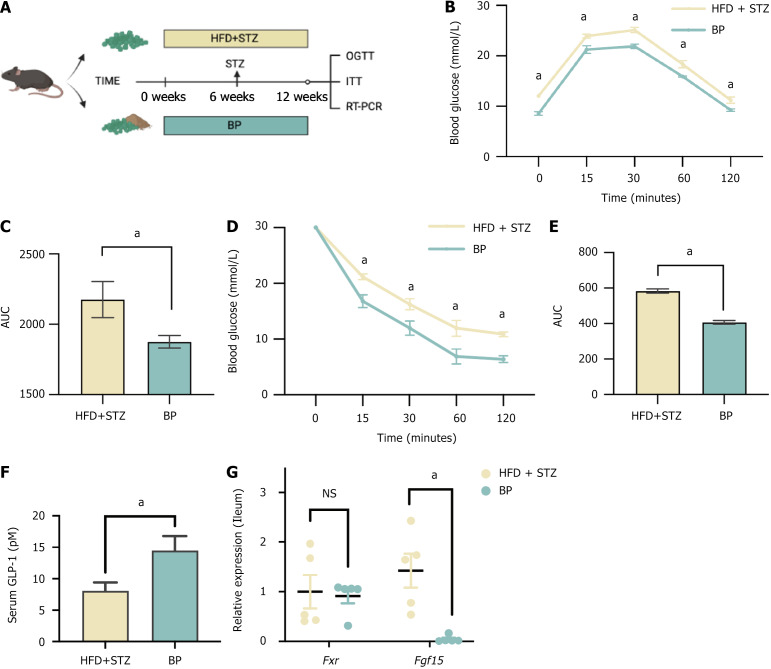
A diabetic mouse model was established using a high-fat diet and streptozotocin administration. Mice were treated with BP at doses of 25, 50, or 75 mg/kg/day for 45 days. Glucose homeostasis was assessed the oral glucose tolerance test and insulin tolerance test. Serum GLP-1 levels were measured by enzyme-linked immunosorbent assay. A GLP-1 receptor antagonist and an FXR agonist were used to clarify the underlying mechanisms. STC-1 murine enteroendocrine cells were treated with a BP-mimicking BA mixture to assess GLP-1 secretion and proglucagon gene expression.
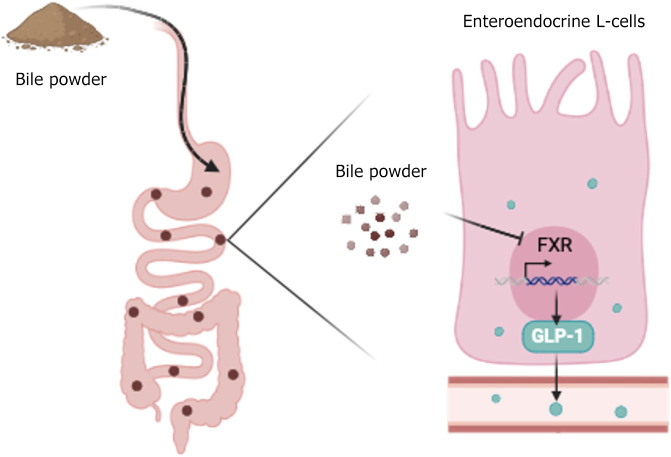
BP treatment significantly improved glucose homeostasis in the diabetic mouse model as indicated by lower blood glucose ( < 0.05) and improved insulin sensitivity. BP enhanced GLP-1 secretion ( < 0.05), which was an effect abolished by the GLP-1 receptor antagonist. This observation confirmed its dependence on GLP-1 signaling. In STC-1 cells, BP-derived BA mixtures stimulated GLP-1 secretion and upregulated proglucagon expression ( < 0.05). Mechanistically, BP inhibited FXR signaling as evidenced by the reversal of its effects upon fexaramine administration. In addition, long-term BP treatment suppressed FXR signaling, resulting in elevated GLP-1 levels and preventing glucose dysregulation.
BP improved glucose homeostasis by promoting GLP-1 secretion FXR inhibition, highlighting its potential as a therapeutic strategy for metabolic disorders.
传统中医为2型糖尿病患者维持血糖稳态提供了许多有价值的疗法。猪胆粉(BP)是从猪胆汁中提取的粉末状物质。它在历史上已被用于各种医学应用。目前,BP在调节葡萄糖稳态方面的治疗潜力仍不清楚。胆汁酸(BAs)因其在葡萄糖代谢中的作用,特别是通过调节胰高血糖素样肽-1(GLP-1),而越来越受到认可。
研究BP对葡萄糖稳态的影响,并通过GLP-1和法尼酯X受体(FXR)信号通路阐明其作用机制。
通过高脂饮食和注射链脲佐菌素建立糖尿病小鼠模型。小鼠分别以25、50或75mg/kg/天的剂量接受BP治疗45天。通过口服葡萄糖耐量试验和胰岛素耐量试验评估葡萄糖稳态。采用酶联免疫吸附测定法测量血清GLP-1水平。使用GLP-1受体拮抗剂和FXR激动剂来阐明潜在机制。用模拟BP的胆汁酸混合物处理STC-1小鼠肠内分泌细胞,以评估GLP-1分泌和胰高血糖素原基因表达。
BP治疗显著改善了糖尿病小鼠模型的葡萄糖稳态,表现为血糖降低(P<0.05)和胰岛素敏感性提高。BP增强了GLP-1分泌(P<0.05),而GLP-1受体拮抗剂消除了这种作用。这一观察结果证实了其对GLP-1信号通路的依赖性。在STC-1细胞中,BP衍生的胆汁酸混合物刺激了GLP-1分泌并上调了胰高血糖素原表达(P<0.05)。从机制上讲,BP抑制了FXR信号通路,给予非诺贝特后其作用逆转证明了这一点。此外,长期BP治疗抑制了FXR信号通路,导致GLP-1水平升高并防止葡萄糖失调。
BP通过促进GLP-1分泌和抑制FXR改善葡萄糖稳态,突出了其作为代谢紊乱治疗策略的潜力。