Laurent Pierre, Renou Marianne, Esper Najeh El, Choukroun Gabriel, Pommerolle Pierre, Laburthe Sébastien, Caillard Pauline
Department of Nephrology, Dialysis, and Transplantation, University of Picardie Jules Verne, Amiens University Hospital, Amiens, F-80054, France.
Mécanismes Physiopathologiques et Conséquences des Calcifications Cardiovasculaires (MP3CV) laboratory, Centre de Recherche en Santé (CURS), Amiens, F-80054, France.
BMC Nephrol. 2025 Jun 23;26(1):290. doi: 10.1186/s12882-025-04264-3.
Chronic kidney disease represents an immunocompromising condition and a cause of a lower vaccine efficacy, even in patients undergoing maintenance dialysis. Recent SARS-CoV-2 outbreaks have prompted clinicians to better understand the underlying mechanisms and establish more suitable vaccination schedules.
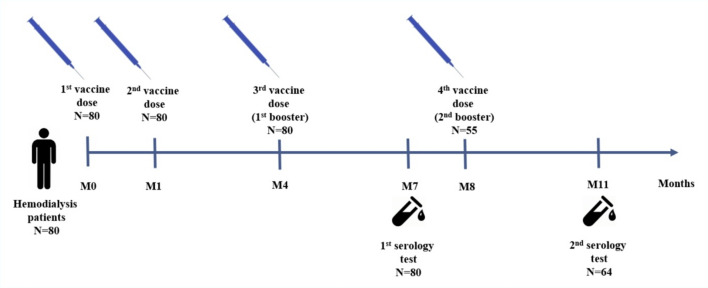
In a single-center, retrospective, observational study of patients undergoing maintenance dialysis in France, we studied the factors associated with the intensity of the humoral response to a SARS-CoV-2 vaccine in this population, including specific dialysis-related variables.
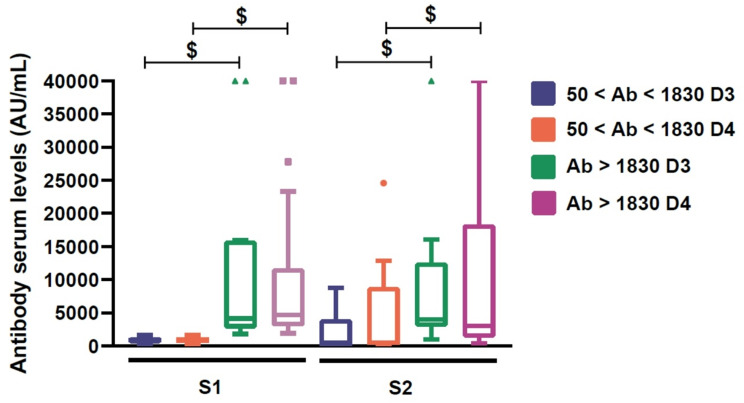
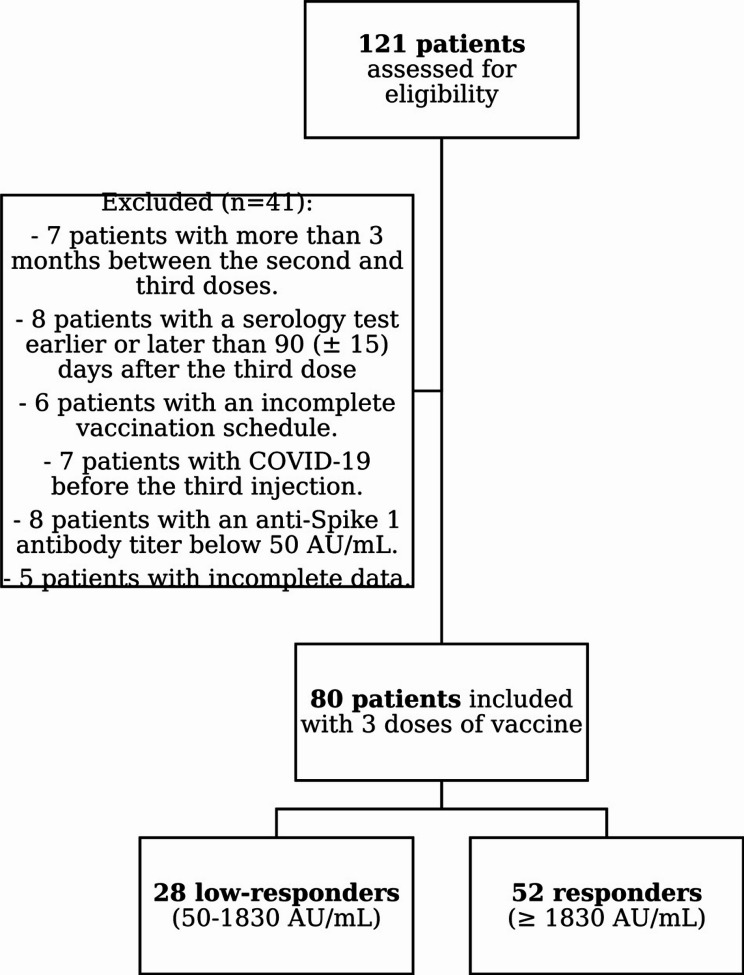
After having received three doses of SARS-CoV-2 mRNA vaccine, a cohort of 80 patients was divided into low-responders (28 patients with an anti-SARS-CoV-2 antibody level of 50-1830 AU/mL) and responders (52 patients with an antibody level > 1830 AU/mL). We found that chronic heart failure (p < 0.00001), higher performance status (p = 0.004), hypoalbuminemia (p < 0.001), lymphopenia (p = 0.003), Rhesus status positivity (p = 0.02), and absence of response to a hepatitis B virus vaccine (p = 0.02) were associated with a poor response to a third dose of SARS-CoV-2 vaccine. In contrast, none of the dialysis-related variables were associated with the vaccine response. In multivariate logistic regression, chronic heart failure (p < 0.0001) and hypoalbuminemia (p = 0.0004) remained associated with a lower humoral response to SARS-CoV-2 vaccine.
Our results showed that chronic heart failure and hypoalbuminemia were factors associated with a poor humoral response after three doses of SARS-CoV-2 vaccine. However, we found no association between specific dialysis-related variables and the anti-SARS-CoV-2 antibody titer.
慢性肾脏病是一种免疫功能低下的疾病,也是疫苗效力降低的一个原因,即使在接受维持性透析的患者中也是如此。近期严重急性呼吸综合征冠状病毒2(SARS-CoV-2)的爆发促使临床医生更好地了解其潜在机制,并制定更合适的疫苗接种计划。
在法国一项针对接受维持性透析患者的单中心回顾性观察研究中,我们研究了该人群中与SARS-CoV-2疫苗体液反应强度相关的因素,包括特定的透析相关变量。
在接种三剂SARS-CoV-2信使核糖核酸疫苗后,80名患者被分为低反应者(28名患者的抗SARS-CoV-2抗体水平为50-1830 AU/mL)和反应者(52名患者的抗体水平>1830 AU/mL)。我们发现,慢性心力衰竭(p<0.00001)、较高的体能状态(p=0.004)、低白蛋白血症(p<0.001)、淋巴细胞减少(p=0.003)、恒河猴血型阳性(p=0.02)以及对乙型肝炎病毒疫苗无反应(p=0.02)与第三剂SARS-CoV-2疫苗反应不佳相关。相比之下,没有任何透析相关变量与疫苗反应相关。在多因素逻辑回归中,慢性心力衰竭(p<0.0001)和低白蛋白血症(p=0.0004)仍然与对SARS-CoV-2疫苗的体液反应较低相关。
我们的结果表明,慢性心力衰竭和低白蛋白血症是三剂SARS-CoV-2疫苗后体液反应不佳的相关因素。然而,我们未发现特定透析相关变量与抗SARS-CoV-2抗体滴度之间存在关联。