Herman Marc L, Geanes Eric S, McLennan Rebecca, Greening Gage J, Mwitanti Heather, Bradley Todd
Genomic Medicine Center, Children's Mercy Research Institute, Kansas City, MO, United States.
University of Missouri-Kansas City School of Medicine, Kansas City, MO, United States.
Immunohorizons. 2025 May 30;9(7). doi: 10.1093/immhor/vlaf025.
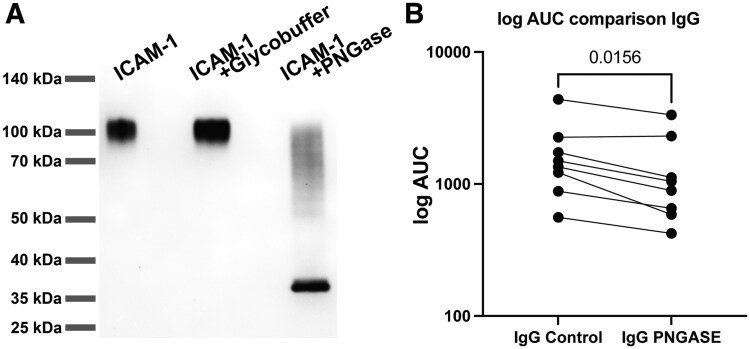
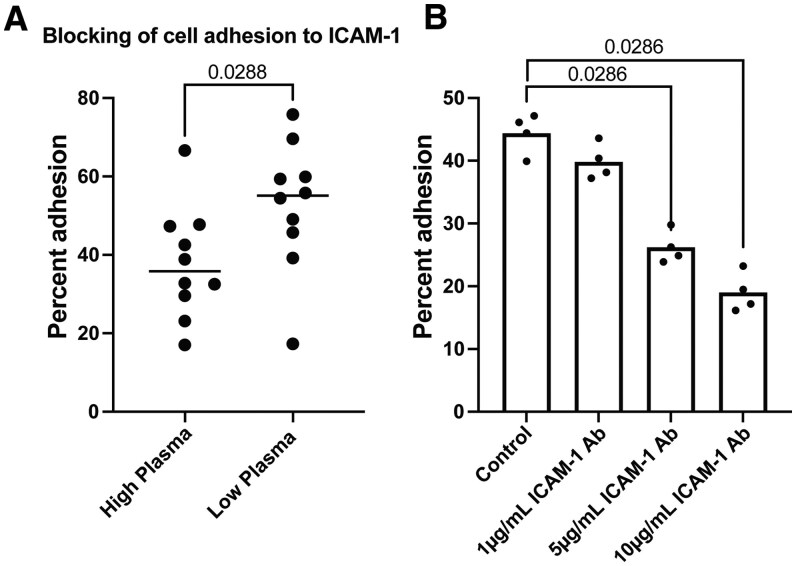
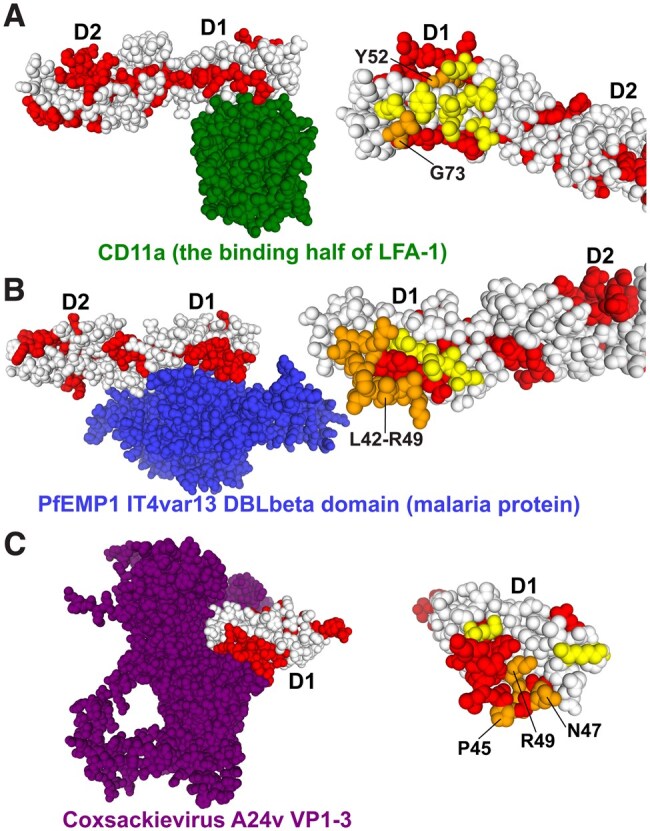
Intracellular adhesion molecule 1 (ICAM-1) is a cell surface glycoprotein that regulates cell-cell interactions, signaling, and immune processes. ICAM-1 expression has been shown to be elevated in many types of infections and inflammatory diseases. Strategies to block ICAM-1 function, including monoclonal anti-ICAM-1 antibodies, have been successful in treating the effects of chronic respiratory, autoimmune, and cardiovascular diseases. Naturally occurring autoantibodies targeting cytokines, endothelial cells, and other host receptors have been identified, and have been found to play a role in immunoregulation in health and disease. In this study, we determined the presence and levels of ICAM-1 autoantibodies across different age groups and disease states. We found that ICAM-1 autoantibody levels increased with age and were lower in individuals with various inflammatory states, suggesting a dynamic role in immune regulation. Using peptide microarrays, we identified high-resolution epitopes targeted by ICAM-1 autoantibodies that overlap with critical functional ICAM-1 binding sites. Finally, we determined that ICAM-1 autoantibodies were enriched for the IgG2 subclass that is critical for the response to bacterial antigens and chronic inflammation. This could indicate that molecular mimicry of bacterial antigens or underlying immune dysregulation could trigger the generation of anti-ICAM-1 antibodies. Understanding the functional implications of ICAM-1 autoantibodies could provide new insights into their contribution to immune homeostasis and their potential impact on inflammatory and autoimmune conditions.
细胞间黏附分子1(ICAM-1)是一种细胞表面糖蛋白,可调节细胞间相互作用、信号传导和免疫过程。ICAM-1的表达在多种感染和炎症性疾病中均有升高。阻断ICAM-1功能的策略,包括单克隆抗ICAM-1抗体,已成功用于治疗慢性呼吸道疾病、自身免疫性疾病和心血管疾病的影响。已鉴定出针对细胞因子、内皮细胞和其他宿主受体的天然自身抗体,并发现它们在健康和疾病的免疫调节中发挥作用。在本研究中,我们测定了不同年龄组和疾病状态下ICAM-1自身抗体的存在情况和水平。我们发现,ICAM-1自身抗体水平随年龄增长而升高,在各种炎症状态的个体中较低,提示其在免疫调节中具有动态作用。使用肽微阵列,我们鉴定了ICAM-1自身抗体靶向的高分辨率表位,这些表位与ICAM-1的关键功能结合位点重叠。最后,我们确定ICAM-1自身抗体富含IgG2亚类,该亚类对细菌抗原反应和慢性炎症至关重要。这可能表明细菌抗原的分子模拟或潜在的免疫失调可能触发抗ICAM-1抗体的产生。了解ICAM-1自身抗体的功能意义可为其对免疫稳态的贡献及其对炎症和自身免疫性疾病的潜在影响提供新的见解。