Hein Zaw Myo, Vishnumukkala Thirupathirao, Karikalan Barani, Alkatiri Aisyah, Hussan Farida, Jagadeesan Saravanan, Kamaruzzaman Mohd Amir, Che Ramli Muhammad Danial, Che Mohd Nassir Che Mohd Nasril, Gopalakrishna Prarthana Kalerammana
Department of Basic Medical Sciences, College of Medicine, Ajman University, Ajman P.O. Box 346, United Arab Emirates.
Anatomy Discipline, Human Biology Department, School of Medicine, IMU University, Bukit Jalil, Kuala Lumpur 57000, Malaysia.
Cells. 2025 Jun 16;14(12):911. doi: 10.3390/cells14120911.
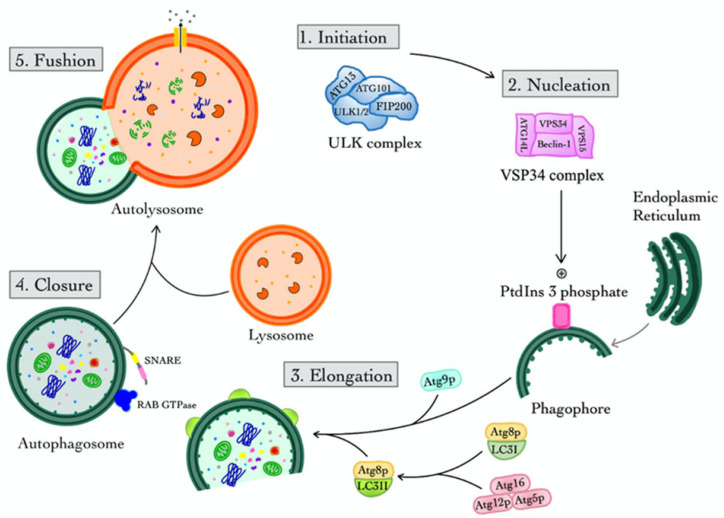
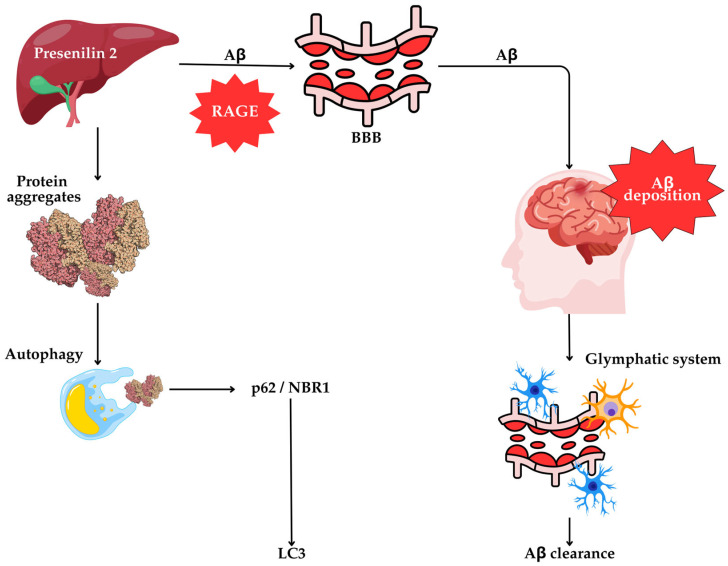
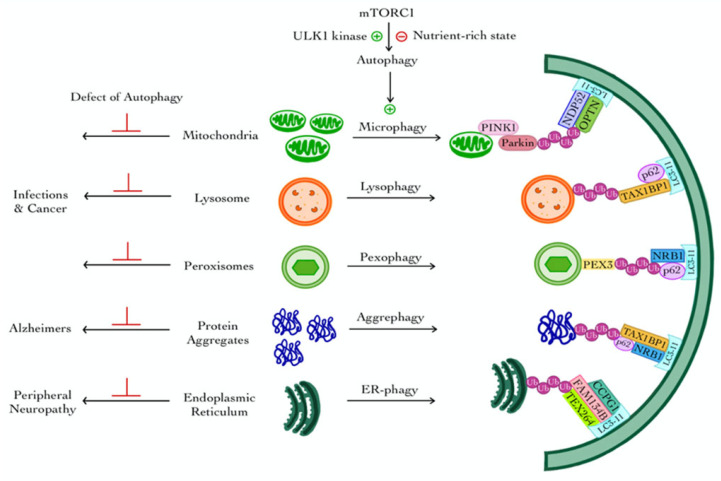
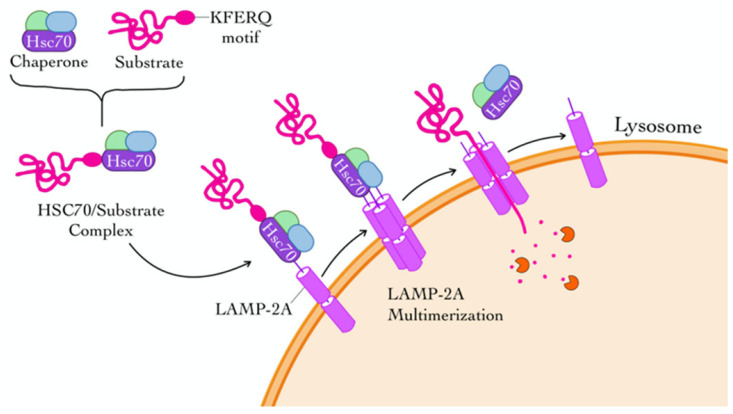
Alzheimer's disease (AD) is a progressive neurodegenerative disorder marked by neuronal loss, cognitive decline, and pathological hallmarks such as amyloid-beta (Aβ) plaques and tau neurofibrillary tangles. Recent evidence highlights autophagy as a pivotal mechanism in cellular homeostasis, mediating the clearance of misfolded proteins and damaged organelles. However, impaired autophagy contributes significantly to AD pathogenesis by disrupting proteostasis, exacerbating neuroinflammation, and promoting synaptic dysfunction. This review aims to scrutinize the intricate relationship between autophagy dysfunction and AD progression, explaining key pathways including macroautophagy, chaperone-mediated autophagy (CMA), and selective autophagy processes such as mitophagy and aggrephagy. This further extends the discussion beyond the central nervous system, evaluating the role of hepatic autophagy in Aβ clearance and systemic metabolic regulation. An understanding of autophagy's involvement in AD pathology via various mechanisms could give rise to a novel therapeutic strategy targeting autophagic modulation to mitigate disease progression in the future.
阿尔茨海默病(AD)是一种进行性神经退行性疾病,其特征为神经元丢失、认知衰退以及诸如β-淀粉样蛋白(Aβ)斑块和tau神经原纤维缠结等病理特征。最近的证据表明自噬是细胞稳态中的关键机制,介导错误折叠蛋白和受损细胞器的清除。然而,自噬功能受损通过破坏蛋白质稳态、加剧神经炎症和促进突触功能障碍,对AD发病机制有显著影响。本综述旨在审视自噬功能障碍与AD进展之间的复杂关系,解释包括巨自噬、伴侣介导的自噬(CMA)以及诸如线粒体自噬和聚集体自噬等选择性自噬过程在内的关键途径。这进一步将讨论扩展到中枢神经系统之外,评估肝脏自噬在Aβ清除和全身代谢调节中的作用。通过各种机制了解自噬在AD病理中的参与情况,可能会产生一种针对自噬调节的新型治疗策略,以减轻未来的疾病进展。