Ahmed Waqar, Gong Hongyang, Xiang Xiaoxiao, Chen Runze, Xu Yumeng, Shi Wenxuan, Li Binzhe, Yin Junhui, Chen Qing
State Key Lab of Biocontrol, Guangdong Provincial Key Laboratory of Plant Stress Biology, School of Agriculture and Biotechnology, Shenzhen Campus of Sun Yat-sen University, Shenzhen 518107, China.
College of Resources and Environmental Sciences, China Agricultural University, Beijing 100193, China.
Biology (Basel). 2025 May 28;14(6):621. doi: 10.3390/biology14060621.
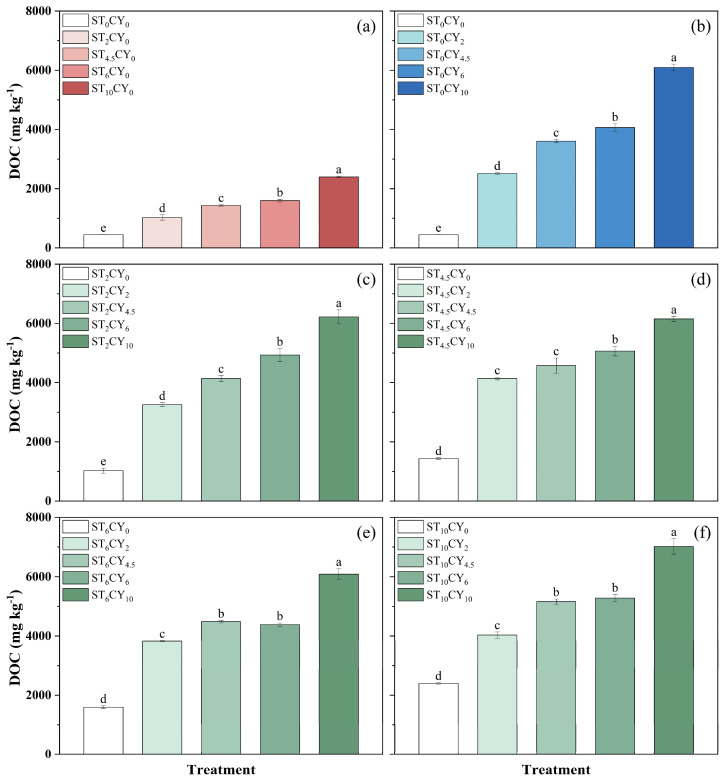
Nitrous oxide (NO) is a potent greenhouse gas with intensive emissions from acidic soil. This study explored the impact of the disruption of the microbial balance from microbial inhibitors (streptomycin and cycloheximide) on soil's NO emission and nitrogen (N) dynamics. Under all the conditions examined, biotic processes accounted for 96-98% of total NO emissions. High concentrations of streptomycin (6 and 10 mg g) reduced NO emissions from 2.24 μg kg h to 1.93 μg kg h and 2.12 μg kg h, respectively, whereas lower concentrations (2 and 4.5 mg g) increased emissions from 2.24 μg kg h to 2.95 μg kg h and 3.27 μg kg h, respectively. Lower cycloheximide (2 and 4.5 mg g) significantly enhanced NO emissions, reaching 9.15 μg kg h and 5.68 μg kg h, respectively, whereas higher dosages (6 mg g and 10 mg g) inhibited NO emissions, reducing them to 5.55 μg kg h and 4.84 μg kg h, respectively. Carbon dioxide (CO) emissions generally decreased with increasing inhibitor dosages but significantly increased at 2 mg g and 4.5 mg g streptomycin. The inhibitors also altered soil N and carbon (C) dynamics, increasing ammonium (NH-N), dissolved organic nitrogen (DON), and dissolved organic carbon (DOC) levels. Pearson correlation analysis indicated that NO emission was negatively correlated with cycloheximide dosage (R = -0.68, < 0.001), NH-N (R = -0.31, < 0.001) and DOC content (R = -0.57, < 0.05). These findings highlight the consequences of microbial disruption on NO emission and the complex microbial interactions in acidic soils. High concentrations of microbial inhibitors effectively reduce NO emissions by suppressing key microbial groups in nitrification and denitrification. Conversely, lower concentrations may prompt compensatory responses from surviving microorganisms, resulting in increased NO production. Future research should focus on sustainable management strategies to mitigate NO emissions while preserving the soil's microbial community.
一氧化二氮(N₂O)是一种强效温室气体,酸性土壤会大量排放该气体。本研究探讨了微生物抑制剂(链霉素和放线菌酮)破坏微生物平衡对土壤N₂O排放和氮(N)动态的影响。在所有检测条件下,生物过程占总N₂O排放量的96 - 98%。高浓度链霉素(6和10 mg/g)分别将N₂O排放量从2.24 μg kg⁻¹ h⁻¹降至1.93 μg kg⁻¹ h⁻¹和2.12 μg kg⁻¹ h⁻¹,而较低浓度(2和4.5 mg/g)则分别将排放量从2.24 μg kg⁻¹ h⁻¹增至2.95 μg kg⁻¹ h⁻¹和3.27 μg kg⁻¹ h⁻¹。较低浓度的放线菌酮(2和4.5 mg/g)显著增强了N₂O排放,分别达到9.15 μg kg⁻¹ h⁻¹和5.68 μg kg⁻¹ h⁻¹,而较高剂量(6 mg/g和10 mg/g)则抑制了N₂O排放,分别降至5.55 μg kg⁻¹ h⁻¹和4.84 μg kg⁻¹ h⁻¹。二氧化碳(CO₂)排放通常随抑制剂剂量增加而降低,但在链霉素浓度为2 mg/g和4.5 mg/g时显著增加。抑制剂还改变了土壤N和碳(C)动态,增加了铵态氮(NH₄⁺-N)、溶解有机氮(DON)和溶解有机碳(DOC)水平。Pearson相关性分析表明,N₂O排放与放线菌酮剂量(R = -0.68,P < 0.001)、NH₄⁺-N(R = -0.31,P < 0.001)和DOC含量(R = -0.57,P < 0.05)呈负相关。这些发现突出了微生物破坏对N₂O排放的影响以及酸性土壤中复杂的微生物相互作用。高浓度微生物抑制剂通过抑制硝化和反硝化过程中的关键微生物群体有效减少N₂O排放。相反,较低浓度可能促使存活微生物产生补偿反应,导致N₂O产量增加。未来研究应聚焦于可持续管理策略,以在保护土壤微生物群落的同时减少N₂O排放。