Hermosaningtyas Anastasia Aliesa, Totoń Ewa, Budzianowska Anna, Lisiak Natalia, Romaniuk-Drapała Aleksandra, Kruszka Dariusz, Rewers Monika, Kikowska Małgorzata
Doctoral School, Poznan University of Medical Sciences, 70 Bukowska St., 60-812 Poznan, Poland.
Laboratory of Pharmaceutical Biology and Biotechnology, Department and Division of Practical Cosmetology and Skin Diseases Prophylaxis, Poznan University of Medical Sciences, Collegium Pharmaceuticum, 3 Rokietnicka St., 60-806 Poznan, Poland.
Biomedicines. 2025 Jun 4;13(6):1382. doi: 10.3390/biomedicines13061382.
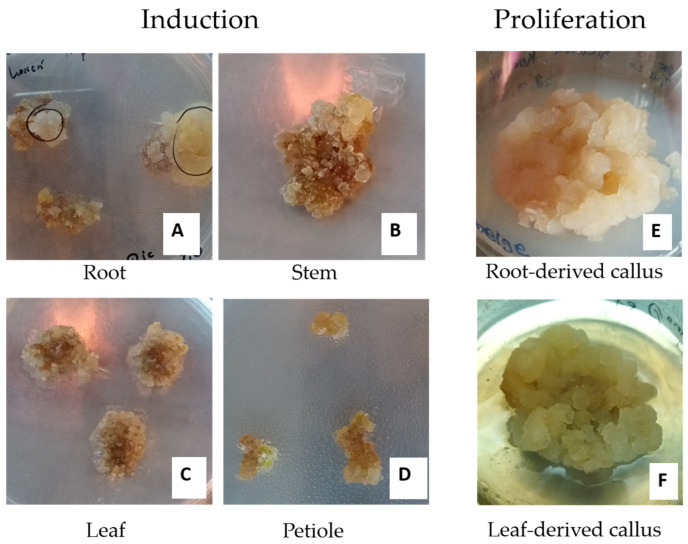
Melanoma is a malignant tumor of melanocytes with an increasing incidence worldwide. Plant-based products are rich in bioactive compounds, offering low toxicity and accessible alternatives for melanoma treatment. A biotechnological approach to obtaining plant-derived produce ensures continuous and high-yield production of medicinally valuable biomass. This study aimed to induce and optimize the growth of homogenous callus cultures of (L.) Dumort., consequently established a cell suspension culture with a high biomass growth rate, analyzed the phytochemical compositions, and assessed the cytotoxic activity against melanoma cells. Callus cultures were induced under controlled in vitro conditions on Murashige and Skoog (MS) media supplemented with 2.0 mg L Dicamba and 2.0 mg L 2,4-Dichlorophenoxyacetic acid. The selected callus lines exhibited a high growth index (351.71% ± 27.77) and showed a homogeneous morphology, beige colour, and had friable and watery characteristics. A combination of auxin and cytokinin was found to enhance biomass production significantly. Phytochemical investigations putatively annotated major compounds, including benzoic acid derivatives, phenolic glycosides, phenylpropanoic acids, hydroxycinnamic acid derivatives, and tyrosol derivatives. Methanolic extract (KE-Ex) and 40% methanolic fraction (KE-40Fr) were prepared and tested for cytotoxicity against human fibroblast (MRC-5) and melanoma (MeWo) cell lines using direct cell counting and MTT assay. The crude extract exhibited the strongest cytotoxicity effect on MeWo cells, with IC values of 125 ± 8 µg mL after 48 h and 117 ± 7 µg mL after 72 h of treatment. The extract demonstrated a time- and dose-dependent cytotoxic effect, making it a potential candidate for melanoma treatment.
黑色素瘤是一种黑素细胞恶性肿瘤,在全球范围内发病率呈上升趋势。植物源产品富含生物活性化合物,为黑色素瘤治疗提供了低毒性且易于获取的替代方案。一种获取植物衍生产品的生物技术方法可确保持续高产药用价值生物量。本研究旨在诱导并优化(L.)杜莫尔同质愈伤组织培养物的生长,进而建立具有高生物量生长速率的细胞悬浮培养物,分析其植物化学成分,并评估对黑色素瘤细胞的细胞毒活性。在添加2.0毫克/升麦草畏和2.0毫克/升2,4 - 二氯苯氧乙酸的Murashige和Skoog(MS)培养基上,于受控体外条件下诱导愈伤组织培养物。所选愈伤组织系表现出高生长指数(351.71% ± 27.77),形态均匀,呈米色,具有易碎且似水的特征。发现生长素和细胞分裂素的组合可显著提高生物量产量。植物化学研究推测性注释了主要化合物,包括苯甲酸衍生物、酚苷、苯丙酸、羟基肉桂酸衍生物和酪醇衍生物。制备了甲醇提取物(KE - Ex)和40%甲醇馏分(KE - 40Fr),并使用直接细胞计数和MTT法测试其对人成纤维细胞(MRC - 5)和黑色素瘤(MeWo)细胞系的细胞毒性。粗提取物对MeWo细胞表现出最强的细胞毒作用,处理48小时后IC值为125 ± 8微克/毫升,处理72小时后为117 ± 7微克/毫升。该提取物表现出时间和剂量依赖性细胞毒作用,使其成为黑色素瘤治疗的潜在候选物。