Eroshchenko Nikolay, Danilova Elena, Lomonosova Anastasiia, Antonik Alexey, Lebedeva Svetlana, Gognieva Daria, Shchekochikhin Dmitry, Demura Tatiana, Krot Marina, Gogiberidze Nana, Syrkin Abram, Kopylov Philipp
Institute of Molecular Theranostics, Biomedical Science and Technology Park, I.M. Sechenov First Moscow State Medical University (Sechenov University), 119048 Moscow, Russia.
Department of Analytic Chemistry, Faculty of Chemistry, Lomonosov Moscow State University, 119991 Moscow, Russia.
Biomedicines. 2025 Jun 4;13(6):1383. doi: 10.3390/biomedicines13061383.
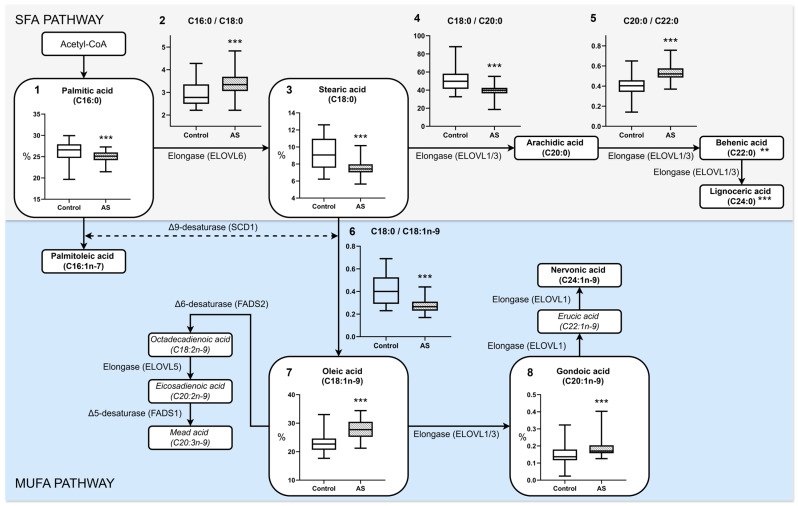
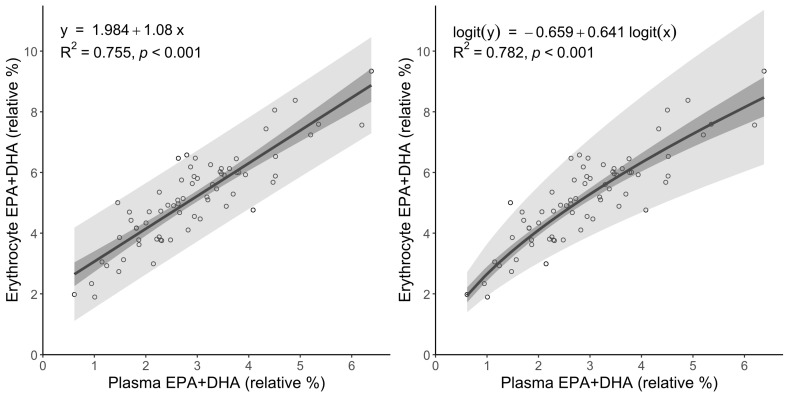
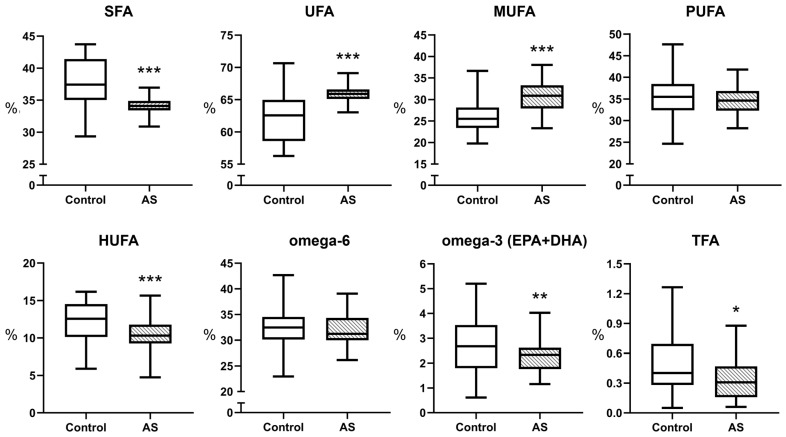
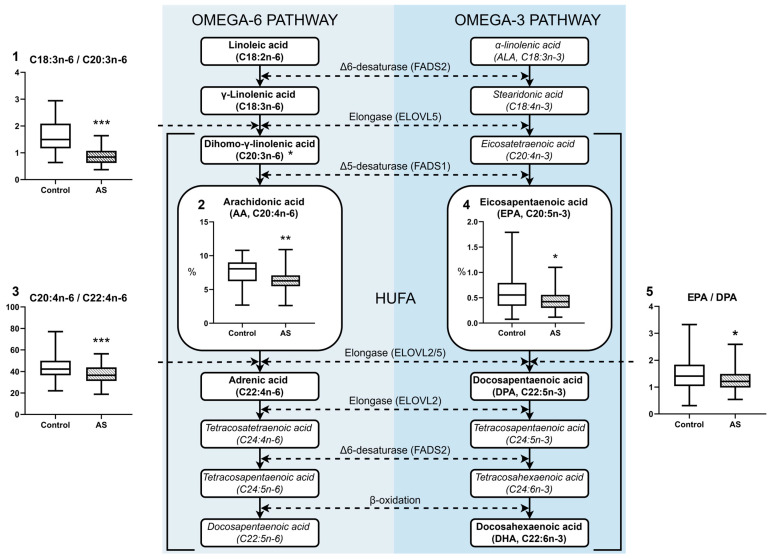
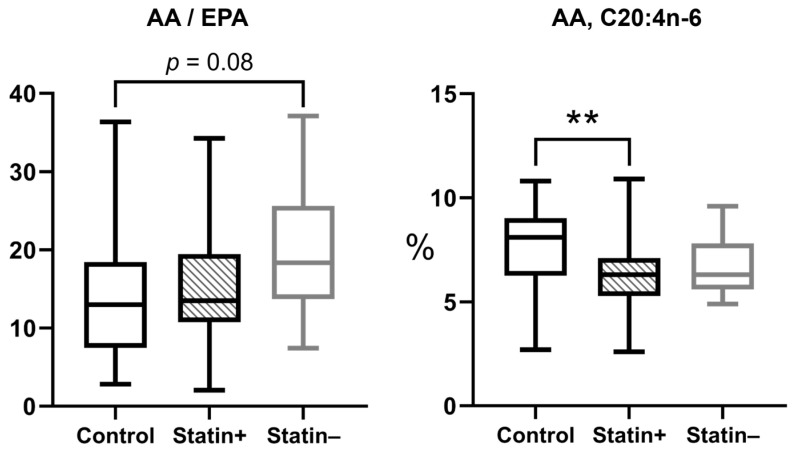
Omega-3 highly unsaturated fatty acids (HUFAs), particularly EPA and DHA, have anti-inflammatory and lipid-modulating properties for treating atherosclerosis. However, the relationship between plasma fatty acid profiles, omega-3 status, and statin efficacy in carotid atherosclerosis remains poorly defined. This study evaluates plasma and plaque fatty acid (FA) composition, explores their associations with plaque stability, and examines the relationship of omega-3 levels, lipid biomarkers (VLDL-C, LDL-C, HDL-C, total cholesterol, and triglycerides) with statin and β-blocker treatment. A mathematical model was developed to predict the erythrocyte omega-3 index from plasma. In this case-control study, plasma and carotid plaques of 52 patients undergoing carotid endarterectomy were analyzed. Plasma was compared with that of 50 healthy controls. FAs were quantified by LC-MS/MS. Plaques were histologically classified as stable or unstable. Atherosclerotic patients showed disturbed FA metabolism, including decreased plasma omega-3 EPA + DHA, SFAs and HUFAs, increased MUFAs, and impaired desaturase and elongase activity. Unstable plaques had higher MUFA and lower HUFA content compared with stable plaques. Significant correlations between plasma EPA + DHA and HDL-C and triglycerides were observed in statin-naïve patients, whereas statins appeared to attenuate these associations. Co-treatment with β-blockers had no significant effect. A validated logit-based model accurately predicted the erythrocyte omega-3 index from plasma (R = 0.782). Altered plasma and plaque FA profiles correlate with atherosclerosis's plaque instability and inflammatory lipid profiles. Statins significantly influence these associations, suggesting their complex interaction with lipid metabolism. Plasma measurements of omega-3 fatty acids in combination with predictive modelling may be beneficial for diagnostic and therapeutic monitoring in carotid atherosclerosis.
ω-3高度不饱和脂肪酸(HUFAs),尤其是二十碳五烯酸(EPA)和二十二碳六烯酸(DHA),具有抗炎和调节血脂的特性,可用于治疗动脉粥样硬化。然而,血浆脂肪酸谱、ω-3状态与他汀类药物治疗颈动脉粥样硬化疗效之间的关系仍不明确。本研究评估血浆和斑块脂肪酸(FA)组成,探讨它们与斑块稳定性的关联,并研究ω-