Petrescu Simona, Dumitru-Martoiu Maria-Melania, Panea Cristina Aura, Teunissen Charlotte E
Department of Neurology, Elias Emergency and University Hospital, 011461 Bucharest, Romania.
Department of Clinical Neurosciences, Carol Davila University of Medicine and Pharmacy, 050474 Bucharest, Romania.
Biomedicines. 2025 Jun 6;13(6):1394. doi: 10.3390/biomedicines13061394.
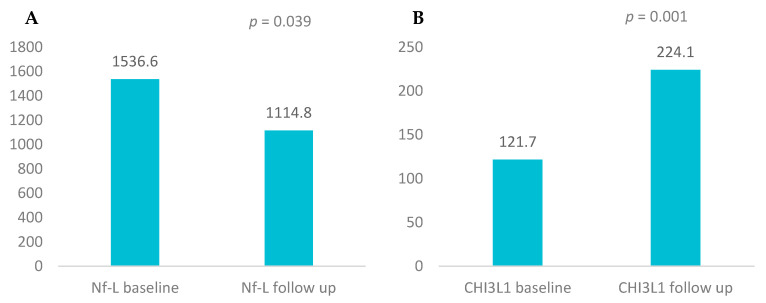
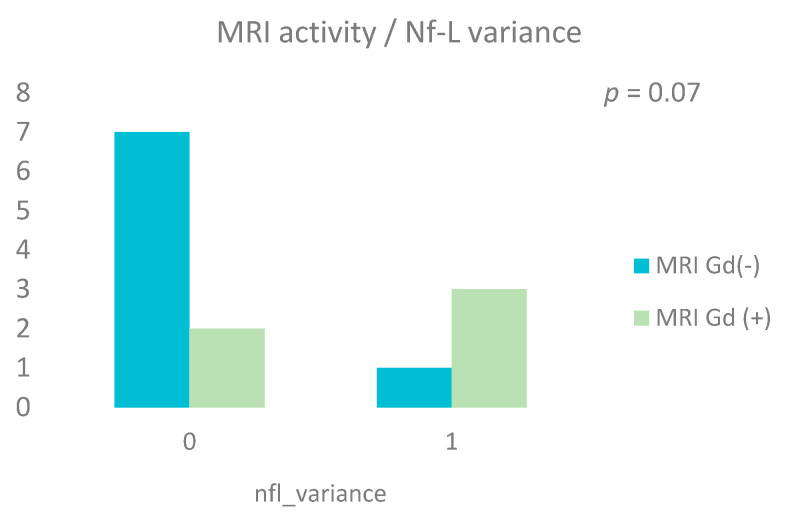
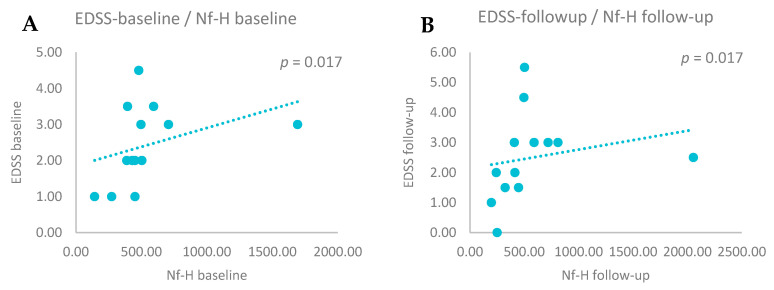
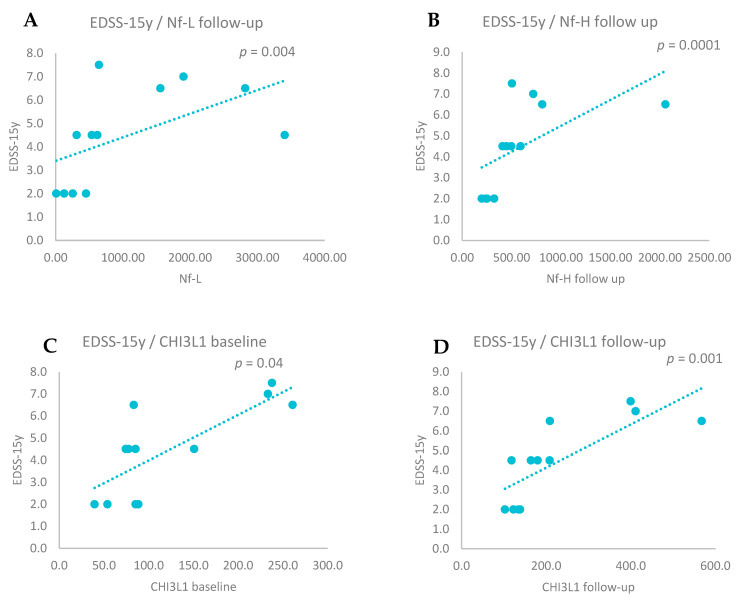
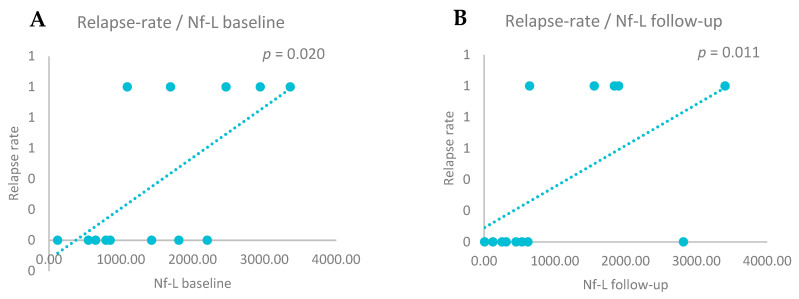
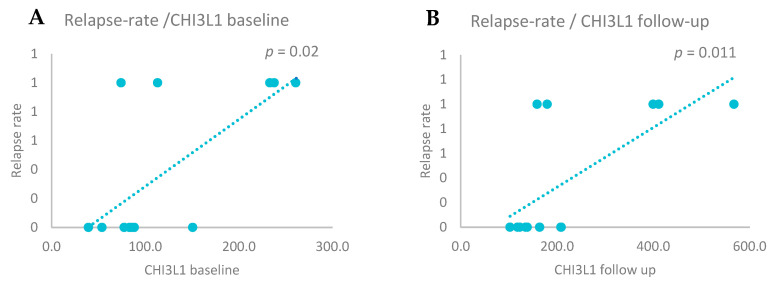
Neurofilament light chain (Nf-L), neurofilament heavy chain (Nf-H), and chitinase 3-like 1 (CHI3L1) are cerebrospinal fluid (CSF) biomarkers of neuroaxonal damage and inflammation in multiple sclerosis (MS). Their longitudinal response to disease-modifying therapies and association with clinical and radiological outcomes remain incompletely understood. The aim of this study is to evaluate the impact of interferon beta (IFN-β) therapy on CSF levels of Nf-L, Nf-H, and CHI3L1 in early relapsing-remitting MS (RRMS) and assess their association with long-term clinical outcomes and MRI activity. We conducted a prospective two-year observational study involving 14 treatment-naive RRMS patients who initiated IFN-β therapy. CSF levels of Nf-L, Nf-H, and CHI3L1 were measured at baseline and after two years. Clinical disability was assessed via the Expanded Disability Status Scale (EDSS) and by studying brain MRI activity. A 15-year clinical follow-up was performed for 12 patients. Nf-L levels significantly decreased after two years of IFN-β treatment ( = 0.039), while CHI3L1 levels significantly increased ( = 0.001). Nf-H levels remained stable. Nf-L and CHI3L1 levels at baseline and follow-up correlated with relapse rate and long-term EDSS. Nf-H levels correlated with EDSS scores but not with relapse or MRI activity. A trend toward a positive correlation between increasing Nf-L levels and MRI activity was observed ( = 0.07). CSF biomarkers demonstrate differential responses to IFN-β therapy in early RRMS. Nf-L emerges as a sensitive biomarker of treatment response and disease activity, while CHI3L1 may reflect ongoing tissue remodeling and inflammation. These findings support the utility of CSF biomarker monitoring for personalized treatment strategies in MS.
神经丝轻链(Nf-L)、神经丝重链(Nf-H)和几丁质酶3样蛋白1(CHI3L1)是多发性硬化症(MS)中神经轴突损伤和炎症的脑脊液(CSF)生物标志物。它们对疾病修饰疗法的纵向反应以及与临床和影像学结果的关联仍未完全明确。本研究的目的是评估干扰素β(IFN-β)疗法对早期复发缓解型MS(RRMS)患者脑脊液中Nf-L、Nf-H和CHI3L1水平的影响,并评估它们与长期临床结果和MRI活动的关联。我们进行了一项为期两年的前瞻性观察性研究,纳入了14例开始接受IFN-β治疗的未经治疗的RRMS患者。在基线和两年后测量脑脊液中Nf-L、Nf-H和CHI3L1的水平。通过扩展残疾状态量表(EDSS)和研究脑部MRI活动来评估临床残疾情况。对12例患者进行了15年的临床随访。IFN-β治疗两年后,Nf-L水平显著降低(P = 0.039),而CHI3L1水平显著升高(P = 0.001)。Nf-H水平保持稳定。基线和随访时的Nf-L和CHI3L1水平与复发率和长期EDSS相关。Nf-H水平与EDSS评分相关,但与复发或MRI活动无关。观察到Nf-L水平升高与MRI活动之间存在正相关趋势(P = 0.07)。脑脊液生物标志物在早期RRMS中对IFN-β疗法表现出不同的反应。Nf-L成为治疗反应和疾病活动的敏感生物标志物,而CHI3L1可能反映正在进行的组织重塑和炎症。这些发现支持脑脊液生物标志物监测在MS个性化治疗策略中的应用。