Mormile Ilaria, Nazzaro Gerardo, Filippelli Marco, Della Casa Francesca, Mormile Mauro, de Paulis Amato, Rossi Francesca Wanda
Department of Translational Medical Sciences, University of Naples Federico II, 80131 Naples, Italy.
Department of Clinical Medicine and Surgery, University of Naples Federico II, 80131 Naples, Italy.
Biomedicines. 2025 Jun 16;13(6):1485. doi: 10.3390/biomedicines13061485.
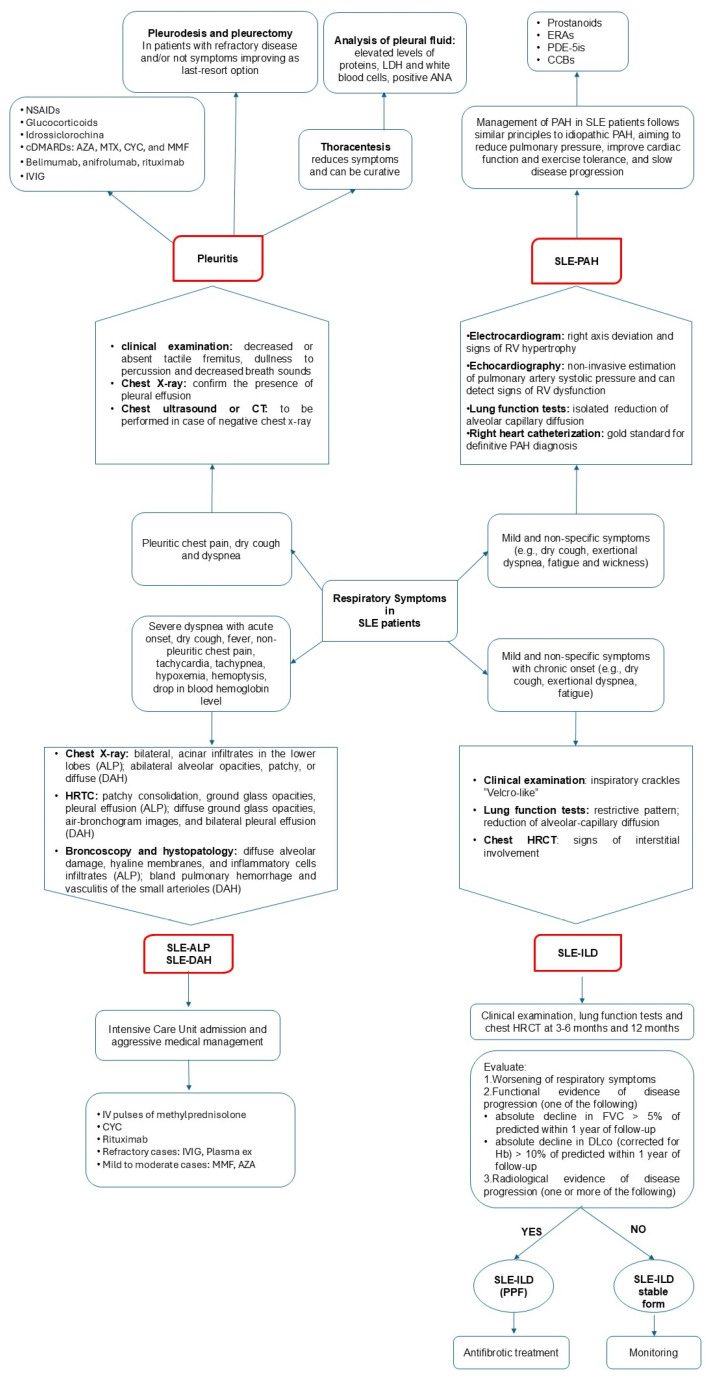
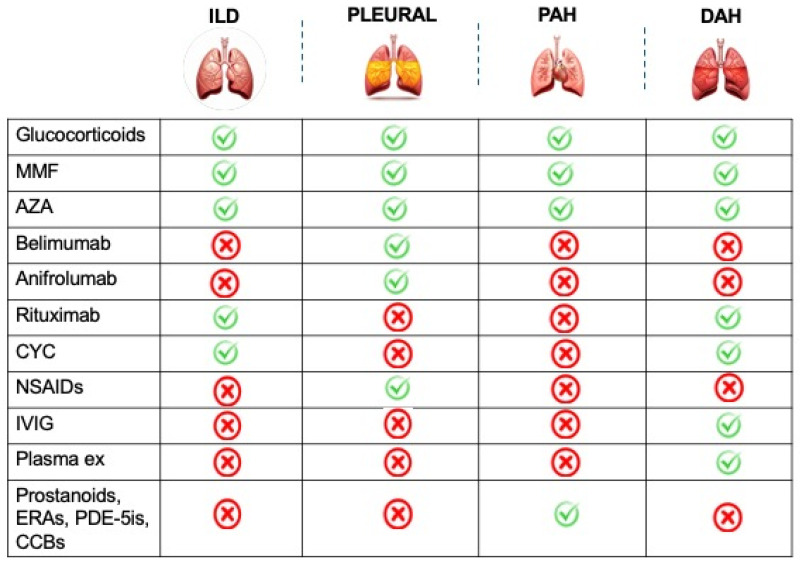
Systemic lupus erythematosus (SLE) is a pleiotropic disease that can present in numerous forms, ranging from mild mucocutaneous symptoms to severe manifestations affecting multiple organs. SLE has the potential to impact any segment of the respiratory system, exhibiting a range of severity levels throughout the different stages of the disease. Pulmonary manifestations in SLE patients can be classified as primary (i.e., directly related to SLE and to immune-mediated damage), secondary to other SLE manifestations (e.g., nephrotic syndrome, renal failure, congestive heart failure), and comorbidities (e.g., infections, cancers, overlapping primary respiratory diseases). Understanding and correctly managing lung involvement in SLE is crucial because pulmonary complications are common and can significantly impact morbidity and mortality in affected patients. Early recognition and appropriate treatment can prevent irreversible lung damage, improve quality of life, and reduce the risk of life-threatening complications. Treatment algorithms are based on the suppression of inflammation, with or without the need for dedicated, supportive care. According to disease severity, available treatments include nonsteroidal anti-inflammatory drugs, corticosteroids, immunosuppressants, and biological agents. In this review, we aim to summarize the current knowledge on lung involvement in SLE and then focus on the management and treatment approaches available for the different forms.
系统性红斑狼疮(SLE)是一种多系统疾病,可呈现多种形式,从轻微的黏膜皮肤症状到影响多个器官的严重表现不等。SLE有可能影响呼吸系统的任何部分,在疾病的不同阶段表现出一系列严重程度。SLE患者的肺部表现可分为原发性(即直接与SLE和免疫介导的损伤相关)、继发于其他SLE表现(如肾病综合征、肾衰竭、充血性心力衰竭)以及合并症(如感染、癌症、重叠的原发性呼吸道疾病)。了解并正确处理SLE患者的肺部受累情况至关重要,因为肺部并发症很常见,会显著影响受累患者的发病率和死亡率。早期识别和适当治疗可预防不可逆的肺损伤、提高生活质量并降低危及生命的并发症风险。治疗方案基于炎症抑制,可能需要也可能不需要专门的支持性护理。根据疾病严重程度,可用的治疗方法包括非甾体抗炎药、皮质类固醇、免疫抑制剂和生物制剂。在本综述中,我们旨在总结目前关于SLE肺部受累的知识,然后重点介绍针对不同形式的管理和治疗方法。