Krawczyk Beata, Wityk Paweł, Burzyńska Magdalena, Majchrzak Tomasz, Markuszewski Michał Jan
Department of Biotechnology and Microbiology, Faculty of Chemistry, Gdańsk University of Technology, 80-233 Gdańsk, Poland.
Department of Biopharmaceutics and Pharmacodynamics, Medical University of Gdańsk, 80-210 Gdańsk, Poland.
Int J Mol Sci. 2025 Jun 13;26(12):5681. doi: 10.3390/ijms26125681.
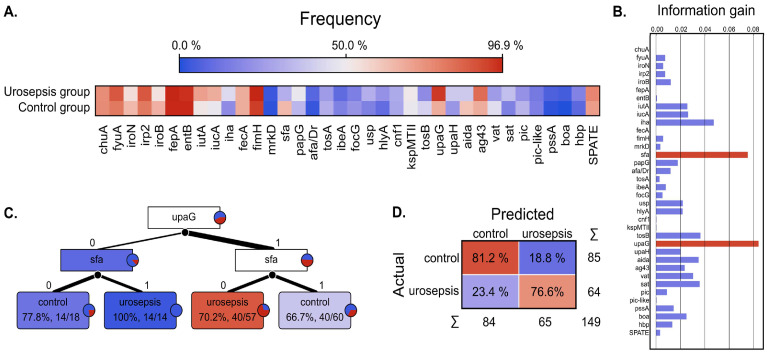
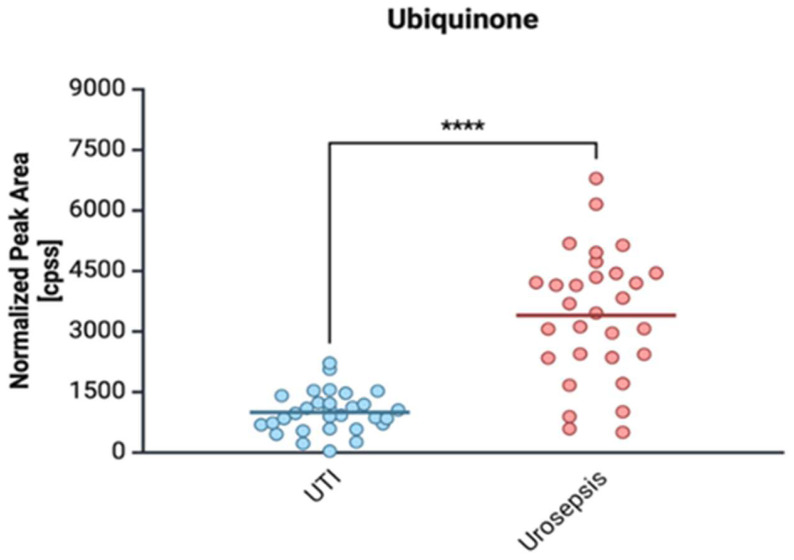
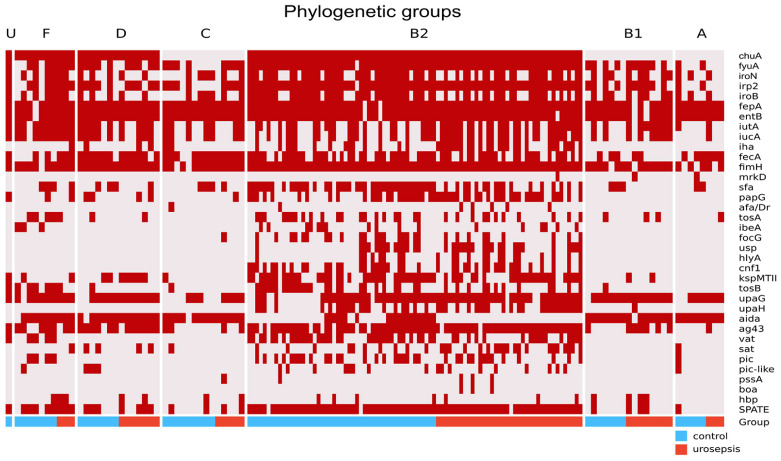
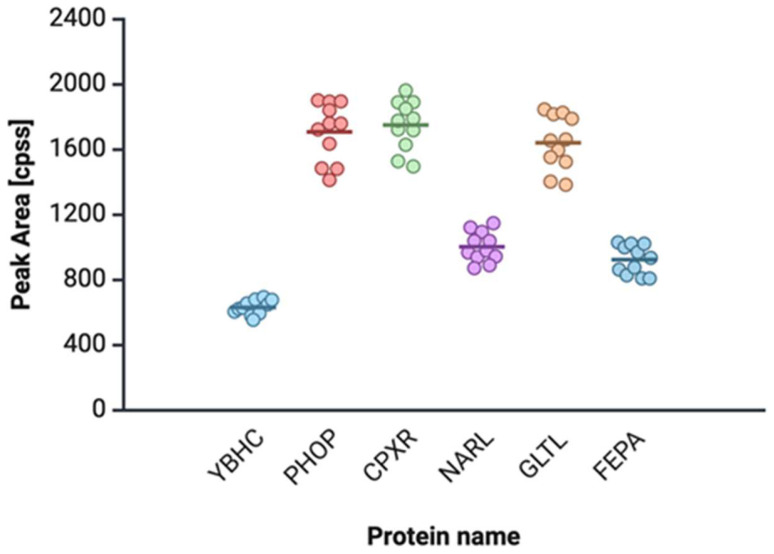
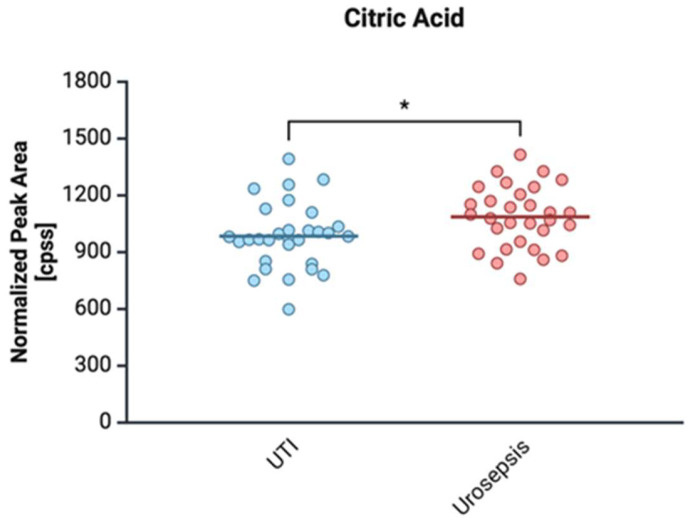
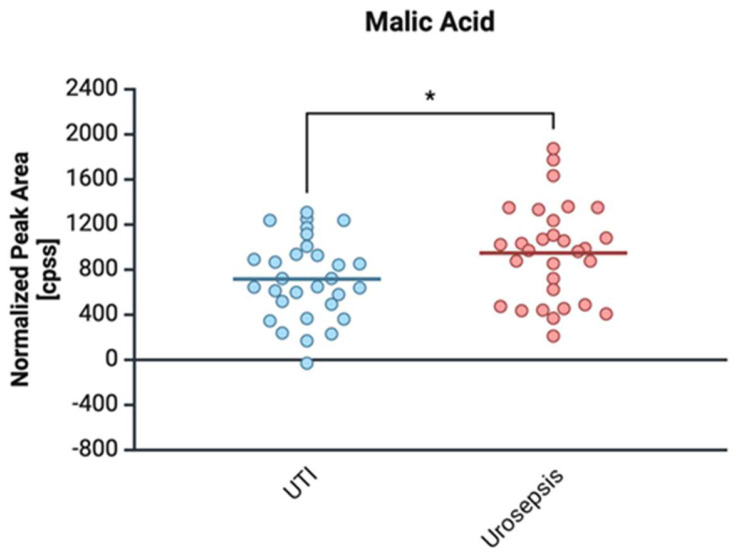
In the absence of fully effective therapies and preventive strategies against the development of urosepsis, a deeper understanding of the virulence mechanisms of Uropathogenic (UPEC) strains is needed. UPEC strains employ a wide range of virulence factors (VFs) to persist in the urinary tract and bloodstream. UPEC strains were isolated from patients with sepsis and a control group without sepsis. PCR was used to detect 36 genes encoding various groups of virulence and fitness factors. Profiling of both intracellular and extracellular bacterial proteins was also included in our approach. Bacterial metabolites were identified and quantified using GC-MS and LC-MS techniques. The UpaG autotransporter, a trimeric AT adhesin, was significantly more prevalent in urosepsis strains ( = 0.00001). Iron uptake via aerobactin and the Iha protein also appeared to be predictive of urosepsis ( = 0.03 and = 0.002, respectively). While some studies suggest an association between S fimbriae and the risk of urosepsis, we observed no such correlation ( = 0.0001). Proteomic and metabolomic analyses indicated that elevated levels of bacterial citrate, malate, coenzyme Q10, pectinesterase (YbhC), and glutamate transport proteins, as well as the regulators PhoP two-component system, CpxR two-component system, Nitrate/nitrite response regulator protein NarL, and the Ferrienterobactin receptor FepA, may play a role in sepsis. These genetic biomarkers, proteins, and metabolites derived from UPEC could potentially serve as indicators for assessing the risk of developing sepsis.
在缺乏针对泌尿道脓毒症发生的完全有效的治疗方法和预防策略的情况下,需要更深入地了解尿路致病性大肠杆菌(UPEC)菌株的毒力机制。UPEC菌株利用多种毒力因子(VF)在尿路和血液中持续存在。从脓毒症患者和无脓毒症的对照组中分离出UPEC菌株。采用聚合酶链反应(PCR)检测编码各种毒力和适应性因子组的36个基因。我们的方法还包括对细胞内和细胞外细菌蛋白质进行分析。使用气相色谱-质谱联用(GC-MS)和液相色谱-质谱联用(LC-MS)技术对细菌代谢产物进行鉴定和定量。三聚体自转运粘附素UpaG在泌尿道脓毒症菌株中明显更为普遍(P = 0.00001)。通过气杆菌素和Iha蛋白摄取铁似乎也可预测泌尿道脓毒症(分别为P = 0.03和P = 0.002)。虽然一些研究表明S菌毛与泌尿道脓毒症风险之间存在关联,但我们未观察到这种相关性(P = 0.0001)。蛋白质组学和代谢组学分析表明,细菌柠檬酸、苹果酸、辅酶Q10、果胶酯酶(YbhC)和谷氨酸转运蛋白水平升高,以及双组分调节系统PhoP、双组分调节系统CpxR、硝酸盐/亚硝酸盐反应调节蛋白NarL和铁肠杆菌素受体FepA可能在脓毒症中起作用。这些源自UPEC的遗传生物标志物、蛋白质和代谢产物可能潜在地用作评估发生脓毒症风险的指标。