Qi Qi, Yang Wenhao, Li Liang, Tang Yuheng, Chen Yongzhi, Wang Hui, Yingjie Sun, Shi Jialin, Gul Samina, Tang Wenru, Pang Jianyu, Xie Xiaoli
Laboratory of Molecular Genetics of Aging & Tumor, Medicine School, Kunming University of Science and Technology, China.
Laboratory of Molecular Genetics of Aging & Tumor, Medicine School, Kunming University of Science and Technology, China.
Transl Oncol. 2025 Jun 26;59:102457. doi: 10.1016/j.tranon.2025.102457.
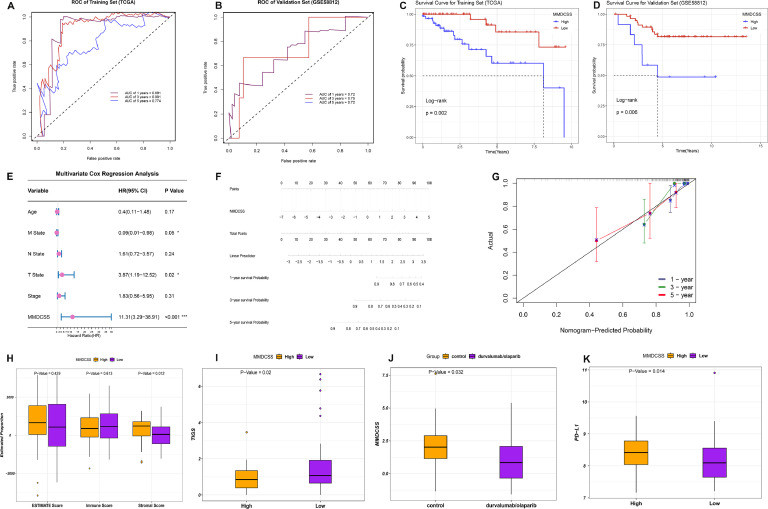
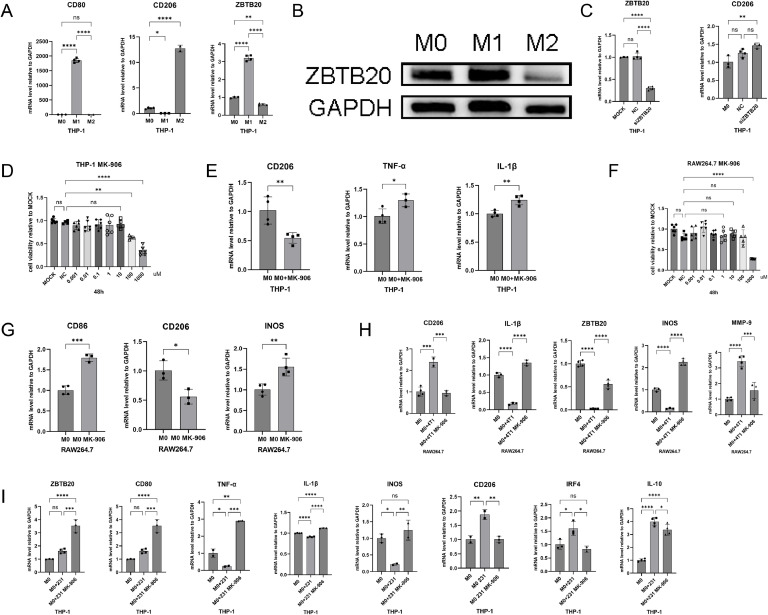
Triple-negative breast cancer (TNBC) presents therapeutic challenges due to its immunosuppressive tumor microenvironment (TME) and limited targeted options. Analyzing scRNA-seq data from 24 TNBC patients using integrated transcriptomics, machine-learning, and pseudo-time trajectory mapping, we developed a macrophage differentiation-based classifier (MMDCSS) (CD93, CHI3L1, ZBTB20) with remarkable prognostic accuracy (C-index: 0.929, 3-year AUC: 0.907). Computational pharmacology identified finasteride as a ZBTB20 modulator (binding energy:7.7 kcal/mol) capable of reversing tumor-induced M2 macrophage polarization. Finasteride significantly enhanced doxorubicin efficacy ex vivo and in vivo by reprogramming the TME, reducing M2 macrophage infiltration while promoting an M1 phenotype. Mechanistically, finasteride upregulated ZBTB20, counteracting TNBC-mediated suppression of this M1-associated transcription factor. Our findings establish ZBTB20 as a key regulator of macrophage polarization in TNBC and introduce finasteride as a clinically viable agent to reverse TME immunosuppression. Targeting macrophage polarization via ZBTB20 modulation, particularly by repurposing finasteride, offers a promising therapeutic strategy for TNBC with immediate translational potential.
三阴性乳腺癌(TNBC)因其免疫抑制性肿瘤微环境(TME)和有限的靶向治疗选择而面临治疗挑战。通过整合转录组学、机器学习和伪时间轨迹映射分析24例TNBC患者的单细胞RNA测序(scRNA-seq)数据,我们开发了一种基于巨噬细胞分化的分类器(MMDCSS)(CD93、CHI3L1、ZBTB20),其具有显著的预后准确性(C指数:0.929,3年曲线下面积:0.907)。计算药理学确定非那雄胺为一种ZBTB20调节剂(结合能:7.7千卡/摩尔),能够逆转肿瘤诱导的M2巨噬细胞极化。非那雄胺通过重新编程TME、减少M2巨噬细胞浸润同时促进M1表型,在体外和体内显著增强了阿霉素的疗效。从机制上讲,非那雄胺上调ZBTB20,抵消TNBC介导的对这种M1相关转录因子的抑制作用。我们的研究结果确定ZBTB20是TNBC中巨噬细胞极化的关键调节因子,并引入非那雄胺作为一种临床上可行的药物来逆转TME免疫抑制。通过ZBTB20调节靶向巨噬细胞极化,特别是通过重新利用非那雄胺,为TNBC提供了一种具有直接转化潜力的有前景的治疗策略。