Infinity Pharmaceuticals, Cambridge, Massachusetts, USA
Infinity Pharmaceuticals, Cambridge, Massachusetts, USA.
J Immunother Cancer. 2024 Aug 30;12(8):e009160. doi: 10.1136/jitc-2024-009160.
Triple-negative breast cancer (TNBC) is an aggressive subtype of breast cancer with a poor prognosis particularly in the metastatic setting. Treatments with anti-programmed cell death protein-1/programmed death-ligand 1 (PD-L1) immune checkpoint inhibitors (ICI) in combination with chemotherapies have demonstrated promising clinical benefit in metastatic TNBC (mTNBC) but there is still an unmet need, particularly for patients with PD-L1 negative tumors. Mechanisms of resistance to ICIs in mTNBC include the presence of immunosuppressive tumor-associated macrophages (TAMs) in the tumor microenvironment (TME). Eganelisib is a potent and selective, small molecule PI3K-γ inhibitor that was shown in preclinical studies to reshape the TME by reducing myeloid cell recruitment to tumors and reprogramming TAMs from an immune-suppressive to an immune-activating phenotype and enhancing activity of ICIs. These studies provided rationale for the clinical evaluation of eganelisib in combination with the anti-PD-L1 atezolizumab and nab-paclitaxel in firstline mTNBC in the phase 2 clinical trial MAcrophage Reprogramming in Immuno-Oncology-3 (MARIO-3, NCT03961698). We present here for the first time, in-depth translational analyses from the MARIO-3 study and supplemental data from eganelisib monotherapy Ph1/b study in solid tumors (MARIO-1, NCT02637531).
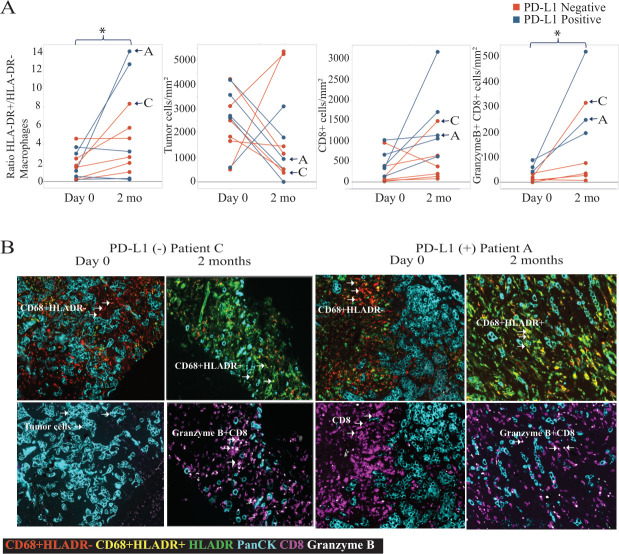
Paired pre-treatment and post-treatment tumor biopsies were analyzed for immunophenotyping by multiplex immunofluorescence (n=11), spatial transcriptomics using GeoMx digital spatial profiling (n=12), and PD-L1 immunohistochemistry, (n=18). Peripheral blood samples were analyzed using flow cytometry and multiplex cytokine analysis.
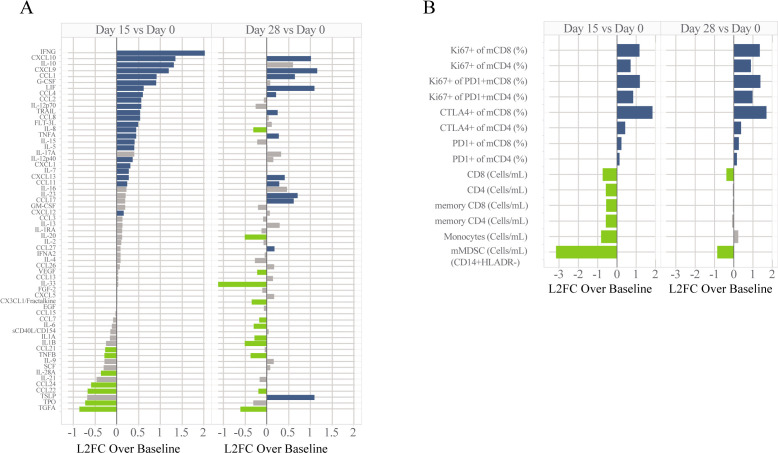
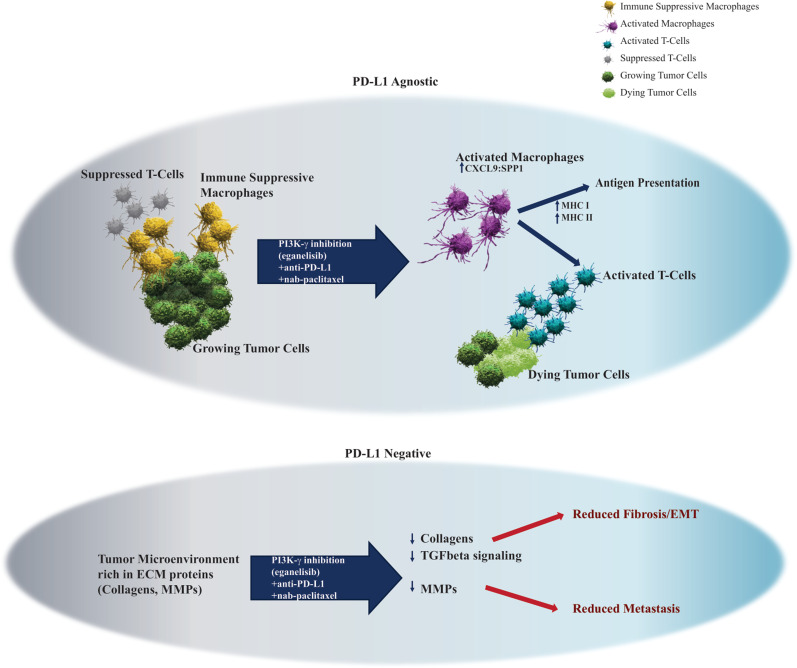
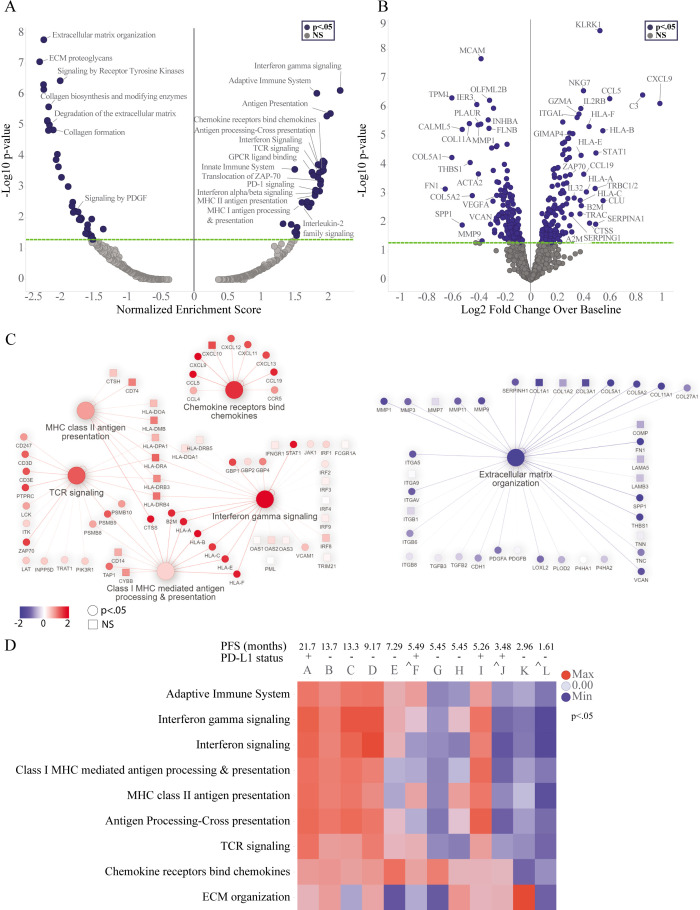
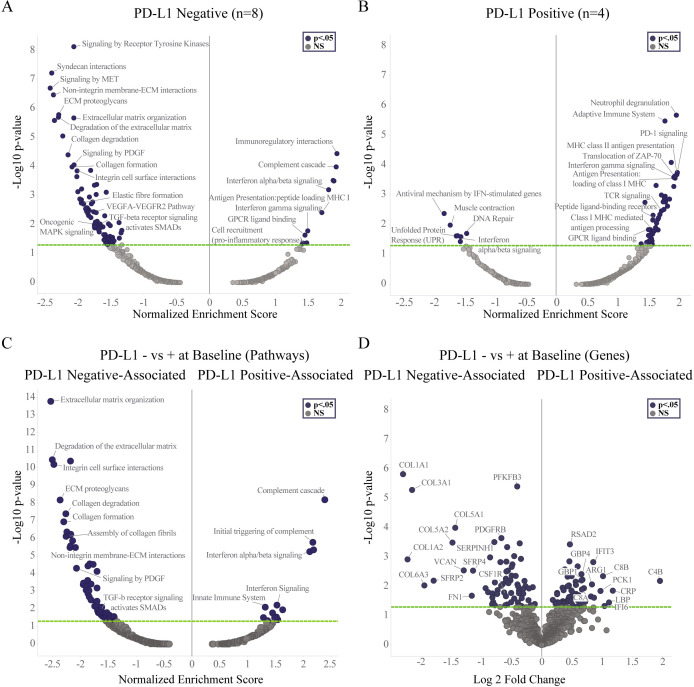
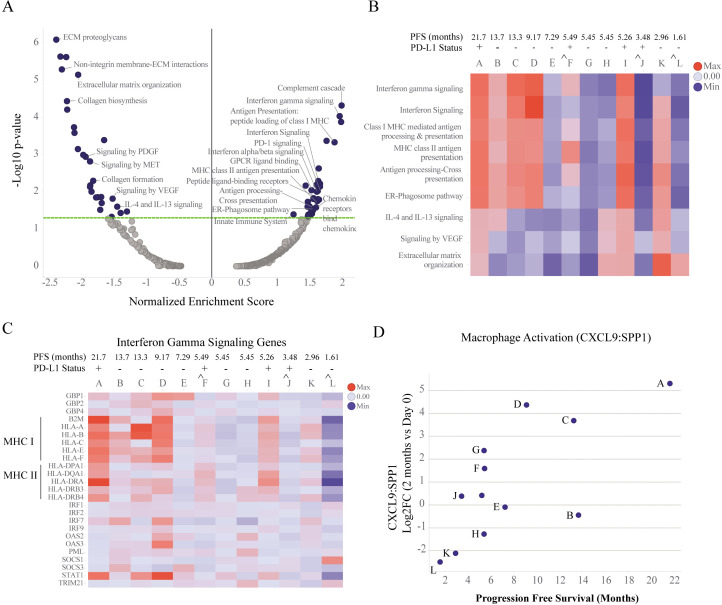
Results from paired tumor biopsies from MARIO-3 revealed gene signatures of TAM reprogramming, immune activation and extracellular matrix (ECM) reorganization. Analysis of PD-L1 negative tumors revealed elevated ECM gene signatures at baseline that decreased after treatment. Gene signatures of immune activation were observed regardless of baseline PD-L1 status and occurred in patients having longer progression-free survival. Peripheral blood analyses revealed systemic immune activation.
This is the first report of translational analyses including paired tumor biopsies from a phase 2 clinical study of the first-in-class PI3K-γ inhibitor eganelisib in combination with atezolizumab and nab-paclitaxel in frontline mTNBC. These results support the mechanism of action of eganelisib as a TAM-reprogramming immunotherapy and support the rationale for combining eganelisib with ICI and chemotherapy in indications with TAM-driven resistance to ICI.
三阴性乳腺癌(TNBC)是一种侵袭性乳腺癌亚型,预后较差,尤其是在转移性疾病中。抗程序性细胞死亡蛋白 1/程序性死亡配体 1(PD-L1)免疫检查点抑制剂(ICI)与化疗联合治疗转移性 TNBC(mTNBC)显示出有前景的临床获益,但仍存在未满足的需求,特别是在 PD-L1 阴性肿瘤患者中。mTNBC 中对 ICI 产生耐药的机制包括肿瘤微环境(TME)中存在免疫抑制性肿瘤相关巨噬细胞(TAMs)。Eganelisib 是一种有效的、选择性的、小分子的 PI3K-γ 抑制剂,在临床前研究中,它通过减少髓样细胞向肿瘤的募集并将 TAMs 从免疫抑制表型重新编程为免疫激活表型,从而重塑 TME,增强 ICI 的活性。这些研究为在一线治疗转移性 TNBC 的 2 期临床试验中,评估 eganelisib 联合抗 PD-L1 阿替利珠单抗和 nab-紫杉醇的临床研究(MACROPHAGE Reprogramming in Immuno-Oncology-3,MARIO-3,NCT03961698)提供了理论依据。在这里,我们首次介绍了 MARIO-3 研究的深入转化分析结果,以及来自实体瘤中 eganelisib 单药 Ph1/b 研究的补充数据(MARIO-1,NCT02637531)。
对 MARIO-3 研究的配对预处理和后处理肿瘤活检进行免疫表型分析(n=11),使用 GeoMx 数字空间分析进行空间转录组学分析(n=12),以及 PD-L1 免疫组化分析(n=18)。通过流式细胞术和多指标细胞因子分析检测外周血样本。
MARIO-3 配对肿瘤活检的结果显示 TAM 重编程、免疫激活和细胞外基质(ECM)重排的基因特征。对 PD-L1 阴性肿瘤的分析显示,治疗前 ECM 基因特征升高,治疗后降低。无论基线 PD-L1 状态如何,均可观察到免疫激活的基因特征,并且在无进展生存期较长的患者中发生。外周血分析显示系统免疫激活。
这是首次报道来自 2 期临床试验的转化分析结果,该试验首次评估了一类新型 PI3K-γ 抑制剂 eganelisib 联合 atezolizumab 和 nab-paclitaxel 治疗一线转移性 TNBC。这些结果支持 eganelisib 作为 TAM 重编程免疫疗法的作用机制,并支持在 TAM 驱动的 ICI 耐药性相关适应证中联合使用 eganelisib、ICI 和化疗的合理性。