Seo Mi Kyoung, Lee Jung Goo, Kim Ji Hyun, Seog Dae-Hyun, Jeong Sehoon, Kim Seong-Ho, Lee Jin Young, Park Sung Woo
Department of Convergence Biomedical Science, College of Medicine, Inje University, 75, Bokji-ro, Busanjin-gu, Busan, 47392, Republic of Korea.
Paik Institute for Clinical Research, Inje University, Busan, 47392, Republic of Korea.
Sci Rep. 2025 Jul 1;15(1):21283. doi: 10.1038/s41598-025-06203-6.
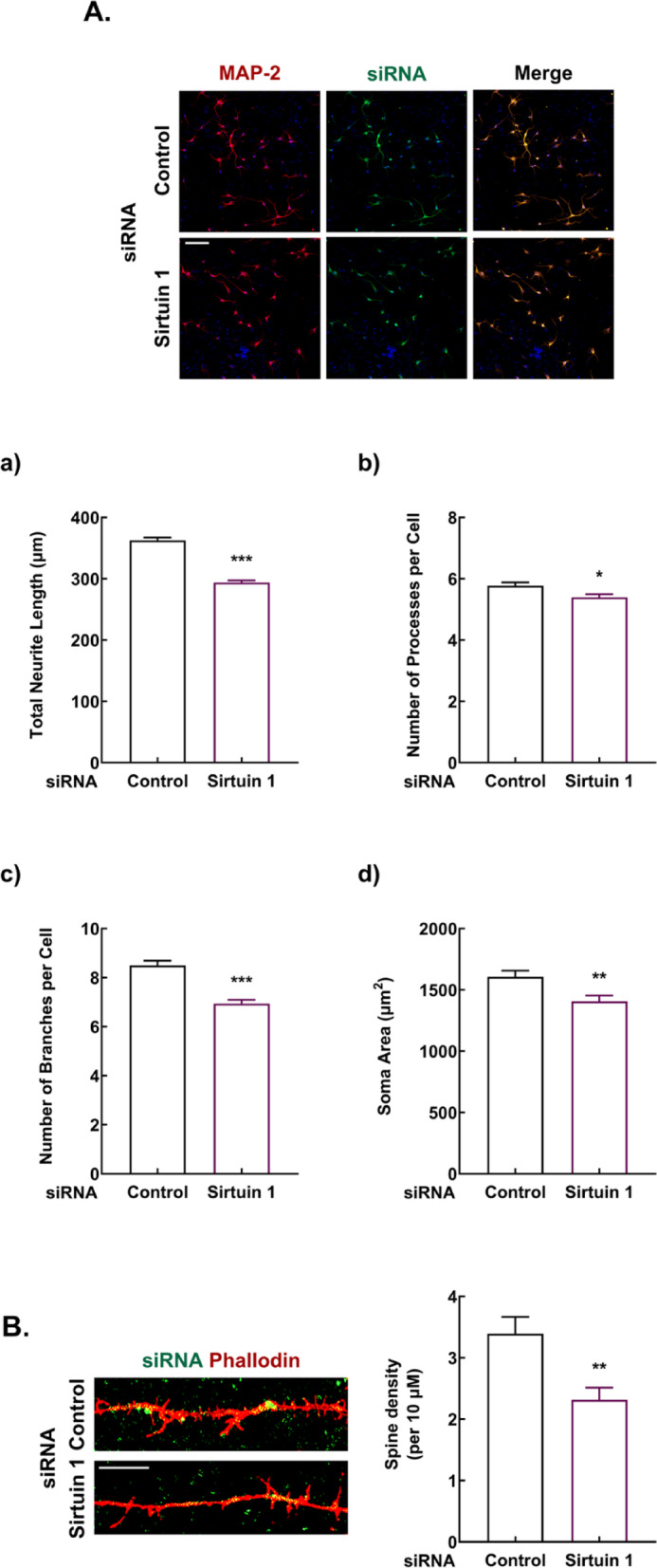
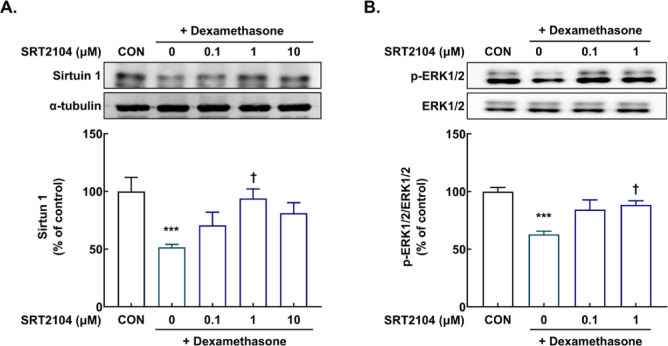
Impaired neuroplasticity is a one of the key pathological mechanism of depression. Sirtuin 1 plays a crucial role in neuroplasticity; however, its precise mechanisms remain unclear. This study examined whether sirtuin 1 regulates dendritic outgrowth and spine formation via mTORC1 signaling in rat primary cortical cells under dexamethasone-induced neurotoxic conditions. Cortical cells were treated with SRT2104 (0.1, 1, and 10 µM), a selective sirtuin 1 activator, in the presence of dexamethasone (500 µM). Protein levels of sirtuin 1, mTORC1 signaling components, and synaptic markers (PSD-95 and GluA1) were analyzed by Western blotting, while dendritic outgrowth and spine density were assessed via immunofluorescence. SRT2104 significantly increased sirtuin 1 expression and ERK1/2 (a downstream target of sirtuin 1) phosphorylation. SRT2104 led to a substantial augmentation in the phosphorylation levels of mTORC1, as well as 4E-BP1 and p70S6K, which are downstream targets of mTORC1. Furthermore, SRT2104 led to an increase in dendritic outgrowth and spine density. Conversely, sirtuin 1 knockdown by siRNA transfection markedly reduced ERK1/2 and mTORC1 phosphorylation, as well as dendritic complexity and spine formation. These results suggest that sirtuin 1 promotes neuroplasticity by activating mTORC1 signaling, providing potential therapeutic implications for depression treatment.
神经可塑性受损是抑郁症关键的病理机制之一。沉默调节蛋白1在神经可塑性中起关键作用;然而,其确切机制尚不清楚。本研究检测了在 dexamethasone 诱导的神经毒性条件下,沉默调节蛋白1是否通过 mTORC1 信号通路调节大鼠原代皮质细胞中的树突生长和棘突形成。在存在 dexamethasone(500 μM)的情况下,用选择性沉默调节蛋白1激活剂 SRT2104(0.1、1 和 10 μM)处理皮质细胞。通过蛋白质印迹分析沉默调节蛋白1、mTORC1 信号成分和突触标志物(PSD-95 和 GluA1)的蛋白水平,同时通过免疫荧光评估树突生长和棘突密度。SRT2104 显著增加了沉默调节蛋白1的表达和 ERK1/2(沉默调节蛋白1的下游靶点)的磷酸化。SRT2104 导致 mTORC1 以及 mTORC1 的下游靶点 4E-BP1 和 p70S6K 的磷酸化水平大幅增加。此外,SRT2104 导致树突生长和棘突密度增加。相反,通过 siRNA 转染敲低沉默调节蛋白1显著降低了 ERK1/2 和 mTORC1 的磷酸化,以及树突复杂性和棘突形成。这些结果表明,沉默调节蛋白1通过激活 mTORC1 信号通路促进神经可塑性,为抑郁症治疗提供了潜在的治疗意义。