Undergraduate Program in Neuroscience, University of Michigan, Ann Arbor, MI, USA.
Michigan Neuroscience Institute, University of Michigan, Ann Arbor, MI, USA.
Endocrinology. 2021 Mar 1;162(3). doi: 10.1210/endocr/bqaa242.
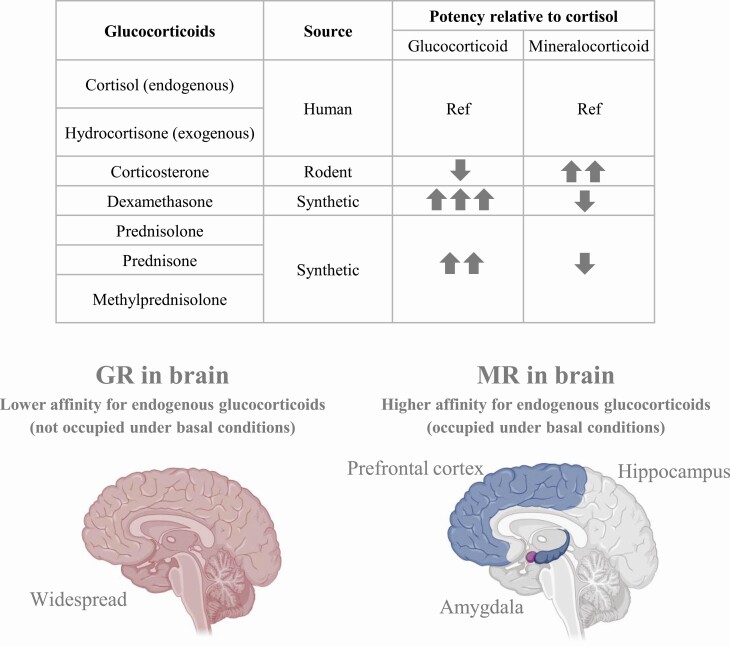
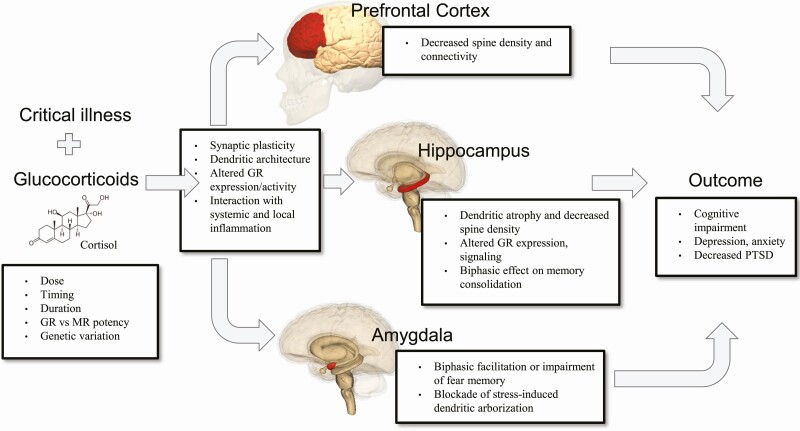
Treatment for critical illness typically focuses on a patient's short-term physical recovery; however, recent work has broadened our understanding of the long-term implications of illness and treatment strategies. In particular, survivors of critical illness have significantly elevated risk of developing lasting cognitive impairment and psychiatric disorders. In this review, we examine the role of endogenous and exogenous glucocorticoids in neuropsychiatric outcomes following critical illness. Illness is marked by acute elevation of free cortisol and adrenocorticotropic hormone suppression, which typically normalize after recovery; however, prolonged dysregulation can sometimes occur. High glucocorticoid levels can cause lasting alterations to the plasticity and structural integrity of the hippocampus and prefrontal cortex, and this mechanism may plausibly contribute to impaired memory and cognition in critical illness survivors, though specific evidence is lacking. Glucocorticoids may also exacerbate inflammation-associated neural damage. Conversely, current evidence indicates that glucocorticoids during illness may protect against the development of post-traumatic stress disorder. We propose future directions for research in this field, including determining the role of persistent glucocorticoid elevations after illness in neuropsychiatric outcomes, the role of systemic vs neuroinflammation, and probing unexplored lines of investigation on the role of mineralocorticoid receptors and the gut-brain axis. Progress toward personalized medicine in this area has the potential to produce tangible improvements to the lives patients after a critical illness, including Coronavirus Disease 2019.
治疗危重病通常侧重于患者的短期身体恢复;然而,最近的工作拓宽了我们对疾病和治疗策略的长期影响的理解。特别是,危重病幸存者患持续认知障碍和精神障碍的风险显著增加。在这篇综述中,我们探讨了内源性和外源性糖皮质激素在危重病后神经精神结局中的作用。疾病以游离皮质醇的急性升高和促肾上腺皮质激素的抑制为特征,通常在恢复后恢复正常;然而,有时会发生长期失调。高糖皮质激素水平可导致海马体和前额叶皮质的可塑性和结构完整性的持久改变,这一机制可能合理地导致危重病幸存者的记忆和认知受损,尽管缺乏具体证据。糖皮质激素也可能加剧与炎症相关的神经损伤。相反,目前的证据表明,疾病期间的糖皮质激素可能有助于预防创伤后应激障碍的发生。我们提出了该领域未来的研究方向,包括确定疾病后持续的糖皮质激素升高在神经精神结局中的作用、全身性炎症与神经炎症的作用,以及探索对盐皮质激素受体和肠脑轴作用的未知研究方向。在这一领域朝着个性化医疗的进展有可能改善危重病患者的生活,包括 2019 年冠状病毒病患者。