Divya P, Ranchani A Amala Jeya, Ahmad Hijaz, Reeda V S Jeba, Radwan Taha, Haridas Divya
Department of Physics, Saveetha School of Engineering, Saveetha Institute of Medical and Technical Sciences (SIMATS), Thandalam, Chennai, India.
Near East University, Operational Research Center in Healthcare, Near East Boulevard, 99138, Nicosia/Mersin 10, Turkey.
Sci Rep. 2025 Jul 1;15(1):20483. doi: 10.1038/s41598-025-01503-3.
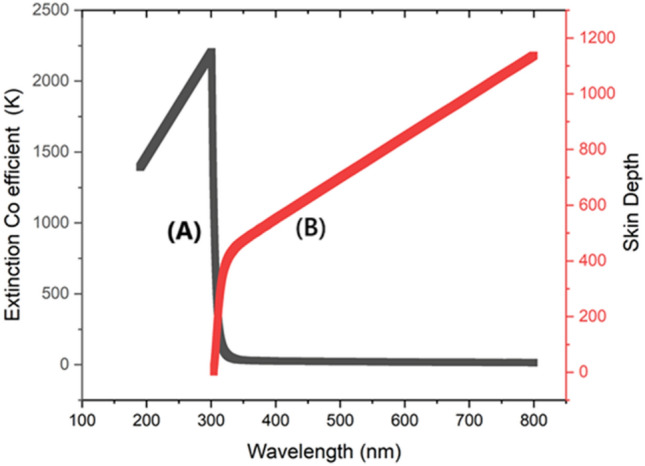
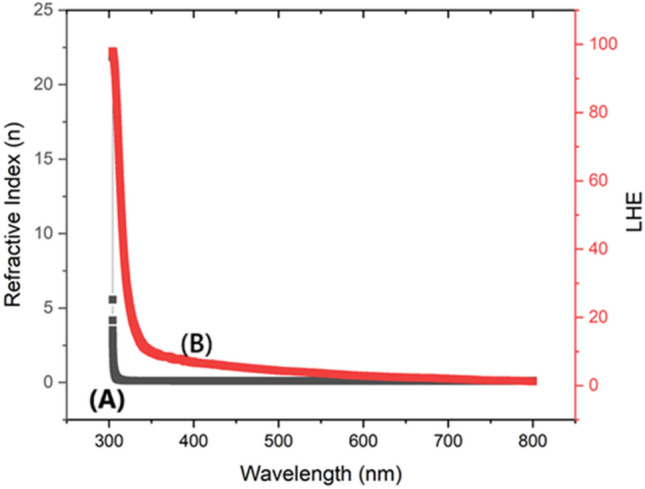
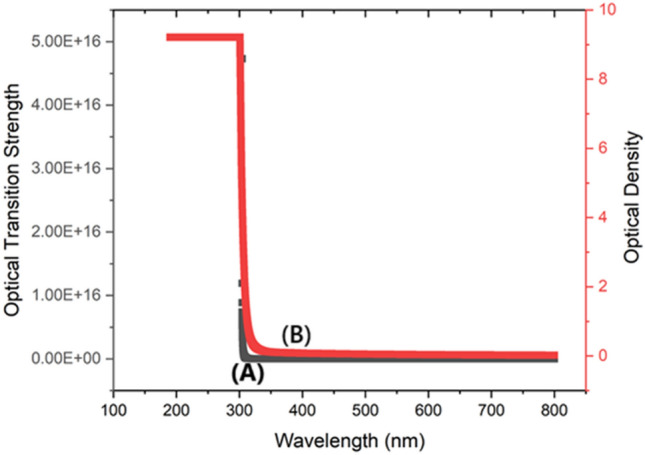
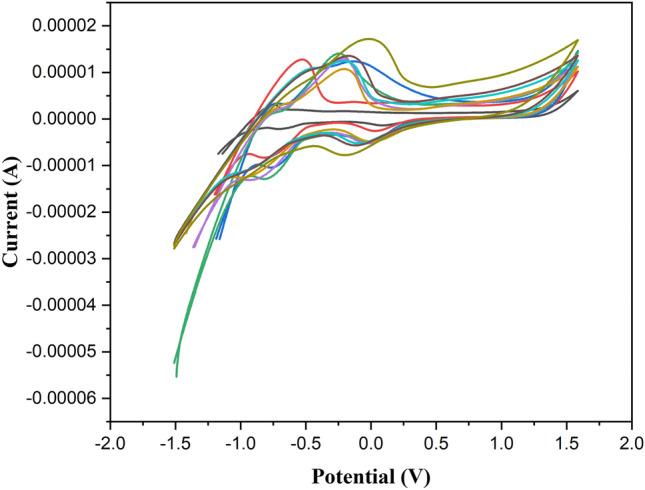
Supercapacitors are widely employed in electric vehicles and portable electronics due to their rapid charge-discharge capability, high power density, and energy efficiency; however, many still depend on non-renewable materials. This study reports the synthesis and comprehensive characterization of benzimidazole picolinic acid (BPEP) as a sustainable, high-performance electrode material for supercapacitors. Optical and electrical analyses reveal significant π → π* and n → π* transitions, with prominent UV-visible absorption peaks at 282 nm (experimental) and 294 nm (theoretical). BPEP exhibits excellent light absorption, achieving 99% light-harvesting efficiency at 300 nm and an extinction coefficient of 2250, underscoring its strong optical potential. Frontier Molecular Orbital (FMO) analysis indicates a band gap of 3.9 eV, reflecting notable chemical hardness and thermal stability. Additionally, the negative chemical potential (μ = -4.377 eV) and high electrophilicity index (ω = 5.249 eV) suggest enhanced chemical reactivity and stability that key attributes for energy storage. Electrochemical impedance analysis reveals a maximum specific capacitance of 125.45 F/g at a scan rate of 10 mV/s, confirming efficient charge storage behavior. Vibrational analysis and optimized geometry further affirm the structural integrity of BPEP. Collectively, these results highlight the optical, topological, and electrochemical merits of BPEP, establishing it as a promising eco-friendly candidate for next-generation supercapacitor electrodes.
超级电容器因其快速充放电能力、高功率密度和能源效率而被广泛应用于电动汽车和便携式电子产品中;然而,许多超级电容器仍依赖不可再生材料。本研究报告了苯并咪唑吡啶甲酸(BPEP)作为一种可持续的高性能超级电容器电极材料的合成及综合表征。光学和电学分析揭示了显著的π → π和n → π跃迁,在282 nm(实验值)和294 nm(理论值)处有明显的紫外可见吸收峰。BPEP表现出优异的光吸收性能,在300 nm处实现了99%的光捕获效率,消光系数为2250,突出了其强大的光学潜力。前沿分子轨道(FMO)分析表明带隙为3.9 eV,反映出显著的化学硬度和热稳定性。此外,负化学势(μ = -4.377 eV)和高亲电指数(ω = 5.249 eV)表明其化学反应性和稳定性增强,这是能量存储的关键属性。电化学阻抗分析显示,在扫描速率为10 mV/s时,最大比电容为125.45 F/g,证实了其高效的电荷存储行为。振动分析和优化的几何结构进一步证实了BPEP的结构完整性。总体而言,这些结果突出了BPEP的光学、拓扑和电化学优点,使其成为下一代超级电容器电极的有前途的环保候选材料。