Bayatian Mobina, Pourbabaee Ahmad Ali, Amoozegar Mohammad Ali
Extremophiles Laboratory, Department of Microbiology, School of Biology and Center of Excellence in Phylogeny of Living Organisms, College of Science, University of Tehran, Tehran, Iran.
Biotechnology Lab, Department of Soil Science, University College of Agriculture and Natural Resources, University of Tehran, Karaj, Iran.
Sci Rep. 2025 Jul 1;15(1):22016. doi: 10.1038/s41598-025-05519-7.
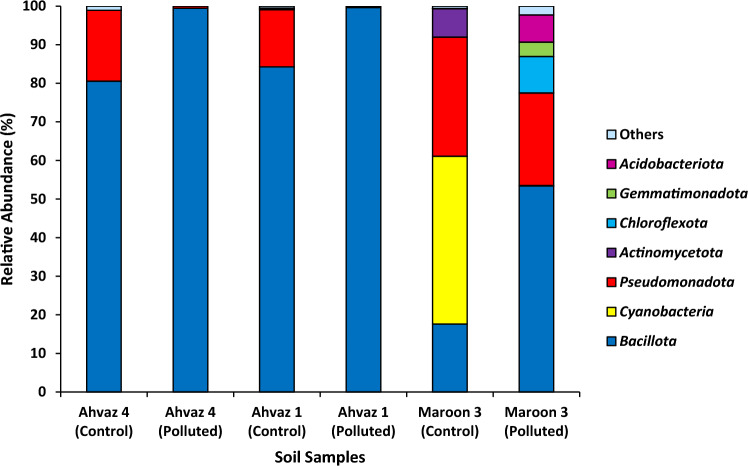
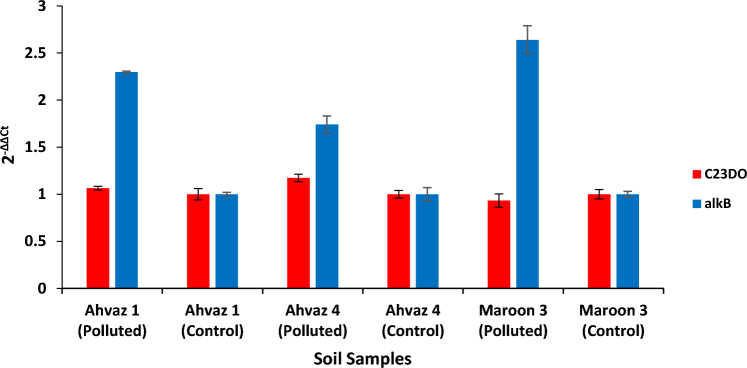
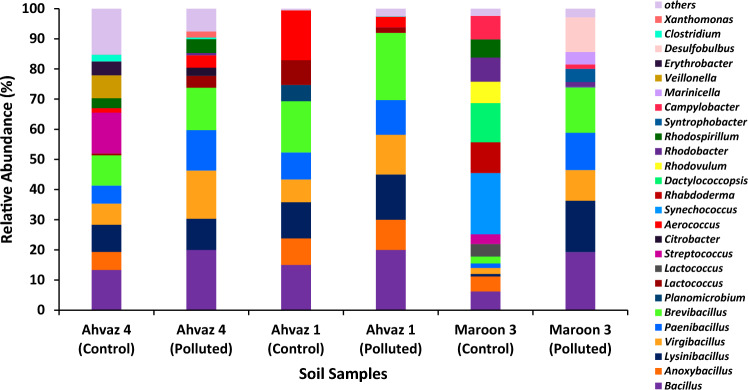
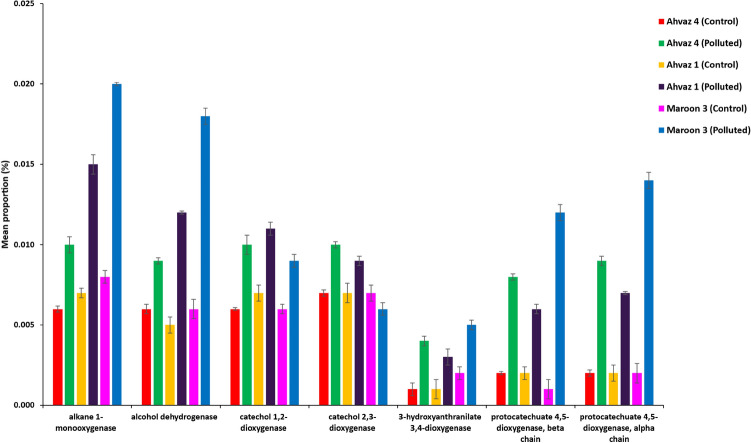
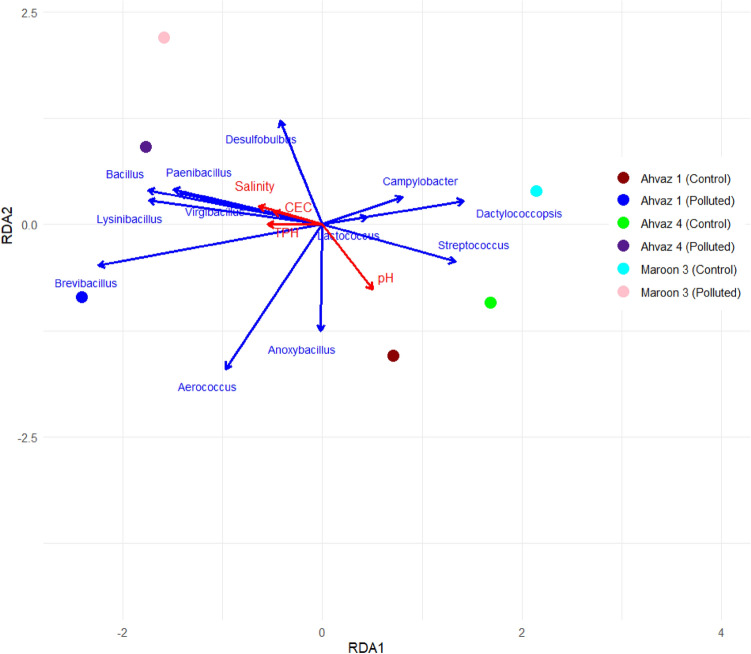
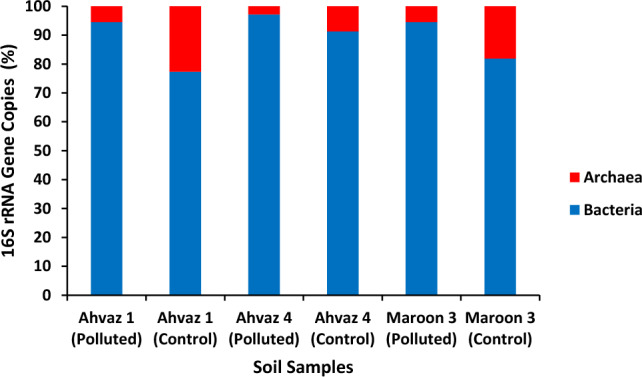
This study explores prokaryotic diversity and oil biodegradation potential in soils from three evaporation ponds in the Ahvaz and Maroon oil fields, Iran. Despite prior studies on prokaryotic diversity in contaminated soils, systematic comparisons within the same region remain limited. The analysis identified distinct physicochemical differences across sites. Ahvaz 1 soil, with a loamy silty clay texture, had the highest salinity (15.4%) and total petroleum hydrocarbons (TPH, 3.5%). Ahvaz 4 soil, loamy silty in texture, showed 7.49% salinity and 1% TPH, while Maroon 3 soil exhibited the lowest salinity (5.06%) and TPH (0.5%). Prokaryotic diversity and biodegradation traits were assessed using 16S rRNA next-generation sequencing (NGS) and qPCR, respectively. NGS revealed reduced prokaryotic diversity in all contaminated soils, with Bacillota dominating, whereas Pseudomonadota prevailed in all control samples. Maroon 3 soils had higher diversity, but Cyanobacteria and Actinomycetota, dominant in controls, were replaced by Chloroflexota, Gemmatimonadota, and Acidobacteriota in polluted soils. At the genus level, Bacillus, Lysinibacillus, Virgibacillus, Brevibacillus, and Paenibacillus showed increased abundance in contaminated soils. Real-time PCR of alkB and C23DO genes indicated enhanced hydrocarbon degradation potential. FAPROTAX and PICRUSt2 analyses revealed enhanced microbial capacity for hydrocarbon degradation in polluted soils, with enriched functions related to chemoheterotrophy, aromatic compound degradation, and increased levels of alkane 1-monooxygenase, alcohol dehydrogenase, and protocatechuate 4,5-dioxygenase subunits. The findings highlight crude oil's impact on microbial community structure, reducing archaea and emphasizing bacterial dominance while underscoring shifts in microbial responses and functional gene expression in hydrocarbon degradation.
本研究探索了伊朗阿瓦士和栗色油田三个蒸发塘土壤中的原核生物多样性及石油生物降解潜力。尽管之前有关于污染土壤中原核生物多样性的研究,但同一地区内的系统比较仍然有限。分析确定了不同地点之间存在明显的物理化学差异。阿瓦士1号土壤质地为壤质粉质黏土,盐度最高(15.4%),总石油烃含量(TPH,3.5%)也最高。阿瓦士4号土壤质地为壤质粉质,盐度为7.49%,TPH为1%,而栗色3号土壤盐度最低(5.06%),TPH也最低(0.5%)。分别使用16S rRNA下一代测序(NGS)和qPCR评估原核生物多样性和生物降解特性。NGS显示,所有污染土壤中的原核生物多样性均降低,其中芽孢杆菌门占主导地位,而在所有对照样品中变形菌门占优势。栗色3号土壤的多样性较高,但在对照中占主导的蓝细菌门和放线菌门在污染土壤中被绿弯菌门、芽单胞菌门和酸杆菌门取代。在属水平上,芽孢杆菌属、赖氨酸芽孢杆菌属、嗜盐芽孢杆菌属、短短芽孢杆菌属和类芽孢杆菌属在污染土壤中的丰度增加。alkB和C23DO基因的实时PCR表明烃类降解潜力增强。FAPROTAX和PICRUSt2分析显示,污染土壤中微生物的烃类降解能力增强,与化学异养、芳香化合物降解相关的功能富集,烷烃1-单加氧酶、醇脱氢酶和原儿茶酸4,5-双加氧酶亚基水平增加。研究结果突出了原油对微生物群落结构的影响,减少了古菌数量,强调了细菌的主导地位,同时强调了微生物在烃类降解中的反应和功能基因表达的变化。