Chen Ya-Jou, Altshuler Ianina, Freyria Nastasia J, Lirette Antoine, Góngora Esteban, Greer Charles W, Whyte Lyle G
Department of Natural Resource Sciences, Faculty of Agricultural and Environmental Sciences, McGill University, Montreal, QC, Canada.
Division of Natural and Applied Sciences, Duke Kunshan University, Kunshan, Jiangsu, China.
Environ Microbiome. 2024 Oct 31;19(1):81. doi: 10.1186/s40793-024-00626-w.
Canadian Arctic summer sea ice has dramatically declined due to global warming, resulting in the rapid opening of the Northwest Passage (NWP), slated to be a major shipping route connecting the Atlantic and Pacific Oceans by 2040. This development elevates the risk of oil spills in Arctic regions, prompting growing concerns over the remediation and minimizing the impact on affected shorelines.
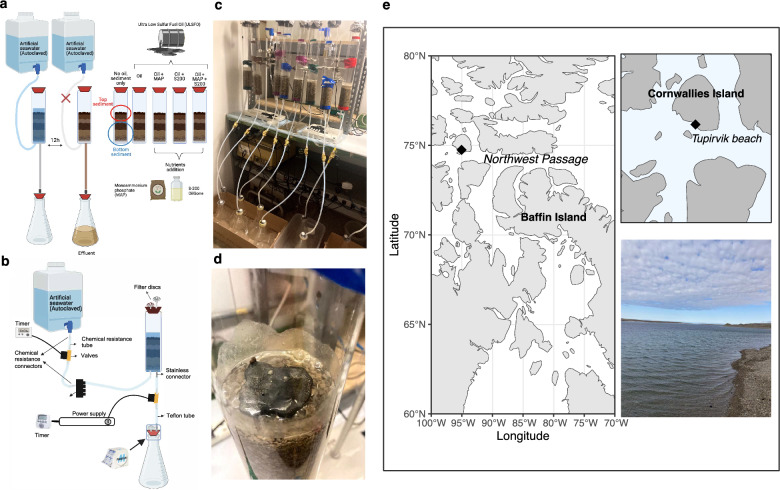
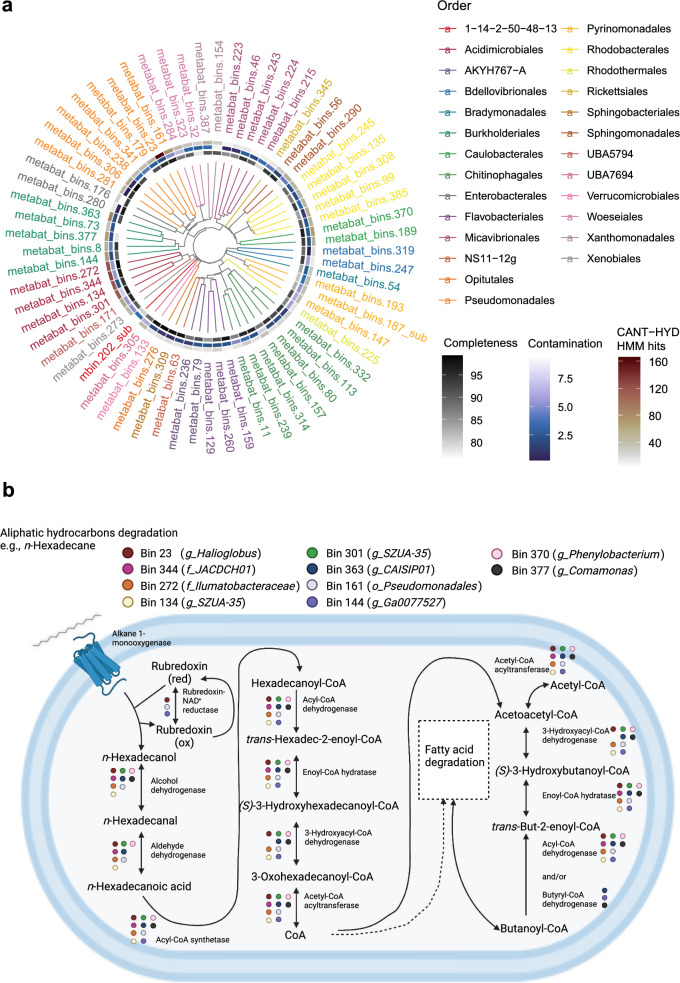
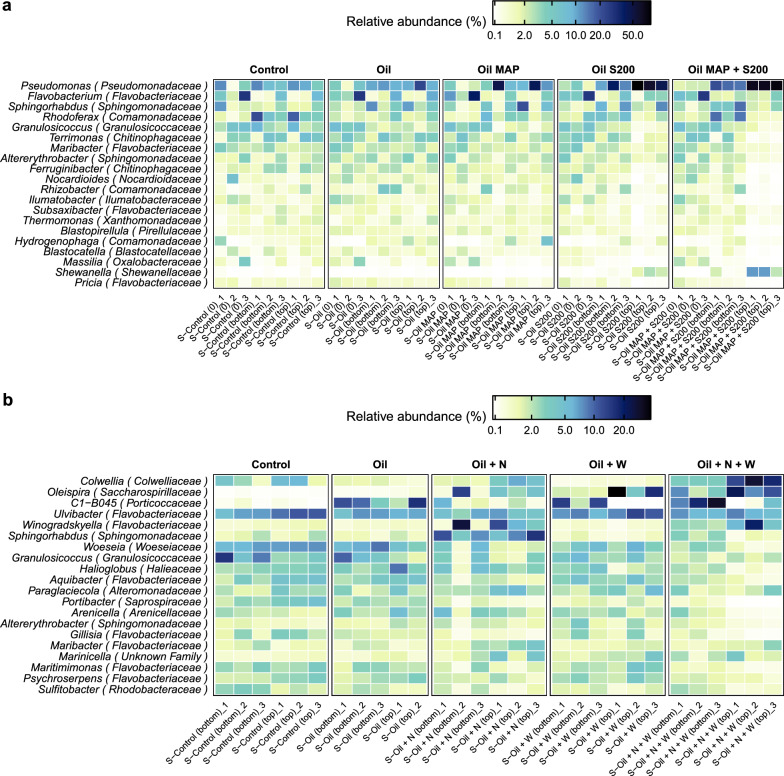
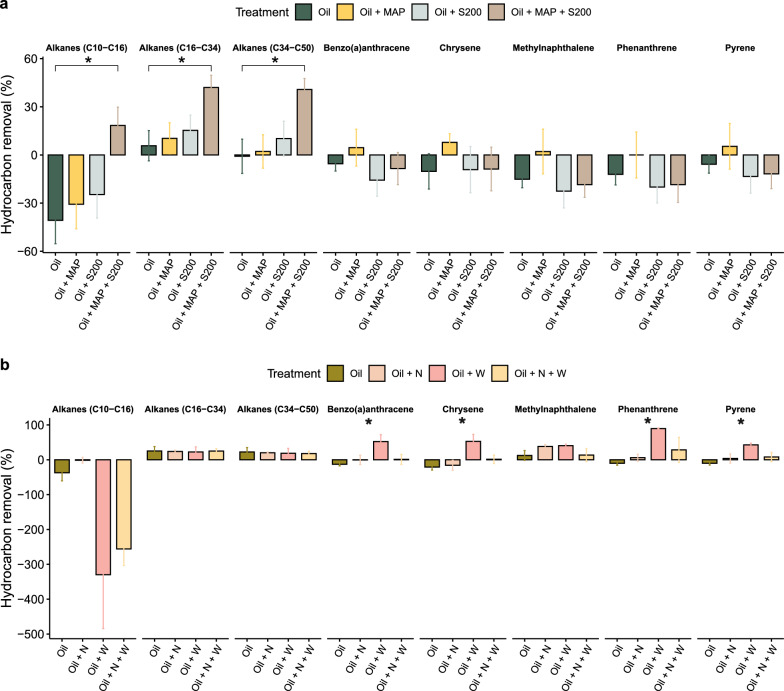
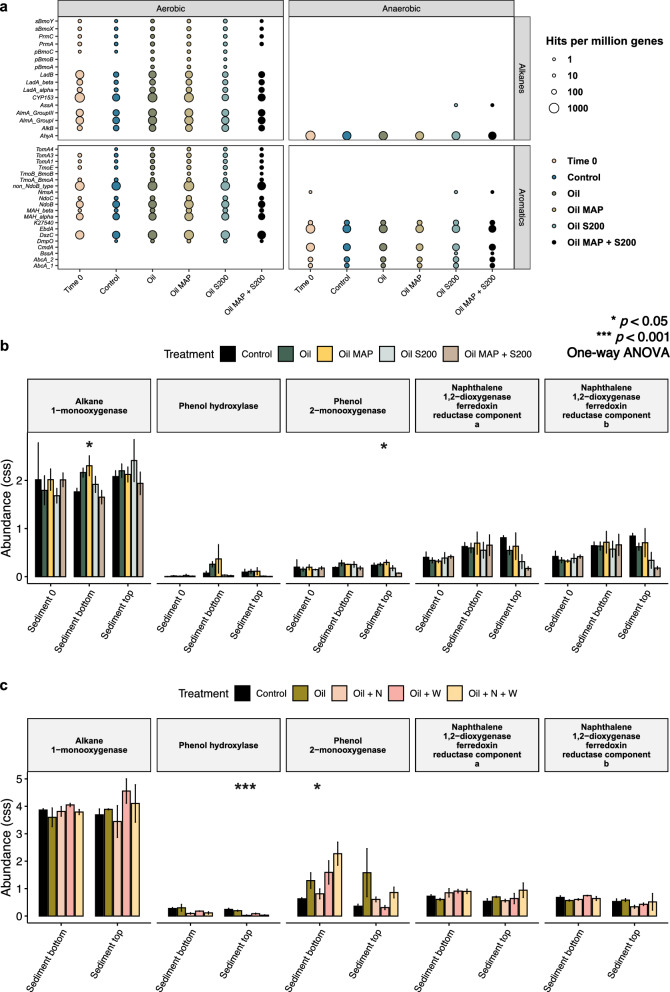
This research aims to assess the viability of nutrient and a surface washing agent addition as potential bioremediation methods for Arctic beaches. To achieve this goal, we conducted two semi-automated mesocosm experiments simulating hydrocarbon contamination in high-Arctic beach tidal sediments: a 32-day experiment at 8 °C and a 92-day experiment at 4 °C. We analyzed the effects of hydrocarbon contamination, biostimulation, and a surface washing agent on the microbial community and its functional capacity using 16S rRNA gene sequencing and metagenomics. Hydrocarbon removal rates were determined through total petroleum hydrocarbon analysis. Biostimulation is commonly considered the most effective strategy for enhancing the bioremediation process in response to oil contamination. However, our findings suggest that nutrient addition has limited effectiveness in facilitating the biodegradation process in Arctic beaches, despite its initial promotion of aliphatic hydrocarbons within a constrained timeframe. Alternatively, our study highlights the promise of a surface washing agent as a potential bioremediation approach. By implementing advanced -omics approaches, we unveiled highly proficient, unconventional hydrocarbon-degrading microorganisms such as Halioglobus and Acidimicrobiales genera.
Given the receding Arctic sea ice and the rising traffic in the NWP, heightened awareness and preparedness for potential oil spills are imperative. While continuously exploring optimal remediation strategies through the integration of microbial and chemical studies, a paramount consideration involves limiting traffic in the NWP and Arctic regions to prevent beach oil contamination, as cleanup in these remote areas proves exceedingly challenging and costly.
由于全球变暖,加拿大北极夏季海冰急剧减少,导致西北航道(NWP)迅速开通,预计到2040年将成为连接大西洋和太平洋的主要航线。这一发展增加了北极地区石油泄漏的风险,引发了人们对补救措施以及尽量减少对受影响海岸线影响的日益关注。
本研究旨在评估添加营养物质和表面活性剂作为北极海滩潜在生物修复方法的可行性。为实现这一目标,我们进行了两项模拟高北极海滩潮汐沉积物中烃污染的半自动中宇宙实验:一项在8°C下进行32天的实验和一项在4°C下进行92天的实验。我们使用16S rRNA基因测序和宏基因组学分析了烃污染、生物刺激和表面活性剂对微生物群落及其功能能力的影响。通过总石油烃分析确定烃去除率。生物刺激通常被认为是增强对油污生物修复过程的最有效策略。然而,我们的研究结果表明,尽管在有限的时间内营养物质最初促进了脂肪烃的降解,但添加营养物质在促进北极海滩生物降解过程方面的效果有限。相反,我们的研究突出了表面活性剂作为一种潜在生物修复方法的前景。通过采用先进的组学方法,我们发现了高度熟练的非常规烃降解微生物,如Halioglobus属和酸微菌目。
鉴于北极海冰的消退和西北航道交通量的增加,必须提高对潜在石油泄漏的认识并做好准备。在通过微生物和化学研究不断探索最佳修复策略的同时,一个至关重要的考虑因素是限制西北航道和北极地区的交通,以防止海滩油污,因为在这些偏远地区进行清理被证明极具挑战性且成本高昂。