Li Yidan, Lei Li, Jiang Ling, Mao Ping, Fu Chuhan, Chen Jing, Zeng Qinghai
Department of Dermatology, Third Xiangya Hospital, Central South University, Changsha, Hunan, 410013, People's Republic of China.
Department of Nursing, Third Xiangya Hospital, Central South University, Changsha, Hunan, 410013, People's Republic of China.
BMC Med Educ. 2025 Jul 1;25(1):957. doi: 10.1186/s12909-025-07474-3.
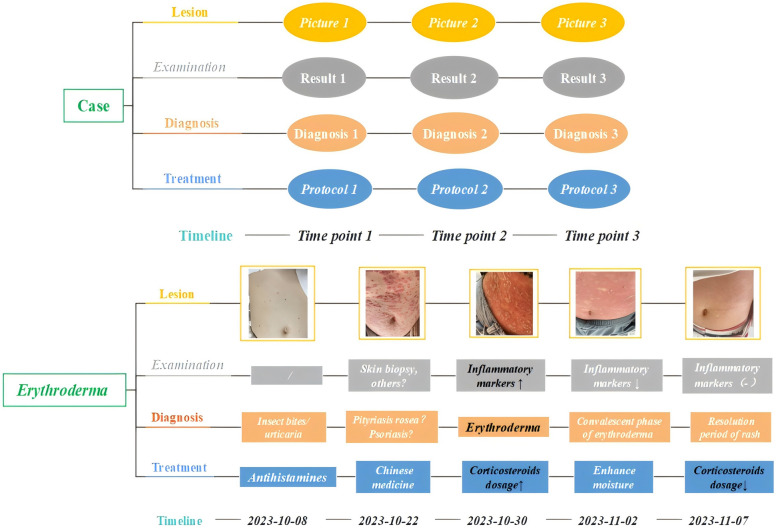
In dermatological diseases, skin lesions are often subject to dynamic changes. However, under the traditional learning model, medical students lack a dynamic understanding of skin lesions and clinical diagnosis and treatment procedures.
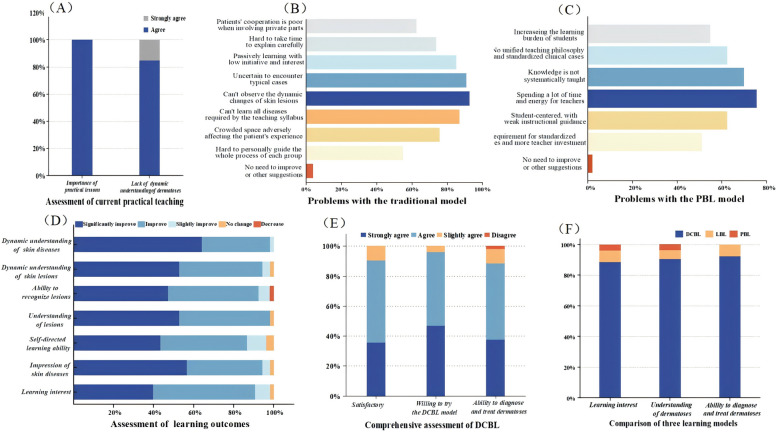
This study proposes the dynamic case-based learning (DCBL) model, which was presented through typical dynamic cases. We surveyed 129 undergraduate students and 53 clinical dermatologists to gain an understanding of perceptions of the DCBL model.
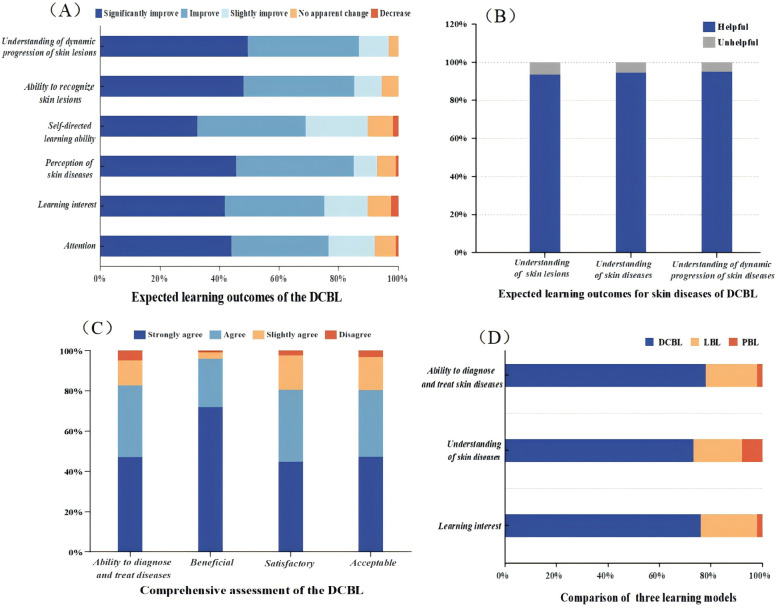
Eighty percent of students felt very satisfied or satisfied with the DCBL model. They self-evaluated that the new model would greatly improve their attention (92.2%), learning interest (89.9%), self-directed learning ability (89.9%), dynamic understanding of lesions (96.9%), and ability to diagnose and treat skin diseases (95.4%). Additionally, a significant proportion of teachers also believed that students could improve across multiple dimensions, including self-directed learning ability (96.2%) and dynamic understanding of skin lesions (98.1%).
Most clinical dermatologists and students participating in this study expressed a positive attitude towards the DCBL model. According to their perceived responses, the model appears to effectively stimulate the enthusiasm of students for learning, enhance their dynamic understanding of skin diseases, help them to train diagnostic and therapeutic thinking, and improve their diagnosis and treatment skills. However, further empirical research is required to directly assess its impact on the enhancement of diagnostic and treatment abilities in dermatology, as well as its overall effectiveness.
在皮肤病学中,皮肤病变常呈现动态变化。然而,在传统学习模式下,医学生对皮肤病变以及临床诊断和治疗过程缺乏动态认识。
本研究提出了基于动态病例的学习(DCBL)模型,通过典型的动态病例进行展示。我们对129名本科生和53名临床皮肤科医生进行了调查,以了解他们对DCBL模型的看法。
80%的学生对DCBL模型感到非常满意或满意。他们自我评价该新模式将极大提高他们的注意力(92.2%)、学习兴趣(89.9%)、自主学习能力(89.9%)、对病变的动态认识(96.9%)以及皮肤病诊断和治疗能力(95.4%)。此外,相当一部分教师也认为学生可以在多个维度上得到提高,包括自主学习能力(96.2%)和对皮肤病变的动态认识(98.1%)。
参与本研究的大多数临床皮肤科医生和学生对DCBL模型持积极态度。根据他们的反馈,该模型似乎能有效激发学生的学习积极性,增强他们对皮肤病的动态认识,帮助他们培养诊断和治疗思维,并提高他们的诊断和治疗技能。然而,需要进一步的实证研究来直接评估其对皮肤科诊断和治疗能力提升的影响以及其整体效果。