Prajapati Poojaben M, Patel Saumya K, Rawal Rakesh M, Lakhani Komal G, Hamid Rasmieh, Maitreya Bharat B
Department of Botany, Bioinformatics and Climate Change Impacts Management, School of Sciences, Gujarat University, Ahmedabad, Gujarat, India.
Department of Medical Biotechnology, Gujarat Biotechnology University, Gandhinagar, Gujarat, India.
Front Pharmacol. 2025 Jun 17;16:1582374. doi: 10.3389/fphar.2025.1582374. eCollection 2025.
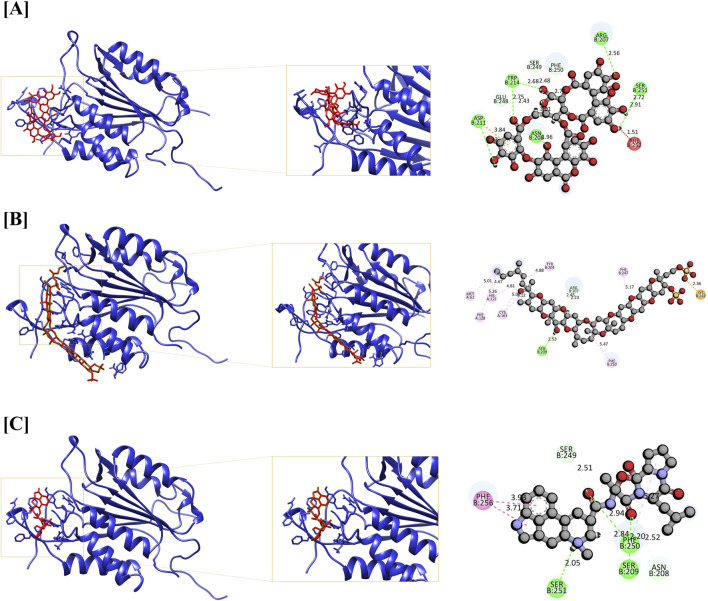
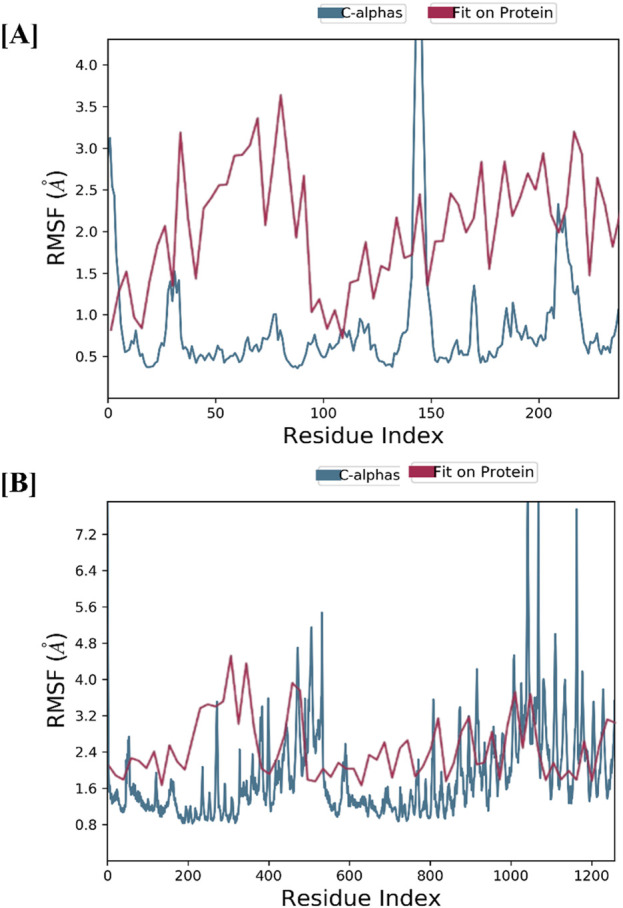
Hepatocellular carcinoma is a multifaceted and lethal malignancy, ranking third in cancer-related mortality and sixth in worldwide incidence. This study aimed to utilize LCMS-QTOF analysis to identify the phytoconstituents of across three distinct seasons. The study also sought to elucidate the multi-layered mechanism of action against hepatocellular carcinoma using network pharmacology analysis, molecular docking, and molecular dynamics simulation. A total of 352 phytoconstituents were identified in the extract of , of which 154 compounds were chosen for subsequent analysis. Network construction and Gene Ontology (GO) enrichment analysis were performed using ShinyGo and the KEGG database, while Cytoscape 3.10.2 was employed for network visualization and analysis. Molecular docking analyses were conducted using YASARA software, and the highest-scoring compounds and targets underwent 100 ns molecular dynamics simulations via Schrödinger Desmond. CytoHubba identified ten key hub genes, including CASP3, STAT3, and EGFR. GO and KEGG analyses revealed significant biological processes, molecular functions, cellular components, and pathways, including PPAR signaling, thyroid cancer, and prolactin pathways. Notably, phytochemicals from , particularly Alnusiin, Egrosine, and Yessotoxin, exhibited strong binding affinities with CASP3 and STAT3. The structural stability of Alnusiin in complex with these target proteins was confirmed through molecular dynamics simulation, indicating its potential as a promising anti-HCC agent. This study integrates network pharmacology, molecular docking, and molecular dynamics simulations to characterize the bioactive compounds in and elucidate a plausible mechanism for its therapeutic action against hepatocellular carcinoma.
肝细胞癌是一种多方面的致命恶性肿瘤,在癌症相关死亡率中排名第三,在全球发病率中排名第六。本研究旨在利用液相色谱-质谱联用飞行时间质谱(LCMS-QTOF)分析来鉴定[具体植物名称未给出]在三个不同季节的植物成分。该研究还试图通过网络药理学分析、分子对接和分子动力学模拟来阐明其抗肝细胞癌的多层次作用机制。在[具体植物名称未给出]提取物中总共鉴定出352种植物成分,其中154种化合物被选用于后续分析。使用ShinyGo和KEGG数据库进行网络构建和基因本体(GO)富集分析,而Cytoscape 3.10.2用于网络可视化和分析。使用YASARA软件进行分子对接分析,得分最高的化合物和靶点通过薛定谔公司的Desmond进行100纳秒的分子动力学模拟。CytoHubba鉴定出十个关键枢纽基因,包括半胱天冬酶3(CASP3)、信号转导和转录激活因子3(STAT3)和表皮生长因子受体(EGFR)。GO和KEGG分析揭示了显著的生物学过程、分子功能、细胞成分和途径,包括过氧化物酶体增殖物激活受体(PPAR)信号通路、甲状腺癌和催乳素信号通路。值得注意的是,[具体植物名称未给出]中的植物化学物质,特别是桤木素、埃格罗辛和岩沙海葵毒素,与CASP3和STAT3表现出很强的结合亲和力。通过分子动力学模拟证实了桤木素与这些靶蛋白复合物的结构稳定性,表明其作为一种有前景的抗肝细胞癌药物的潜力。本研究整合了网络药理学、分子对接和分子动力学模拟,以表征[具体植物名称未给出]中的生物活性化合物,并阐明其抗肝细胞癌治疗作用的合理机制。