Wenjiao Dang, Yurou Wang, Jiaqi Xie, Yan He, Hongfang Ji, Min Chen, Jianjin Guo
Department of Geriatric Medicine, Shanxi Bethune Hospital, Shanxi Academy of Medical Sciences, Third Hospital of Shanxi Medical University, Tongji Shanxi Hospital, Taiyuan, China.
Front Endocrinol (Lausanne). 2025 Jun 19;16:1508473. doi: 10.3389/fendo.2025.1508473. eCollection 2025.
Gut microbiota has demonstrated an increasingly important role in the onset and development of type 2 diabetes mellitus (T2DM), Further investigations have revealed the interactions between drugs and the gut microbiome. However, there are still gaps in research regarding the potential interactions between the gut microbiota and GLP-1 and their therapeutic response in people with T2DM. In addition, Fecal microbiota transplantation (FMT) has become a promising strategy for patients with T2DM.
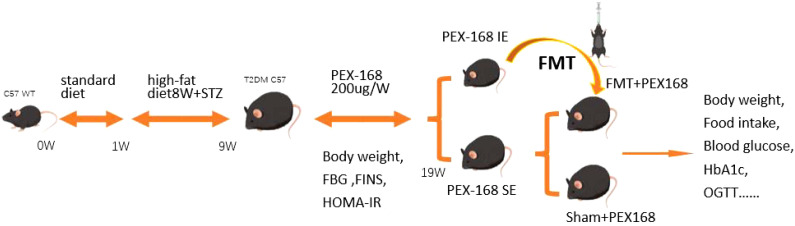
50 healthy male C57BL/6 mice were fed a high-fat diet in combination with STZ to establish a T2DM mouse model. 40 mice were divided into the T2DM group (n=10) and the PEX168 group (n=30). the PEX168 group was divided into two subgroups of the IE group (HbA1c ≤6. 5%, n=12) and the SE group (HbA1c >6. 5%, n=12), 12 mice in each group. Using IE mice as fecal donors and SE mice as recipients, fecal microbiota transplantation was performed between the two groups, the FMT group (given fecal bacterial suspension, n=5) and the Sham group (given equal amounts of sterile saline, n=5). The intestinal microorganisms of mice in the IE group (donor) and SE group (recipient) were also analyzed for differences. To assess the protective effect of FMT on drug efficacy and T2DM, and to explore the underlying mechanisms.
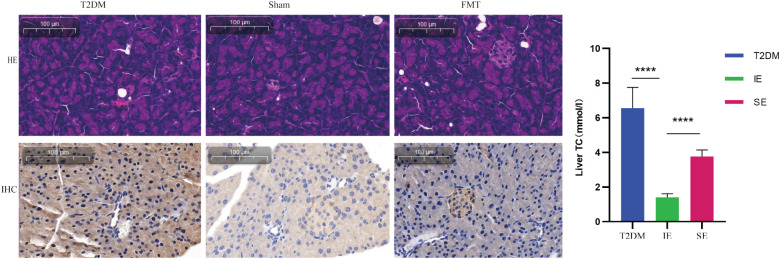
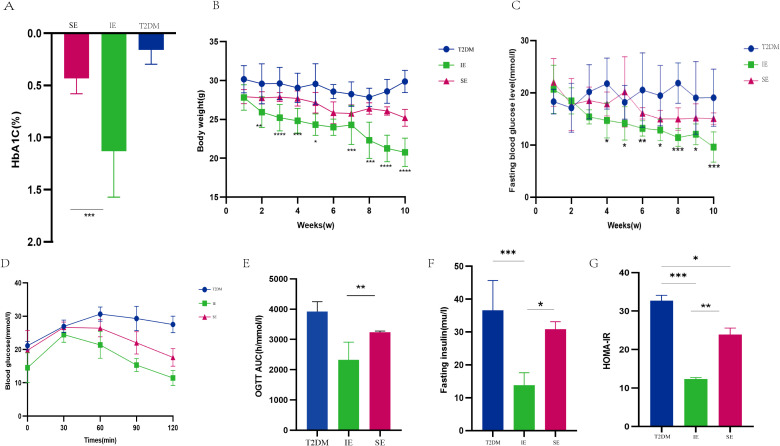
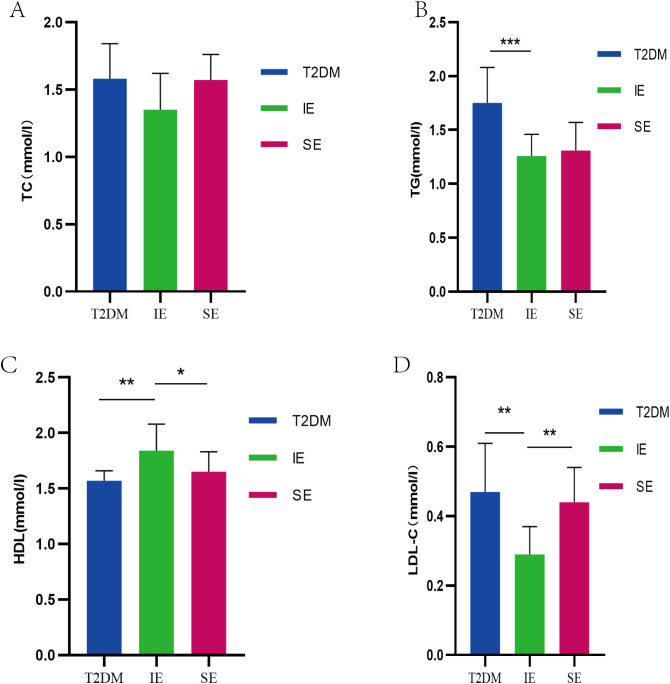
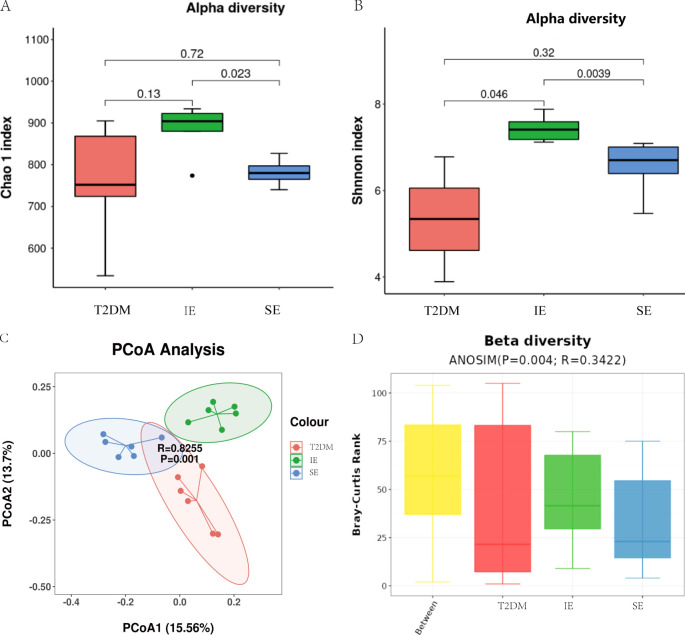
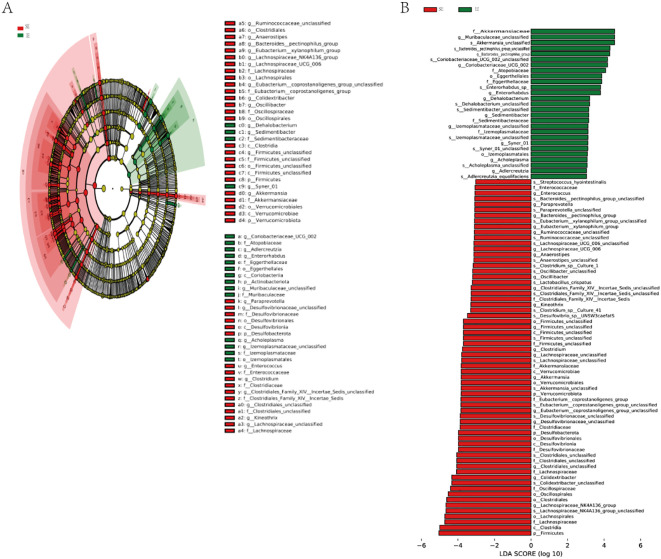
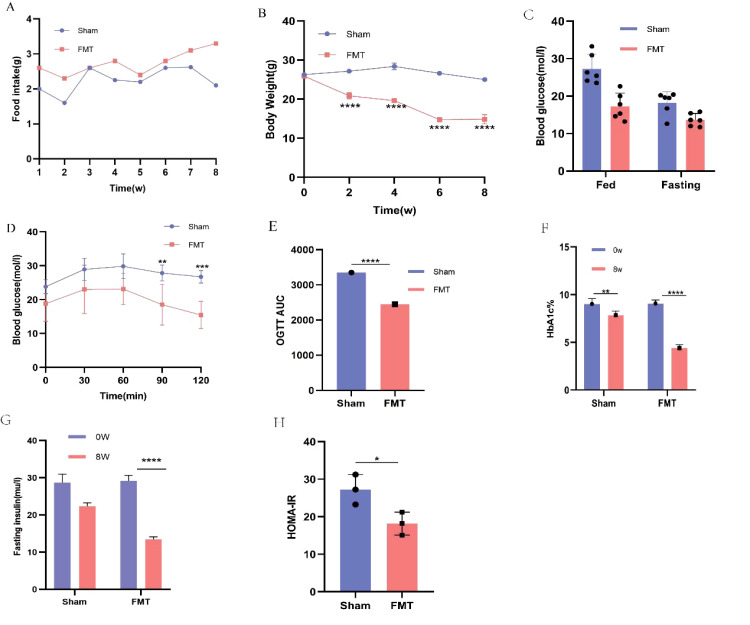
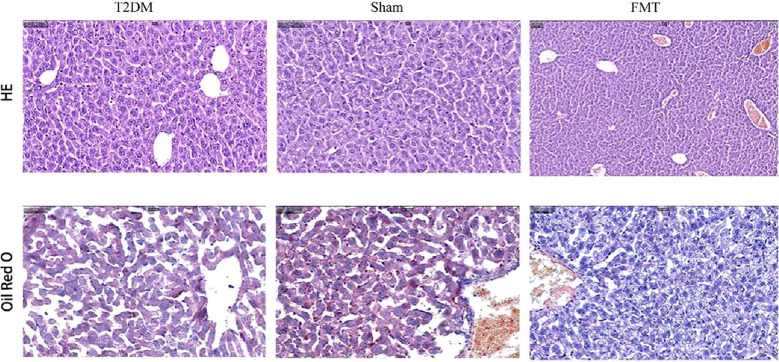
After 10 weeks, compared with the control group, the HbA1c of the experimental group was significantly reduced, still, the level of HBA1c of the mice in the unsatisfactory group was significantly higher than that in the ideal group. Compared with the unsatisfactory group, fasting blood glucose, 2h postprandial blood glucose, blood glucose AUC and body weight were significantly reduced in the ideal group. 16srDNA sequencing showed that the levels of Bacteroidota, Akkermansia, Parabacteroides, Bifidobacteria and other bacteria in the ideal efficacy group were significantly higher than those in the non-ideal efficacy group (P<0.05). The levels of Firmicutes, Romboutsia, Clostridium, Turicibacter and other bacteria in the unsatisfactory group were significantly higher than those in the ideal group (P<0.05). The dominant flora of mice in the ideal drug efficacy group was negatively correlated with HbA1c and blood sugar, and the dominant flora of mice in the unsatisfactory drug efficacy group was positively correlated with pro-inflammatory factors such as blood sugar. Moreover, FMT treatment significantly improved the efficacy of PEX168 and liver steatosis in the group with unsatisfactory efficacy.
In summary, we used the combined method of 16S rDNA and metabolomics to systematically elucidate the efficacy of microflora on PEX168 and the possible mechanism of FMT in treating T2DM by PEX168. The difference in intestinal flora between individuals can affect the therapeutic effect of drugs. Moreover, FMT therapy can affect multiple metabolic pathways and colonization of beneficial bacteria to maintain the drug's therapeutic effect on T2DM mice.
肠道微生物群在2型糖尿病(T2DM)的发生和发展中发挥着越来越重要的作用。进一步的研究揭示了药物与肠道微生物群之间的相互作用。然而,关于肠道微生物群与胰高血糖素样肽-1(GLP-1)之间的潜在相互作用及其在T2DM患者中的治疗反应,仍存在研究空白。此外,粪便微生物群移植(FMT)已成为T2DM患者一种有前景的治疗策略。
50只健康雄性C57BL/6小鼠采用高脂饮食联合链脲佐菌素(STZ)建立T2DM小鼠模型。40只小鼠分为T2DM组(n = 10)和PEX168组(n = 30)。PEX168组又分为理想疗效组(糖化血红蛋白[HbA1c]≤6.5%,n = 12)和非理想疗效组(HbA1c>6.5%,n = 12),每组12只。以理想疗效组小鼠为粪便供体,非理想疗效组小鼠为受体,在两组之间进行粪便微生物群移植,分为FMT组(给予粪便细菌悬液,n = 5)和假手术组(给予等量无菌生理盐水,n = 5)。还分析了理想疗效组(供体)和非理想疗效组(受体)小鼠肠道微生物的差异。以评估FMT对药物疗效和T2DM的保护作用,并探讨其潜在机制。
10周后,与对照组相比,实验组的HbA1c显著降低,不过,非理想疗效组小鼠的HbA水平仍显著高于理想疗效组。与非理想疗效组相比,理想疗效组的空腹血糖、餐后2小时血糖、血糖曲线下面积(AUC)和体重均显著降低。16S核糖体DNA(rDNA)测序显示,理想疗效组中拟杆菌门、阿克曼氏菌、副拟杆菌、双歧杆菌等细菌的水平显著高于非理想疗效组(P<0.05)。非理想疗效组中厚壁菌门、罗姆布茨菌、梭菌、Turicibacter等细菌的水平显著高于理想疗效组(P<0.05)。理想药物疗效组小鼠的优势菌群与HbA1c和血糖呈负相关,非理想药物疗效组小鼠的优势菌群与血糖等促炎因子呈正相关。此外,FMT治疗显著提高了非理想疗效组中PEX168的疗效和肝脂肪变性。
综上所述,我们采用16S rDNA和代谢组学相结合的方法,系统地阐明了微生物群对PEX168的疗效以及FMT通过PEX168治疗T2DM的可能机制。个体之间肠道菌群的差异会影响药物的治疗效果。此外,FMT疗法可影响多种代谢途径并促进有益菌的定植,以维持药物对T2DM小鼠的治疗效果。