Department of Endocrine and Metabolic Diseases, The First Affiliated Hospital of Shantou University Medical College, Shantou, China.
Department of Endocrine and Metabolic Diseases, Longhu Hospital, Shantou, China.
Front Cell Infect Microbiol. 2023 Jan 4;12:1089991. doi: 10.3389/fcimb.2022.1089991. eCollection 2022.
Recent studies have shown that fecal microbiota transplantation (FMT) improved the metabolic profiles of patients with type 2 diabetes mellitus (T2DM), yet the effectiveness in reversing insulin resistance and increasing metformin sensitivity in T2DM patients have not been reported. In this study, we evaluated the improvements of T2DM patients and their gut microbiota by FMT alone and FMT plus metformin.
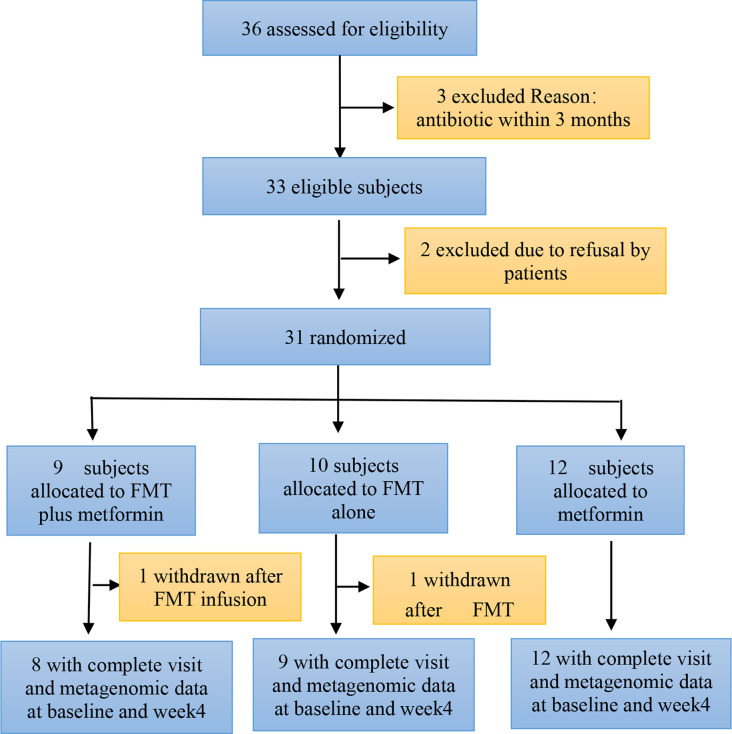
A total of 31 patients with newly diagnosed T2DM were randomized to intervention by metformin, FMT, or FMT plus metformin in the study. Patients were followed up at baseline and week 4 after treatment. Blood and stool samples were collected and subject to analyze clinical parameters and microbial communities by metagenomic sequencing, respectively.
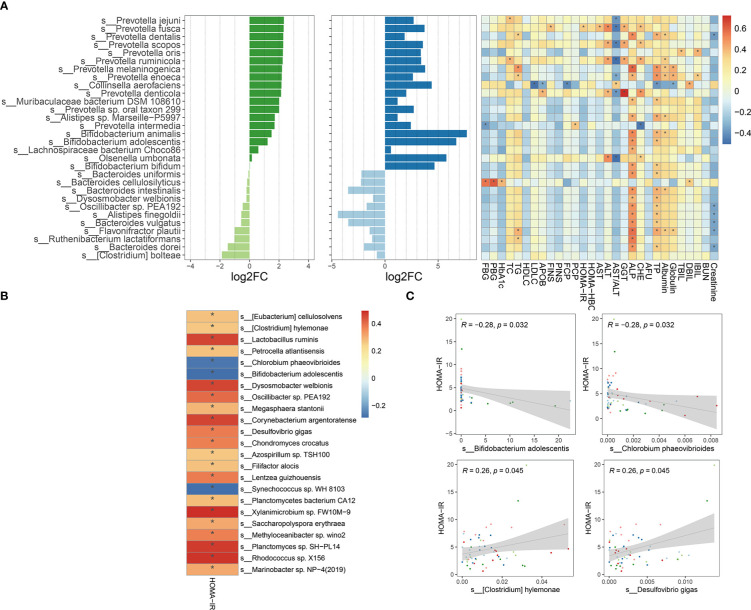
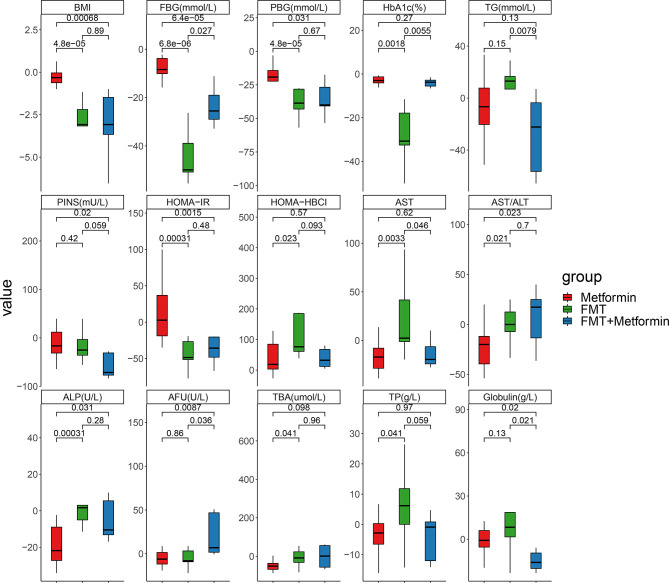
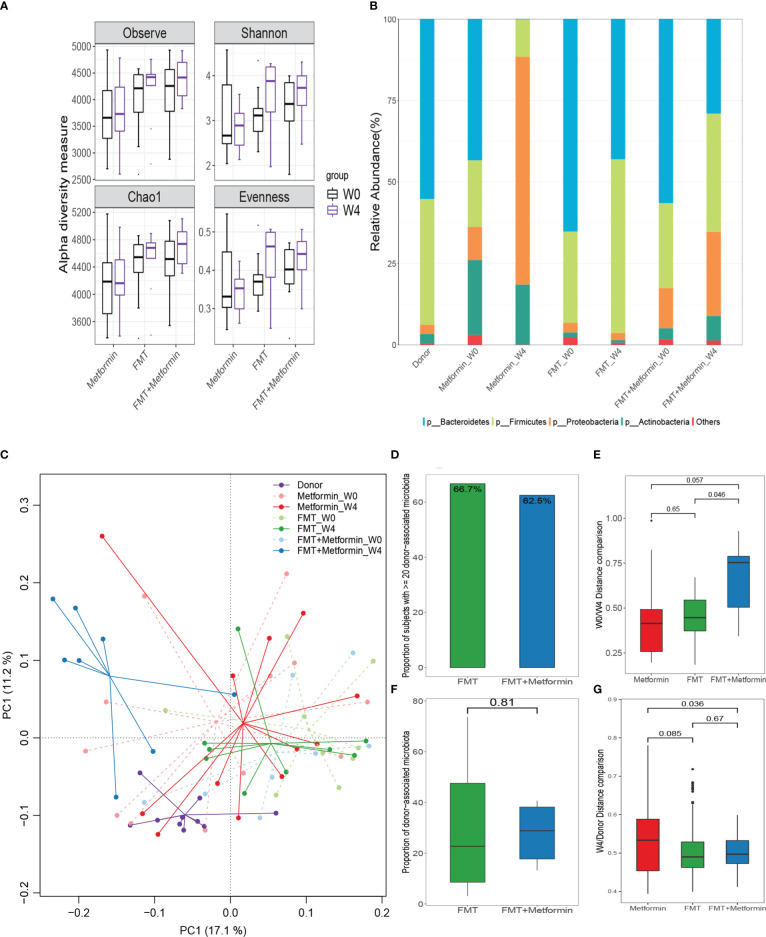
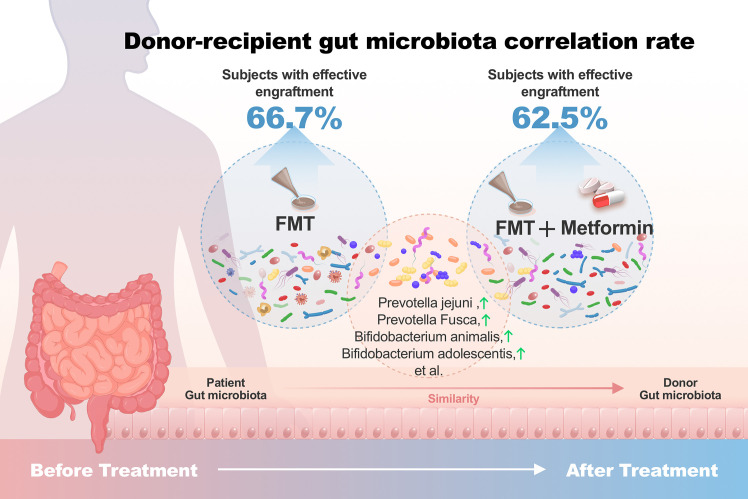
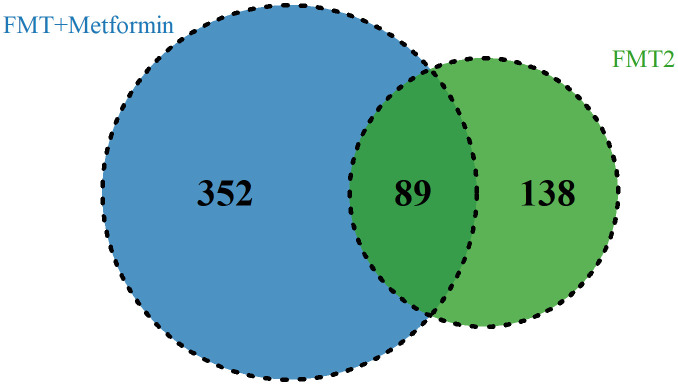
FMT alone and FMT plus metformin significantly improved the clinical indicators HOMA-IR and BMI in T2DM, besides fasting blood glucose, postprandial blood glucose, and hemoglobin A1c that were also controlled by metformin. Donor microbiota effectively colonized in T2DM with slightly higher colonization ration in FMT than FMT plus metformin within 4 weeks, resulting in increased microbial diversity and community changes from baseline after treatment. A total of 227 species and 441 species were significantly alerted after FMT and FMT plus metformin, respectively. FMT were significantly associated with the clinical parameters. Among them, and sp. were potential due to their significantly negative correlations with HOMA-IR.
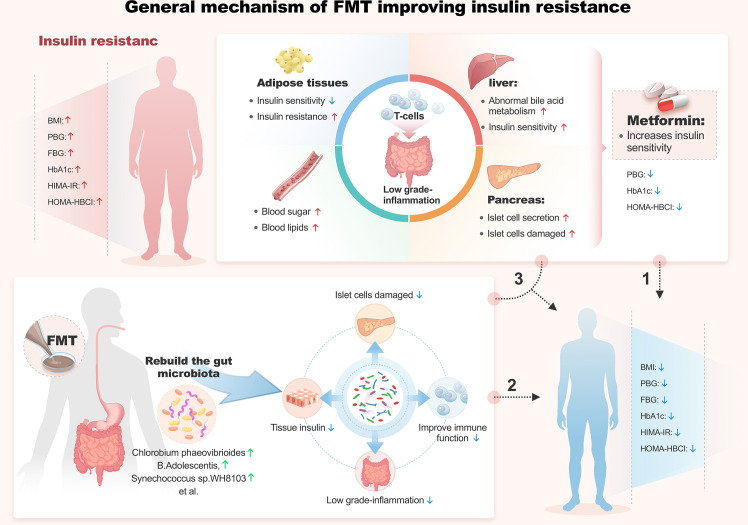
FMT with or without metformin significantly improve insulin resistance and body mass index and gut microbial communities of T2DM patients by colonization of donor-derived microbiota.
最近的研究表明,粪便微生物群移植(FMT)改善了 2 型糖尿病(T2DM)患者的代谢谱,但尚未报道 FMT 逆转胰岛素抵抗和增加二甲双胍敏感性的效果。在这项研究中,我们评估了单独 FMT 和 FMT 加二甲双胍对 T2DM 患者及其肠道微生物群的改善作用。
共有 31 例新诊断的 T2DM 患者被随机分为二甲双胍、FMT 或 FMT 加二甲双胍治疗组。患者在治疗前和治疗后第 4 周进行随访。采集血样和粪便样本,分别通过宏基因组测序分析临床参数和微生物群落。
单独 FMT 和 FMT 加二甲双胍均能显著改善 T2DM 患者的临床指标 HOMA-IR 和 BMI,同时也能控制空腹血糖、餐后血糖和血红蛋白 A1c。供体微生物群在 4 周内有效定植于 T2DM 患者体内,FMT 中的定植率略高于 FMT 加二甲双胍,导致治疗后微生物多样性和群落变化增加。分别有 227 种和 441 种物种在 FMT 和 FMT 加二甲双胍后显著上调。FMT 与临床参数显著相关。其中,和 sp. 由于与 HOMA-IR 呈显著负相关,因此可能是潜在的原因。
单独或联合使用 FMT 可通过供体衍生微生物群的定植,显著改善 T2DM 患者的胰岛素抵抗和体重指数以及肠道微生物群。