Zhang Siai, Liu Chennong, Lai Cuiwei, Zhao Bingyan, Zhang Chunmei, Zhang Yajun, Zhang Zhengtao, Li Jiajia, Zhang Sina, Fa Tiane
Cardiac Intensive Care Unit (CICU), Meizhou People's Hospital, (Meizhou Academy of Medical Sciences), Meizhou, Guangdong Province, China.
Department of Respiratory Medicine, The Second Affiliated Hospital of Tianjin, University of Traditional Chinese Medicine, Tianjin, China.
BMC Nurs. 2025 Jul 4;24(1):841. doi: 10.1186/s12912-025-03517-8.
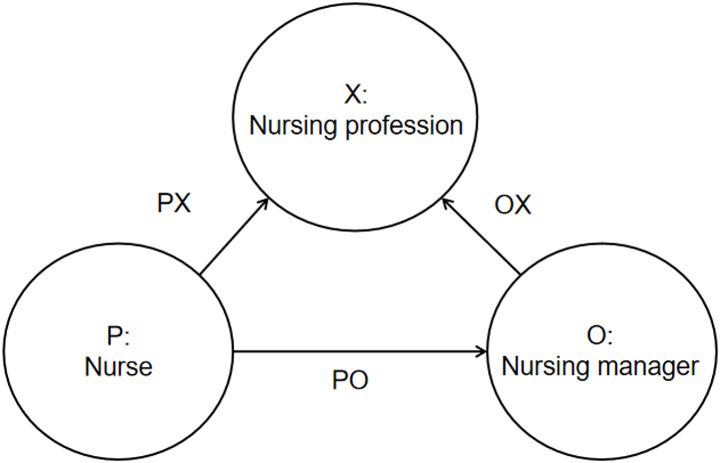
Nurses' professional attitudes, as a key component of nursing professionalism, profoundly influences its development. However, empirical studies examining the influence of nursing managers on nurses' professional attitudes are lacking, and studies exploring how different leadership management styles-through the lens of Balance theory-affect these attitudes remain scarce.
To investigate the relationship between nurses' professional attitudes and nursing managers' authentic, destructive, and transformational leadership styles, based on the Balance theory.
A questionnaire survey was conducted using convenience sampling among 1,154 clinical nurses from 11 hospitals in Tianjin, China. Data from the returned questionnaires were analysed using one-way analysis, correlation analysis, and multiple linear regression to identify factors influencing nurses' professional attitudes.
Nurses' professional attitudes were positively correlated with authentic and transformational leadership (p < 0.01) and negatively correlated with destructive leadership (p < 0.01). Multiple linear regression analysis identified nine influencing factors: gender, monthly income, hospital level, hospital type, whether or not the nurses were specialists, working in obstetrics and gynaecology, authentic leadership, transformational leadership, and destructive leadership (R = 69.7%).
Nurses' professional attitudes are influenced by the degree to which nursing managers exhibit transformational, authentic, or destructive leadership styles.
Not applicable.
护士的职业态度作为护理专业精神的关键组成部分,对其发展有着深远影响。然而,缺乏实证研究来检验护理管理者对护士职业态度的影响,并且从平衡理论的角度探索不同领导管理风格如何影响这些态度的研究仍然很少。
基于平衡理论,调查护士职业态度与护理管理者的真诚型、破坏型和变革型领导风格之间的关系。
采用便利抽样法,对来自中国天津11家医院的1154名临床护士进行问卷调查。对回收问卷的数据进行单因素分析、相关性分析和多元线性回归分析,以确定影响护士职业态度的因素。
护士的职业态度与真诚型和变革型领导呈正相关(p<0.01),与破坏型领导呈负相关(p<0.01)。多元线性回归分析确定了九个影响因素:性别、月收入、医院级别、医院类型、护士是否为专科护士、是否在妇产科工作、真诚型领导、变革型领导和破坏型领导(R=69.7%)。
护士的职业态度受到护理管理者展现变革型、真诚型或破坏型领导风格程度的影响。
不适用。