Samson Susan L, Donegan Diane, Geer Eliza B, Gordon Murray B, Hamidi Oksana, Huang Wenyu, Ioachimescu Adriana G, Silverstein Julie M, Spencer-Segal Joanna L, Tritos Nicholas A, Yuen Kevin C J
Departments of Medicine and Neurologic Surgery, Mayo Clinic, Jacksonville, FL 32224, USA.
Division of Endocrinology, Diabetes and Metabolism, Mayo Clinic, Rochester, MN 55905, USA.
J Endocr Soc. 2025 Jun 27;9(8):bvaf103. doi: 10.1210/jendso/bvaf103. eCollection 2025 Aug.
Endogenous Cushing's syndrome (CS) is a rare endocrine disorder that chronically exposes patients to supraphysiological cortisol levels. Primary therapy for CS consists of surgery. Medical therapies are also considered for many patients with CS, including those who are not surgical candidates or have persistent or recurrent hypercortisolism after surgery. Osilodrostat, an adrenal steroidogenesis inhibitor, demonstrated sustained efficacy and safety in phase 3 clinical trials and is currently approved to treat endogenous CS in Europe and the United States. Because of limited clinical experience, questions remain about how to individualize osilodrostat treatment for different clinical scenarios and special populations. Additional guidance from experts based on clinical study and real-world experiences with osilodrostat is needed.
A modified Delphi consensus panel study was conducted consisting of 13 specialists from high-volume endocrinology centers with experience prescribing osilodrostat. Advisors participated in 3 consensus rounds (2 anonymous surveys, 1 virtual workshop) over approximately 10 months to provide guidance and recommendations on optimal osilodrostat use.
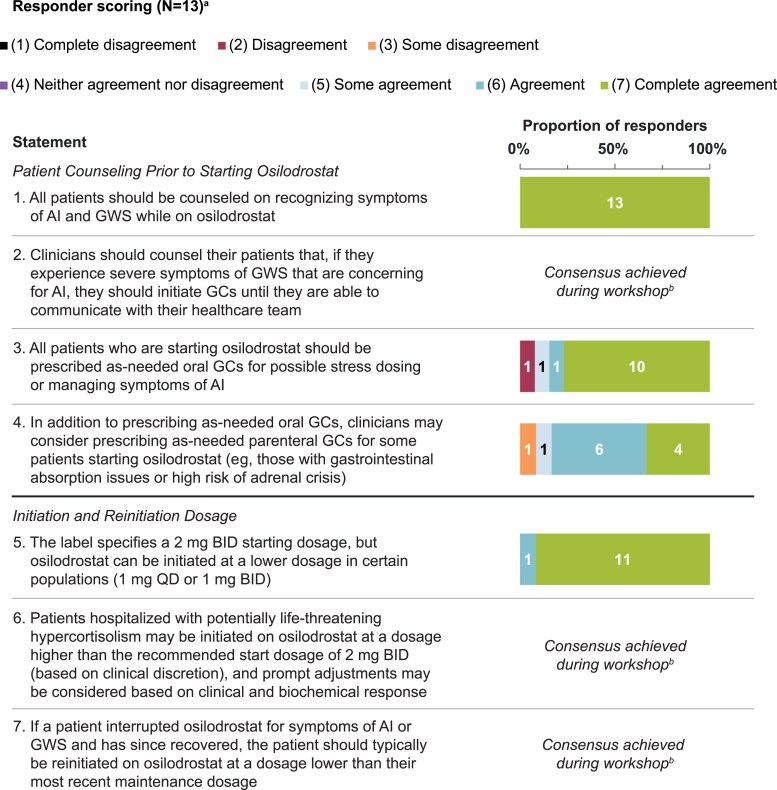
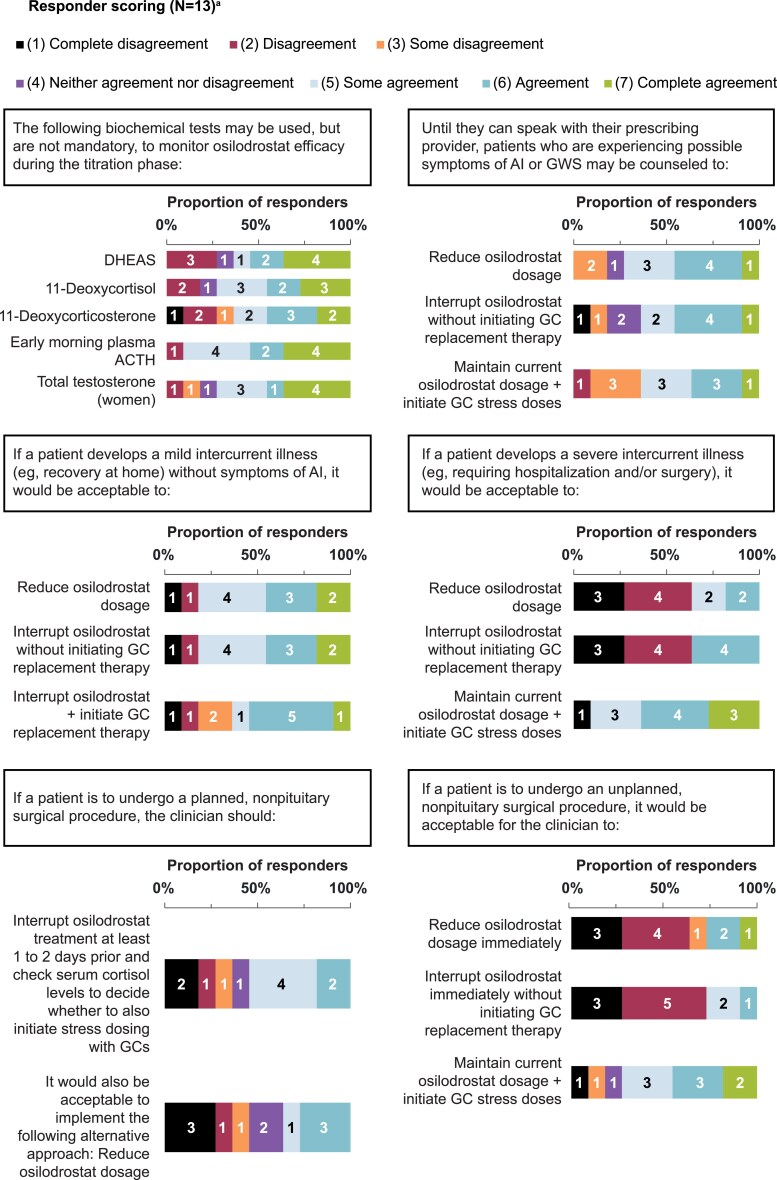
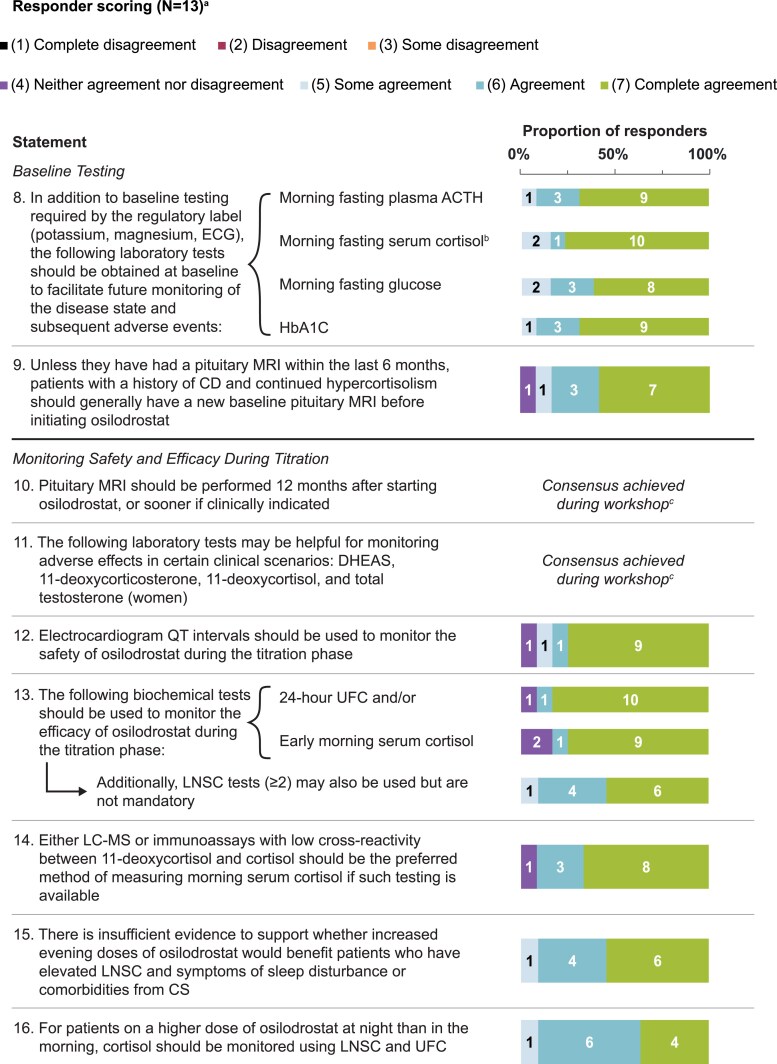
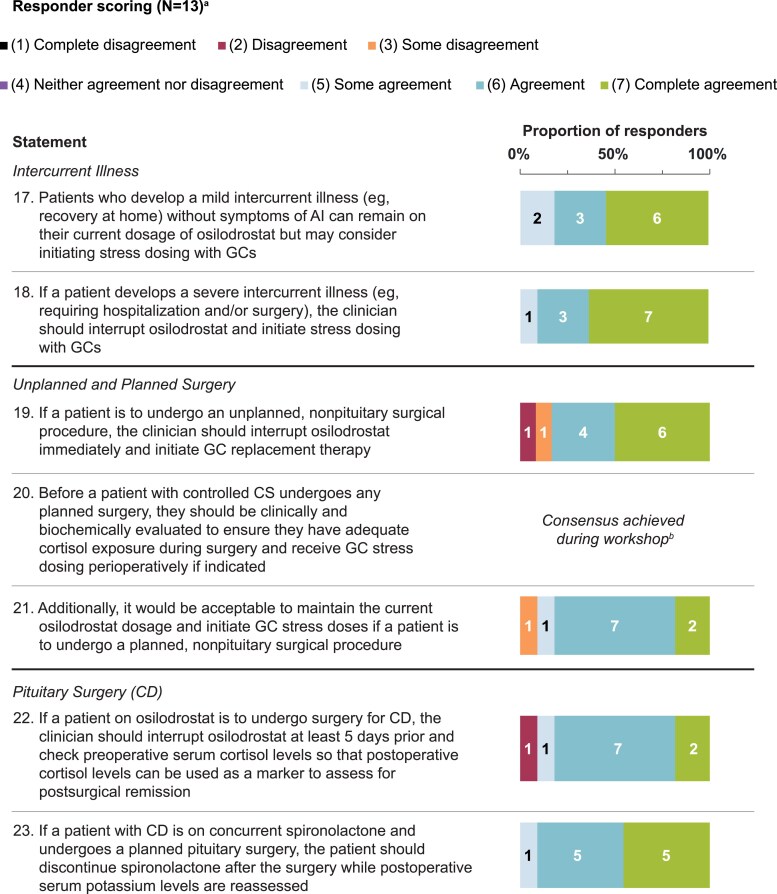
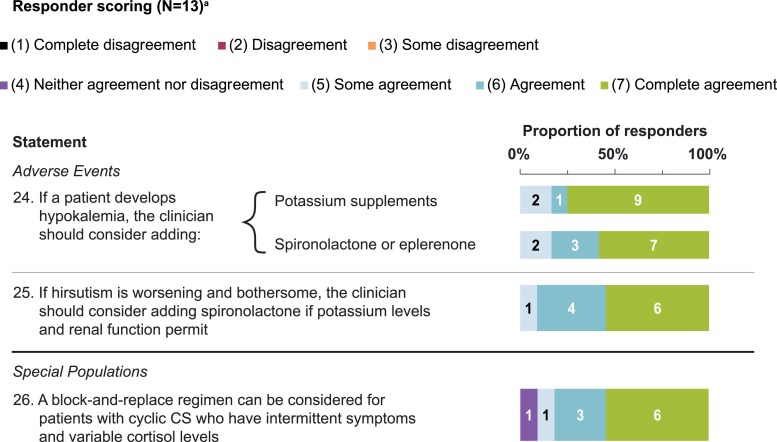
Over 2 surveys and a 2-hour virtual workshop, 26 statements related to osilodrostat achieved consensus among Delphi panelists and 5 were excluded. Topics included patient preparation before osilodrostat initiation, baseline testing, dosing at onset and during treatment, managing dose adjustments, monitoring during dose titration, and treatment alterations for planned and unexpected clinical events.
Treatment guidance and recommendations for osilodrostat use were obtained using the Delphi method. These statements are intended to provide physicians with education and guidance on using osilodrostat to optimally treat patients with CS.
内源性库欣综合征(CS)是一种罕见的内分泌疾病,患者长期暴露于超生理水平的皮质醇环境中。CS的主要治疗方法是手术。对于许多CS患者,也会考虑药物治疗,包括那些不适合手术或术后仍有持续性或复发性皮质醇增多症的患者。奥西卓司他是一种肾上腺类固醇生成抑制剂,在3期临床试验中显示出持续的疗效和安全性,目前已在美国和欧洲获批用于治疗内源性CS。由于临床经验有限,对于如何针对不同临床情况和特殊人群个体化使用奥西卓司他仍存在疑问。因此,需要专家基于奥西卓司他的临床研究和实际应用经验提供更多指导。
开展了一项改良的德尔菲共识小组研究,由13位来自大型内分泌中心、有奥西卓司他处方经验的专家组成。专家们在大约10个月的时间里参与了3轮共识会议(2次匿名调查、1次虚拟研讨会),以提供关于奥西卓司他最佳使用方法的指导和建议。
在2次调查和一场2小时的虚拟研讨会中,德尔菲小组成员就26条与奥西卓司他相关的陈述达成了共识,5条被排除。主题包括奥西卓司他开始使用前的患者准备、基线检测、起始及治疗期间的给药、管理剂量调整、剂量滴定期间的监测以及针对计划内和意外临床事件的治疗调整。
采用德尔菲法获得了奥西卓司他使用的治疗指导和建议。这些陈述旨在为医生提供关于使用奥西卓司他优化治疗CS患者的教育和指导。