Deagen J T, Whanger P D
Biochem J. 1985 Oct 15;231(2):279-83. doi: 10.1042/bj2310279.
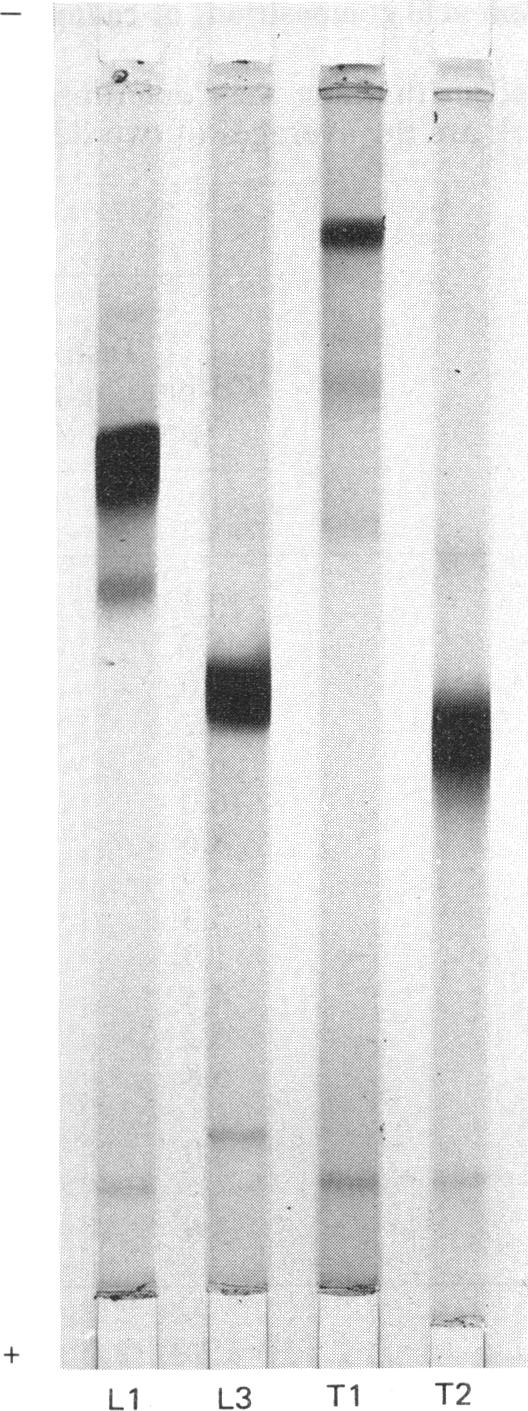
Since the exposure of rats to cadmium causes zinc to accumulate in metallothionein in liver and kidney but not in a similar protein in the testes, the properties of the low-Mr cadmium-binding proteins were investigated in rat testes. Weanling rats that had been given dietary cadmium for 6 weeks were injected with 109CdCl2 and subsequently killed, and the 109Cd-labelled low-Mr proteins from testes were purified. The pooled low-Mr cadmium-containing fractions from the gel-filtration (Sephadex G-75) columns were eluted through DEAE-Sephacel columns, yielding two peaks. Each of the individual peaks from this Sephacel column was further purified by rechromatography on DEAE-Sephacel and on Bio-Gel P-10 columns. Amino acid analysis of the two purified proteins revealed a low cysteine (about 3%) content, with aspartate, glutamate and glycine as the predominant amino acids. Thus these low-Mr cadmium-binding proteins induced by cadmium in rat testes do not appear to be metallothionein.
由于大鼠接触镉会导致锌在肝脏和肾脏的金属硫蛋白中积累,但不会在睾丸中的类似蛋白质中积累,因此对大鼠睾丸中低分子量镉结合蛋白的特性进行了研究。给断奶大鼠喂食镉6周后,注射109CdCl2,随后处死,从睾丸中纯化出109Cd标记的低分子量蛋白。凝胶过滤(Sephadex G-75)柱中合并的含镉低分子量级分通过DEAE-Sephacel柱洗脱,产生两个峰。该Sephacel柱上的每个单独峰通过在DEAE-Sephacel和Bio-Gel P-10柱上重新色谱进一步纯化。对这两种纯化蛋白的氨基酸分析显示,半胱氨酸含量较低(约3%),主要氨基酸为天冬氨酸、谷氨酸和甘氨酸。因此,镉在大鼠睾丸中诱导产生的这些低分子量镉结合蛋白似乎不是金属硫蛋白。