Tawakoli Mohammad Farid, Abed Abdullah, Sakhi Rohullah
Public Health Faculty, Kabul University of Medical Sciences, Kabul, Afghanistan.
Int J Womens Health. 2025 Jul 3;17:1911-1922. doi: 10.2147/IJWH.S524839. eCollection 2025.
Premenstrual Syndrome (PMS) is a significant public health concern affecting a substantial proportion of women worldwide, with a global prevalence of approximately 47.8%. In Afghanistan, the PMS is prevalent, and the magnitude is unknown. Due to a lack of studies, this is the first study that sheds light on prevalence of PMS.
This study investigates the prevalence and symptoms of PMS among female students in Kabul, Afghanistan.
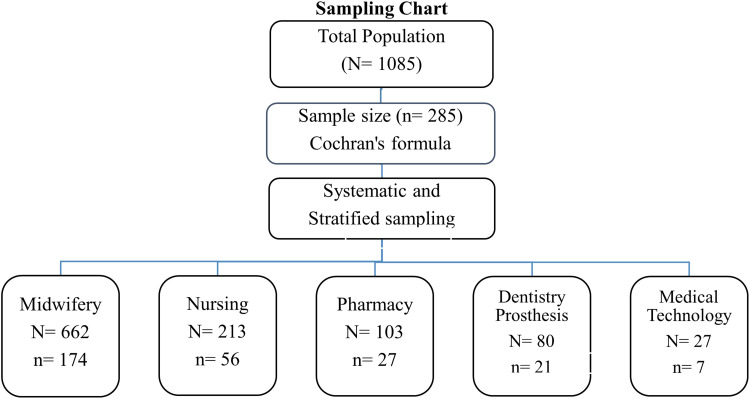
This descriptive cross-sectional study was conducted between May and September 2024 on a sample of 285 students. A systematic and stratified random sampling method was employed. Data were collected using a standardized questionnaire and analyzed using SPSS version 26. The chi-square test was performed to assess the association between PMS prevalence and variables such as age and menstrual cycle status.
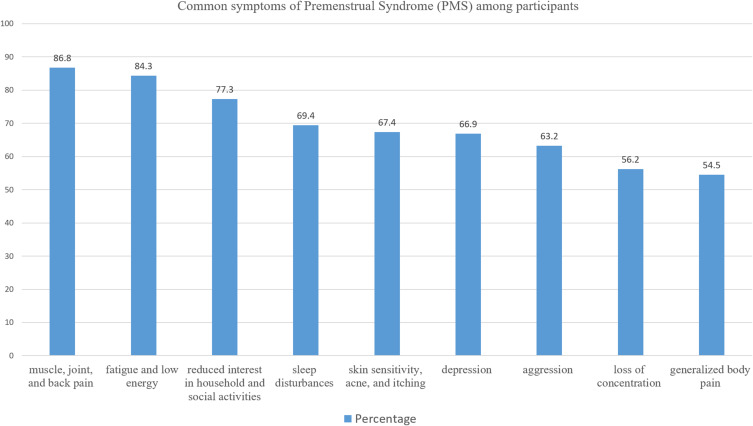
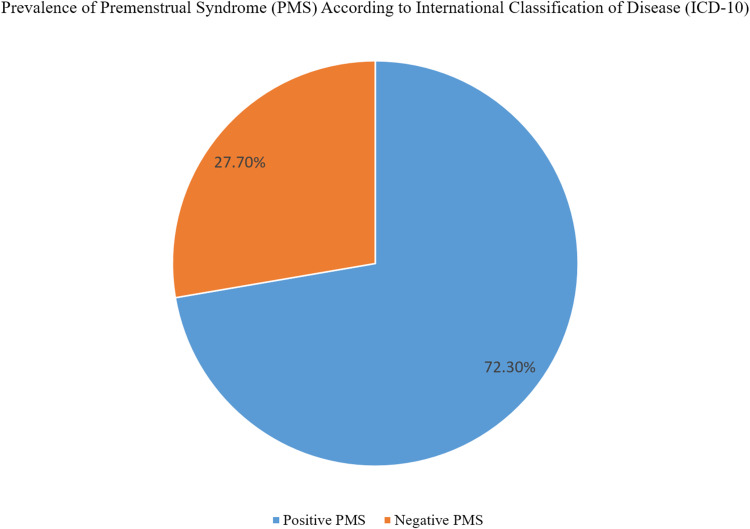
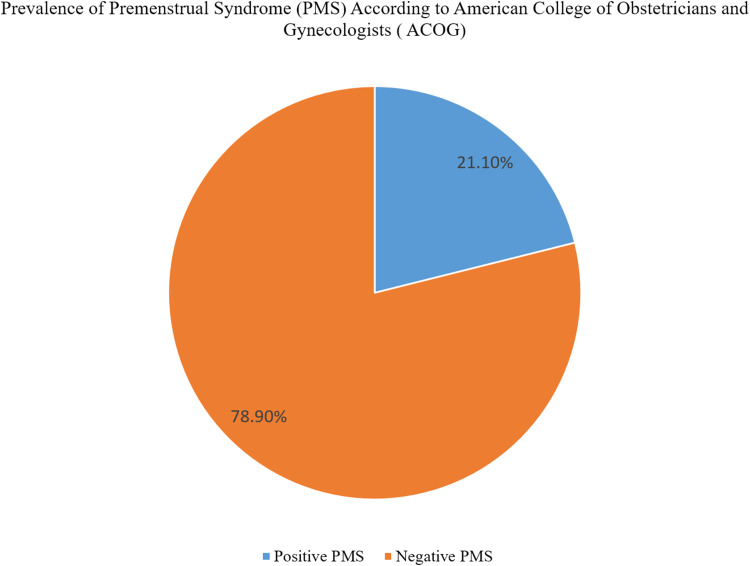
The study achieved a response rate of 84.91%. The participants' age distribution was 39.7% between 18-20 years, 57% between 21-25 years, and 3.3% above 25 years. Most participants were single (87.6%), and 76.9% reported having regular menstrual cycles. The prevalence of PMS was 72.3% based on ICD-10 criteria and 21.1% based on ACOG criteria. The chi-square test indicated no statistically significant association between age groups and PMS prevalence (p-value= 0.151), but significant relationship was observed between menstrual cycle regularity and PMS prevalence (p-value= 0.018). The most frequently reported symptoms were muscle, joint, and back pain (86.8%), fatigue (84.3%), and reduced interest in activities (77.3%).
The high prevalence of PMS and its association with irregular menstrual cycles highlight the need for targeted awareness campaigns, culturally sensitive interventions, and improved healthcare access to mitigate its effects.
经前综合征(PMS)是一个重大的公共卫生问题,影响着全球相当一部分女性,全球患病率约为47.8%。在阿富汗,经前综合征很普遍,但具体程度未知。由于缺乏相关研究,这是第一项揭示经前综合征患病率的研究。
本研究调查阿富汗喀布尔女学生中经前综合征的患病率及症状。
本描述性横断面研究于2024年5月至9月对285名学生样本进行。采用系统分层随机抽样方法。使用标准化问卷收集数据,并使用SPSS 26版进行分析。进行卡方检验以评估经前综合征患病率与年龄和月经周期状态等变量之间的关联。
该研究的应答率为84.91%。参与者的年龄分布为:18至20岁之间占39.7%,21至25岁之间占57%,25岁以上占3.3%。大多数参与者为单身(87.6%),76.9%报告月经周期规律。根据国际疾病分类第10版(ICD - 10)标准,经前综合征的患病率为72.3%,根据美国妇产科医师学会(ACOG)标准为21.1%。卡方检验表明年龄组与经前综合征患病率之间无统计学显著关联(p值 = 0.151),但月经周期规律性与经前综合征患病率之间存在显著关系(p值 = 0.018)。最常报告的症状是肌肉、关节和背痛(86.8%)、疲劳(84.3%)以及对活动的兴趣降低(77.3%)。
经前综合征的高患病率及其与月经周期不规律的关联凸显了开展针对性宣传活动、进行文化敏感干预以及改善医疗保健服务以减轻其影响的必要性。