Ito Hiroyuki, Shimonaka Atsushi, Natsume Midori, Yonekura Kumiko, Fukasawa Tomoyuki, Ito Satomi, Sawazaki Ayako, Tamura Kazuji, Kimura Ikuko, Koga Jinichiro
R&D Division, Meiji Co., Ltd., 1-29-1 Nanakuni, Hachioji-shi, Tokyo 192-0919, Japan.
Medical Research Department, Beauty & Health Research Inc., 4-2-18 Nishi-Shinjuku, Shinjuku-ku, Tokyo 160-0023, Japan.
Biosci Microbiota Food Health. 2025;44(3):196-204. doi: 10.12938/bmfh.2024-049. Epub 2025 Mar 5.
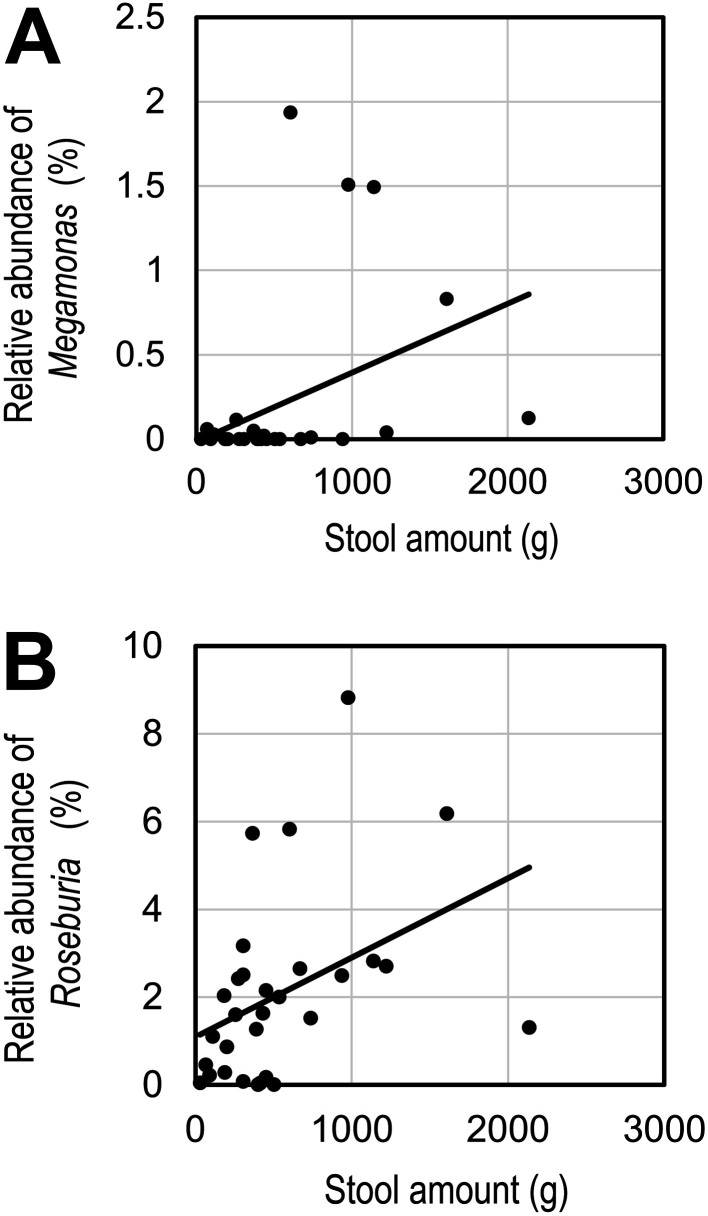
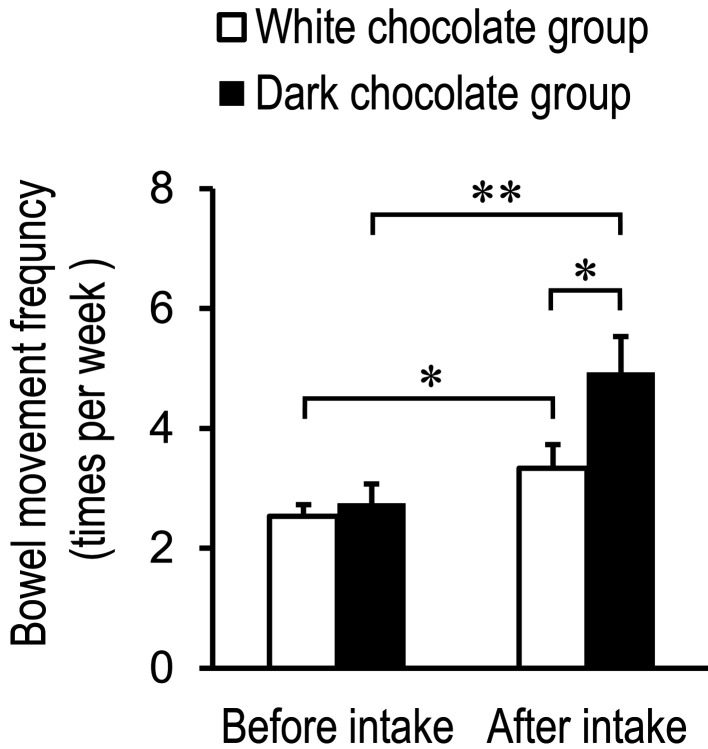
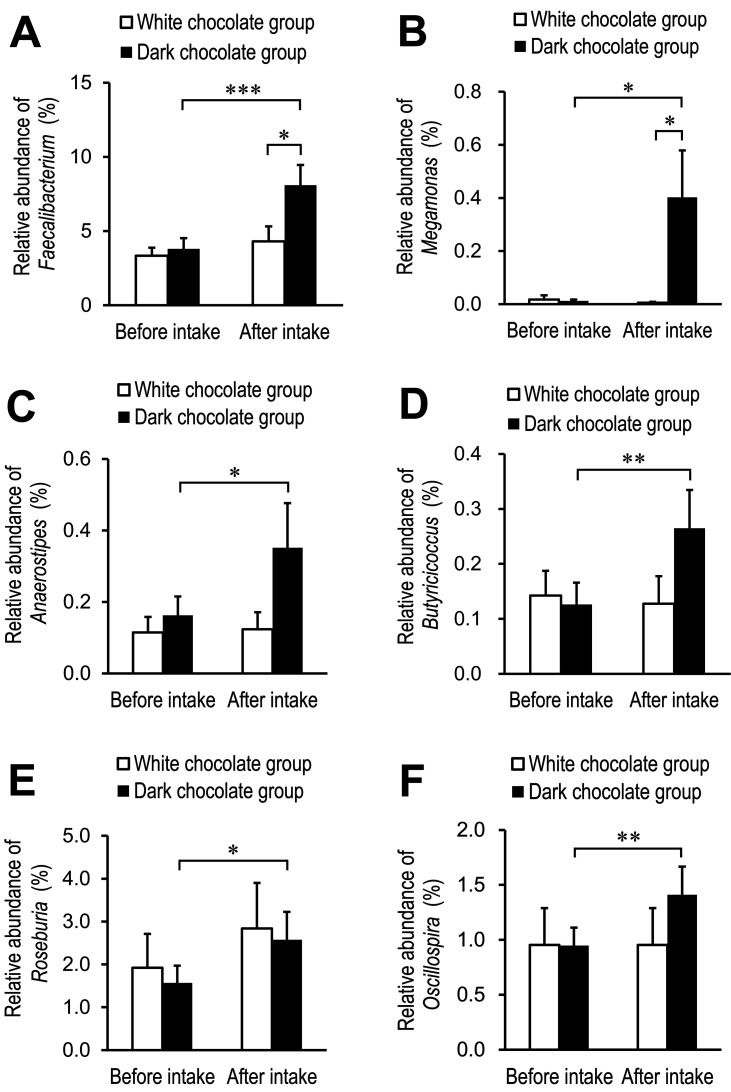
In a previous study, we found that proteins from cacao beans (cacao proteins) were resistant to digestive enzymes and that ingestion of the indigestible cacao proteins promoted defecation and altered the intestinal microbiota in mice. Therefore, we investigated whether ingestion of dark chocolate containing high amounts of cacao proteins improves constipation and alters the intestinal microbiota in Japanese women. Bowel movement frequency and stool amount after dark chocolate ingestion were significantly higher than before dark chocolate ingestion and significantly higher than after ingestion of white chocolate with no cacao proteins. Next, stool samples were collected, and the intestinal microbiota was analyzed by next-generation sequencing-based 16S rRNA. There was no significant difference in the α-diversity index of the gut microbiota between before and after ingestion of white chocolate, but the α-diversity index of the gut microbiota after ingestion of dark chocolate was significantly higher than before ingestion. The relative abundances of and in the fecal microbiota after dark chocolate ingestion were significantly higher than before dark chocolate ingestion and significantly higher than after white chocolate ingestion. The relative abundances of , , and in the fecal microbiota after dark chocolate ingestion were significantly higher than before ingestion. Spearman correlation analysis revealed a correlation between the stool amount and relative abundances of and in the dark chocolate ingestion group. These results indicate that ingestion of dark chocolate improved constipation in humans and promoted increase of the relative abundances of butyrate producing bacteria such as , , , , and in the intestinal microbiota.
在之前的一项研究中,我们发现可可豆中的蛋白质(可可蛋白)对消化酶具有抗性,并且摄入难以消化的可可蛋白可促进小鼠排便并改变其肠道微生物群。因此,我们研究了摄入含有大量可可蛋白的黑巧克力是否能改善日本女性的便秘并改变其肠道微生物群。摄入黑巧克力后的排便频率和粪便量显著高于摄入黑巧克力前,且显著高于摄入不含可可蛋白的白巧克力后。接下来,收集粪便样本,并通过基于下一代测序的16S rRNA分析肠道微生物群。摄入白巧克力前后肠道微生物群的α-多样性指数没有显著差异,但摄入黑巧克力后肠道微生物群的α-多样性指数显著高于摄入前。摄入黑巧克力后粪便微生物群中[具体细菌名称1]和[具体细菌名称2]的相对丰度显著高于摄入黑巧克力前,且显著高于摄入白巧克力后。摄入黑巧克力后粪便微生物群中[具体细菌名称3]、[具体细菌名称4]和[具体细菌名称5]的相对丰度显著高于摄入前。Spearman相关性分析显示,在黑巧克力摄入组中,粪便量与[具体细菌名称1]和[具体细菌名称2]的相对丰度之间存在相关性。这些结果表明,摄入黑巧克力可改善人类便秘,并促进肠道微生物群中产生丁酸盐的细菌如[具体细菌名称1]、[具体细菌名称2]、[具体细菌名称3]、[具体细菌名称4]和[具体细菌名称5]的相对丰度增加。