Springer-Sapp Catherine B, Ogbara Olayinka, Canellas Da Silva Maria, Henderson AbryAnna, Liu Yuan, Prior Steven J, Kuzmiak-Glancy Sarah
Department of Kinesiology, University of Maryland School of Public Health, College Park, Maryland, MD, United States.
Baltimore Veterans Affairs Geriatric Research, Education and Clinical Center, Baltimore, MD, United States.
Front Aging. 2025 Jun 25;6:1606110. doi: 10.3389/fragi.2025.1606110. eCollection 2025.
Skeletal and cardiac muscle mitochondria exist in a dynamic reticulum that is maintained by a balance of mitochondrial biogenesis, fusion, fission, and mitophagy. This balance is crucial for adequate ATP production, and alterations in skeletal muscle mitochondria have been implicated in aging-associated declines in mitochondrial function.
We sought to determine whether age and biological sex affect mitochondrial content [Complex IV (CIV)], biogenesis (PGC-1ɑ), fusion (MFN2, OPA1), fission (DRP1, FIS1), and mitophagy (Parkin, Pink1) markers in skeletal and cardiac muscle by assessing protein expression in tibialis anterior (TA) and ventricular tissue from 16 young (≤6 months) and 16 old (≥20 months) male and female Sprague-Dawley rats.
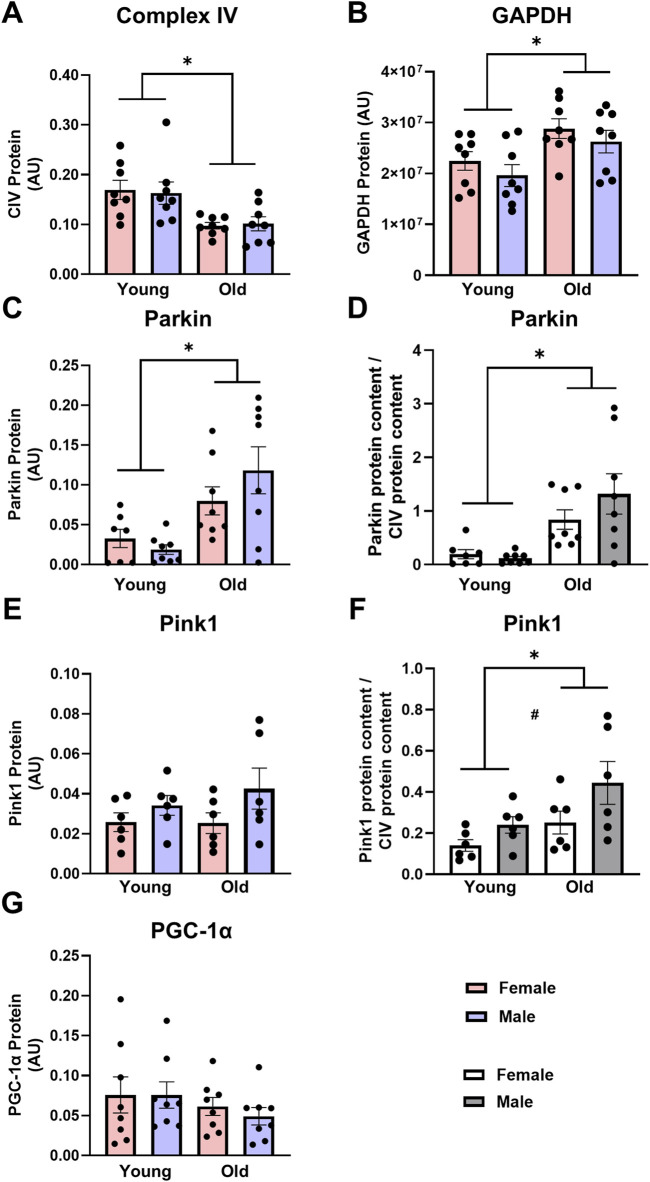
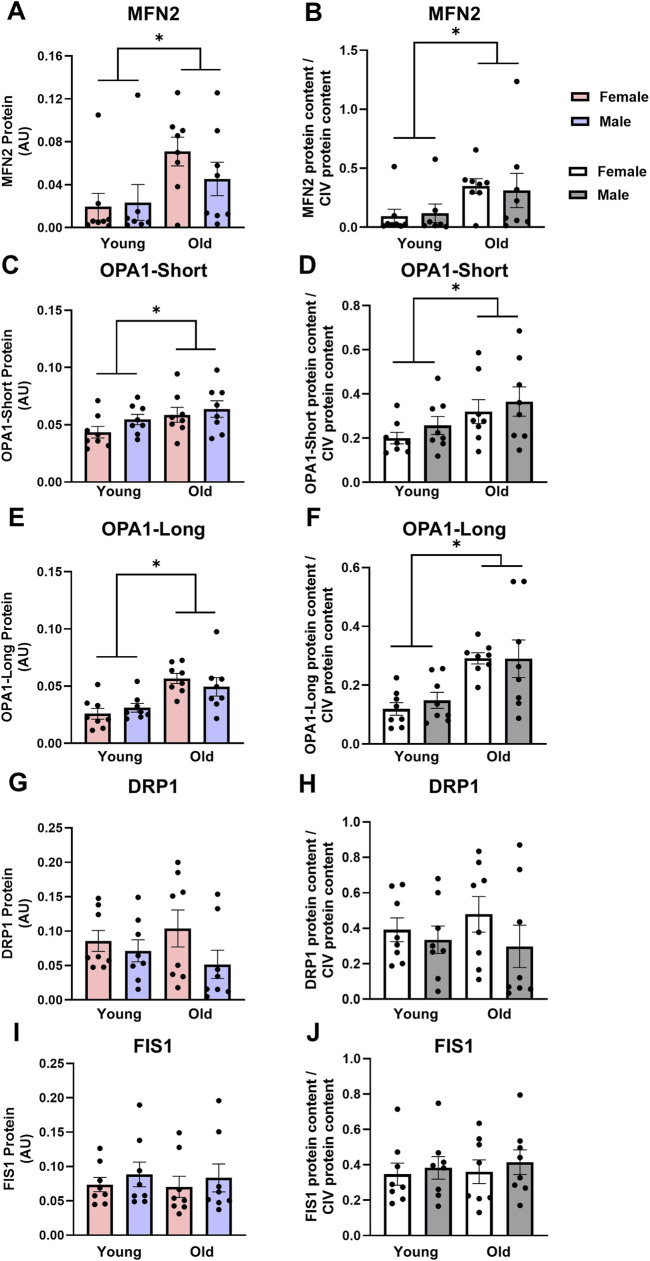
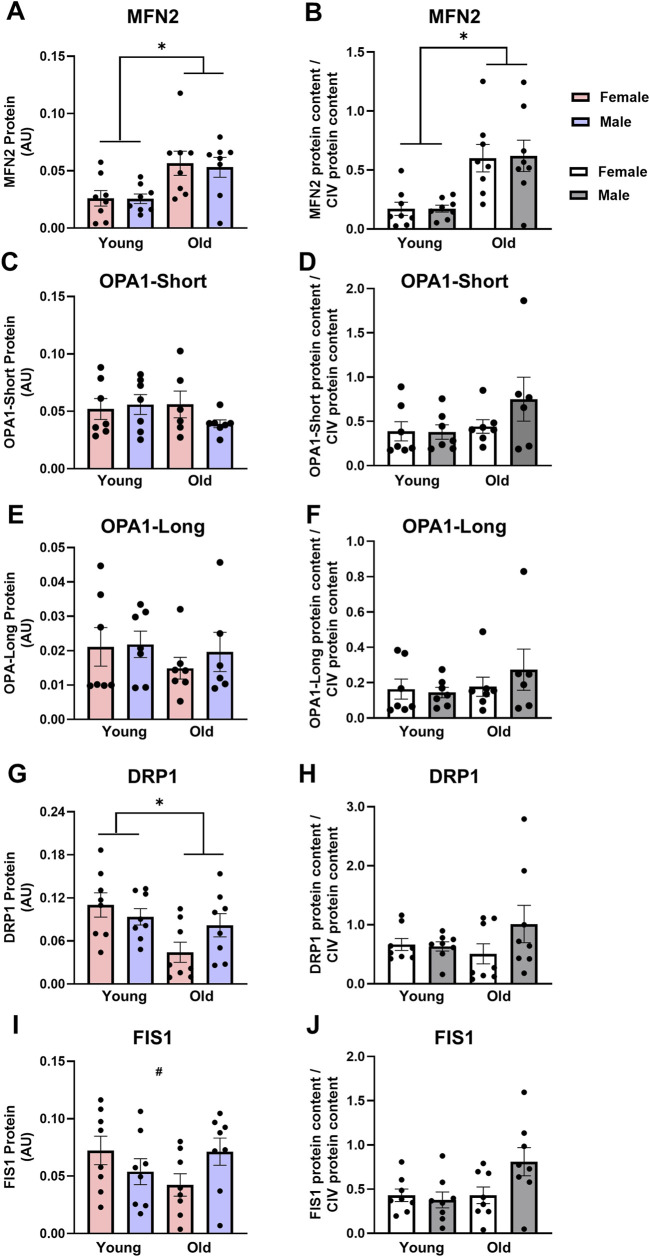
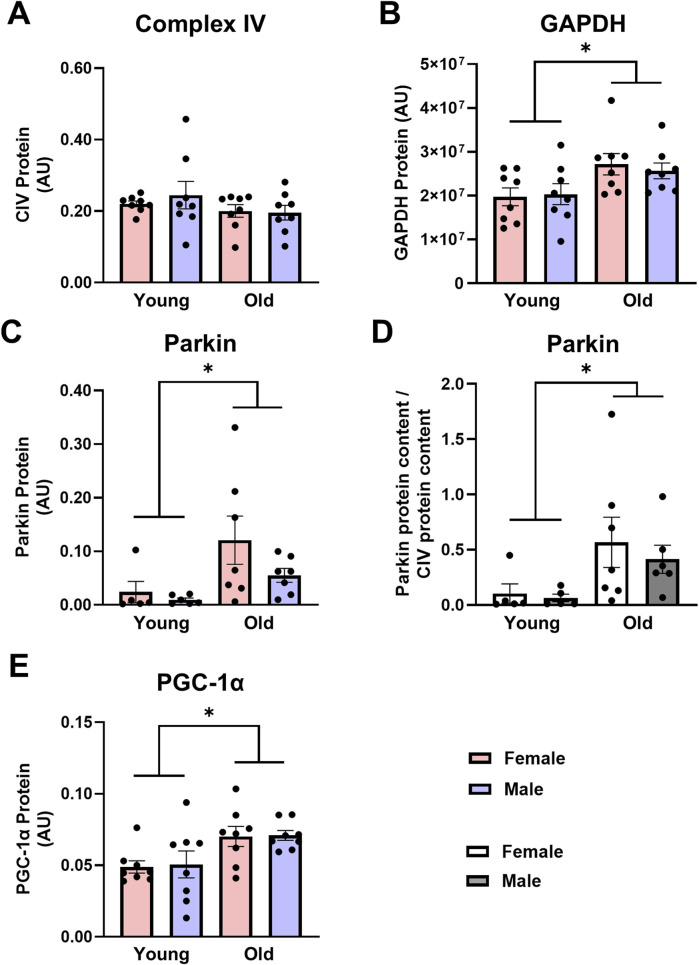
In the TA, CIV expression was 40% lower in old vs. young rats (p < 0.001), indicating lower mitochondrial content, and coincided with higher expression of Parkin (+4-fold, p < 0.001). Further, MFN2 expression was higher (+2-fold, p < 0.005) and DRP1 expression was lower (-40%, p = 0.014) in older rats. In cardiac muscle, mitochondrial content was maintained in old vs. young rats, and this occurred concomitantly with higher expression of both PGC-1ɑ and Parkin. MFN2 and OPA1 expression were also 1.2-5-fold higher in older rats (p < 0.05 for all). Largely, protein expression did not differ between male and female rats, with the exception of Pink1 and FIS1 expression in the TA.
Collectively, older skeletal and cardiac muscle demonstrated higher expression of fusion and mitophagy proteins, which indicates age alters the balance of biogenesis, fission, fusion, and mitophagy. This may, in turn, affect the ability to provide ATP to these metabolically active tissues.
骨骼肌和心肌线粒体存在于一个动态网状结构中,该结构通过线粒体生物发生、融合、裂变和线粒体自噬的平衡来维持。这种平衡对于充足的ATP产生至关重要,并且骨骼肌线粒体的改变与衰老相关的线粒体功能下降有关。
我们试图通过评估16只年轻(≤6个月)和16只老年(≥20个月)雄性和雌性Sprague-Dawley大鼠的胫骨前肌(TA)和心室组织中的蛋白质表达,来确定年龄和生物学性别是否会影响骨骼肌和心肌中的线粒体含量[细胞色素c氧化酶(CIV)]、生物发生(PGC-1ɑ)、融合(MFN2、OPA1)、裂变(DRP1、FIS1)和线粒体自噬(Parkin、Pink1)标志物。
在TA中,老年大鼠的CIV表达比年轻大鼠低40%(p < 0.001),表明线粒体含量较低,并且与Parkin的较高表达(增加4倍,p < 0.001)一致。此外,老年大鼠中MFN2表达较高(增加2倍,p < 0.005),而DRP1表达较低(降低40%,p = 0.014)。在心肌中,老年大鼠与年轻大鼠相比线粒体含量得以维持,并且这与PGC-1ɑ和Parkin的较高表达同时发生。老年大鼠中MFN2和OPA1表达也高1.2至5倍(所有p < 0.05)。总体而言,除了TA中Pink1和FIS1表达外,雄性和雌性大鼠之间的蛋白质表达没有差异。
总的来说,老年骨骼肌和心肌显示出融合和线粒体自噬蛋白的较高表达,这表明年龄改变了生物发生、裂变、融合和线粒体自噬的平衡。这反过来可能会影响为这些代谢活跃组织提供ATP的能力。