Fu Yu, Chen Yang, Han Xuewen, Tan Dandan, Chen Jinlin, Lai Cuiyu, Yang Xiaofan, Shan Xuesong, Silva Luiz H P, Jiang Huaizhi
College of Animal Science and Technology, Jilin Agricultural University, Changchun 130118, China.
Department of Agriculture and Food Science, Western Kentucky University, Bowling Green, KY 42101-1066, USA.
Foods. 2025 Jun 29;14(13):2309. doi: 10.3390/foods14132309.
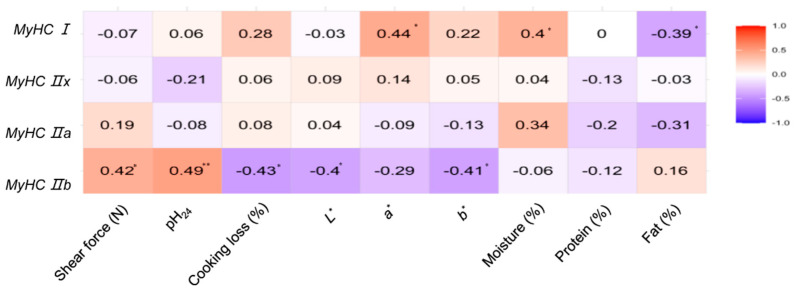
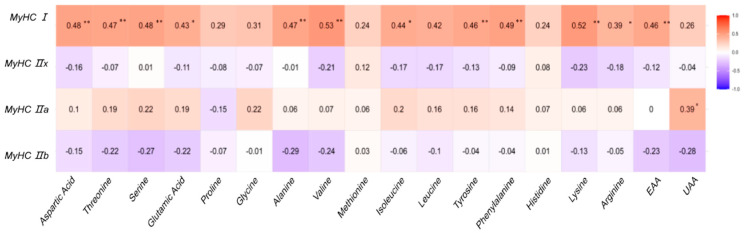
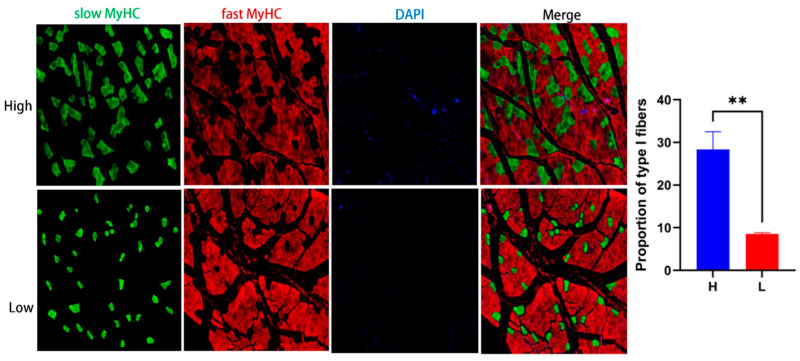
Skeletal muscle fiber type composition critically influences lamb meat quality. This study examined the relationships between muscle fiber types and key quality traits, including tenderness, color, lipid and amino acid profiles, and volatile flavor compounds. MyHC I (slow-twitch oxidative fibers) positively correlated with desirable traits such as increased redness, water-holding capacity, unsaturated fatty acids, and essential amino acids. Conversely, MyHC IIb (fast glycolytic fibers) was linked to reduced tenderness and higher levels of off-flavor compounds. MyHC IIa and IIx showed minimal effects. Untargeted metabolomics comparing muscles with high versus low slow-twitch fiber proportions revealed differential metabolites enriched in sphingolipid and arginine-proline metabolism pathways. These results suggest that a higher proportion of oxidative fibers enhances both the sensory and nutritional qualities of lamb meat by modulating lipid metabolism, amino acid availability, and flavor formation.
骨骼肌纤维类型组成对羔羊肉品质有至关重要的影响。本研究考察了肌肉纤维类型与关键品质性状之间的关系,这些性状包括嫩度、颜色、脂质和氨基酸谱以及挥发性风味化合物。肌球蛋白重链I(慢肌氧化纤维)与诸如色泽加深、持水力、不饱和脂肪酸和必需氨基酸等理想性状呈正相关。相反,肌球蛋白重链IIb(快肌糖酵解纤维)与嫩度降低和异味化合物含量较高有关。肌球蛋白重链IIa和IIx的影响最小。对慢肌纤维比例高和低的肌肉进行的非靶向代谢组学分析显示,鞘脂和精氨酸-脯氨酸代谢途径中富集了差异代谢物。这些结果表明,较高比例的氧化纤维通过调节脂质代谢、氨基酸可用性和风味形成,提高了羔羊肉的感官和营养品质。