Shen Chan, Ikram Mohammad, Zhou Shouhao, Klein Roger, Leslie Douglas, Thornton James Douglas
Department of Surgery, College of Medicine, The Pennsylvania State University, Hershey, PA 17033, USA.
Department of Public Health Sciences, College of Medicine, The Pennsylvania State University, Hershey, PA 17033, USA.
Cancers (Basel). 2025 Jun 25;17(13):2146. doi: 10.3390/cancers17132146.
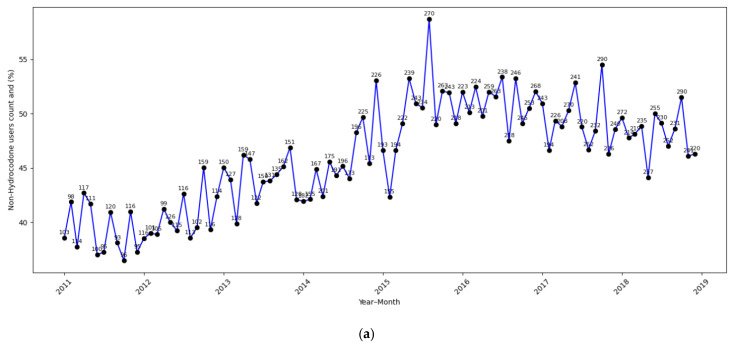
: Pain is a prevalent issue among breast cancer patients and survivors, with a significant proportion receiving hydrocodone for pain management. However, the rescheduling of hydrocodone from Schedule III to Schedule II by the U.S. Drug Enforcement Administration (DEA) in October 2014 raised concerns about potential barriers to opioid access for cancer patients, particularly among vulnerable populations such as dually eligible Medicare-Medicaid beneficiaries and racial/ethnic minorities. : We conducted a retrospective cohort study using Surveillance, Epidemiology, and End Results (SEER)-Medicare linked data including 52,306 early-stage breast cancer patients from 2011 to 2019. We employed multivariable logistic regression models with model specification tests to stratify the subgroups and evaluate the differential effects of the policy change by Medicaid dual eligibility and race-ethnicity, while adjusting for other patient demographics, clinical characteristics, and cancer treatments. : The rescheduling of hydrocodone was associated with significantly different effects on prescription opioid use across subgroups, with the most pronounced reduction in hydrocodone prescription observed among dual-eligible racial/ethnic minority patients (adjusted odds ratio [AOR] = 0.57; 95% confidence interval [CI]: 0.44-0.74; < 0.001). Non-dual-eligible patients experienced a smaller reduction in hydrocodone use (AOR = 0.84; 95% CI: 0.78-0.90; < 0.001). Concurrently, non-hydrocodone opioid use significantly increased among non-dual-eligible non-Hispanic White patients (AOR = 1.29; 95% CI: 1.19-1.40; < 0.001), suggesting a substitution effect, while smaller non-significant increases were observed among other subgroups. : Hydrocodone rescheduling led to the greatest reduction in hydrocodone use among dual-eligible racial-ethnic minority patients. The corresponding increase in non-hydrocodone opioid use was limited to non-dual-eligible non-Hispanic White patients. These findings highlight the need for opioid policies that balance misuse prevention with equitable access to pain relief, particularly among underserved populations.
疼痛是乳腺癌患者和幸存者中普遍存在的问题,很大一部分人接受氢可酮进行疼痛管理。然而,2014年10月美国药物管制局(DEA)将氢可酮从附表III重新划分为附表II,引发了人们对癌症患者,尤其是双重资格的医疗保险-医疗补助受益人和种族/族裔少数群体等弱势群体获取阿片类药物可能存在障碍的担忧。
我们进行了一项回顾性队列研究,使用监测、流行病学和最终结果(SEER)-医疗保险链接数据,包括2011年至2019年的52306例早期乳腺癌患者。我们采用多变量逻辑回归模型和模型规范测试对亚组进行分层,并评估医疗补助双重资格和种族/族裔政策变化的差异影响,同时调整其他患者人口统计学、临床特征和癌症治疗情况。
氢可酮重新分类对不同亚组的处方阿片类药物使用产生了显著不同的影响,在双重资格的种族/族裔少数患者中,氢可酮处方减少最为明显(调整后的优势比[AOR]=0.57;95%置信区间[CI]:0.44-0.74;<0.001)。非双重资格患者的氢可酮使用减少幅度较小(AOR=0.84;95%CI:0.78-0.90;<0.001)。与此同时,非双重资格的非西班牙裔白人患者中,非氢可酮阿片类药物的使用显著增加(AOR=1.29;95%CI:1.19-1.40;<0.001),表明存在替代效应,而在其他亚组中观察到的较小的非显著增加。
氢可酮重新分类导致双重资格的种族/族裔少数患者中氢可酮使用减少最多。非氢可酮阿片类药物使用的相应增加仅限于非双重资格的非西班牙裔白人患者。这些发现凸显了制定阿片类药物政策的必要性,该政策要在预防滥用与公平获得疼痛缓解之间取得平衡,尤其是在服务不足的人群中。