
沙特老年人群中的跌倒风险及对增加跌倒风险药物的认知
Fall Risk and Knowledge of Fall-Risk-Increasing Drugs Among Saudi Older Adults.
作者信息
Yasmeen Ayesha, Syed Mamoon H, Meraya Abdulkarim M, Alqahtani Saad S, Syed Nabeel Kashan, Alfaifi Aseel J, Madkoor Mujeeb Alrhman I, Thaibah Hilal A, Khardali Amani, Van Hout Marie Claire
机构信息
Department of Clinical Practice, College of Pharmacy, Jazan University, P.O. Box 114, Jazan 45124, Saudi Arabia.
Pharmacy Practice Research Unit, College of Pharmacy, Jazan University, P.O. Box 114, Jazan 45124, Saudi Arabia.
出版信息
Healthcare (Basel). 2025 Jun 29;13(13):1549. doi: 10.3390/healthcare13131549.
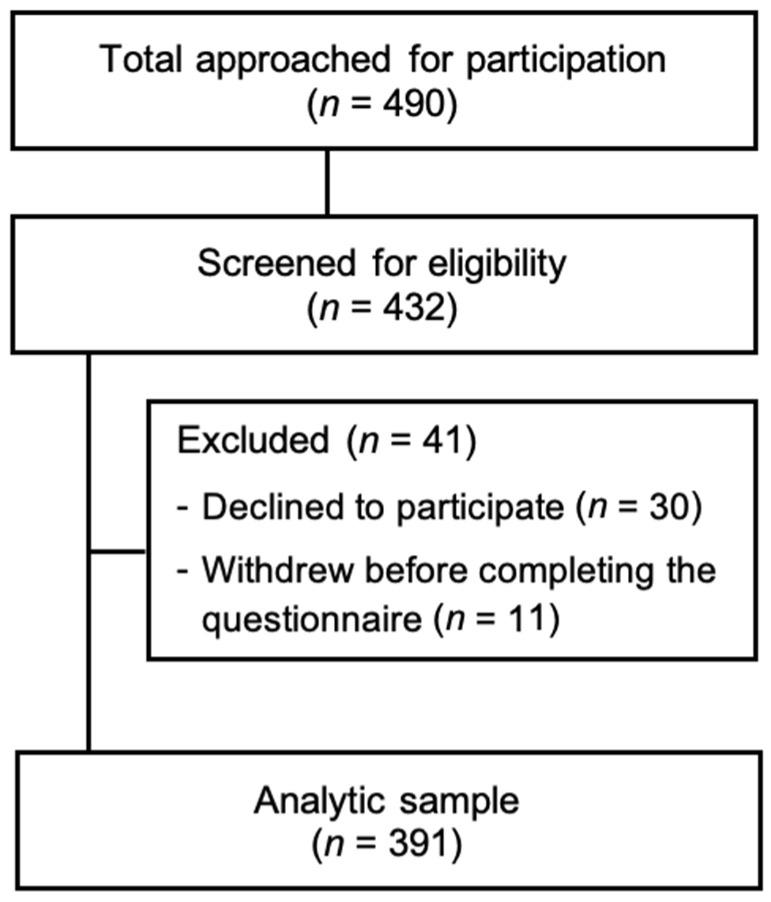
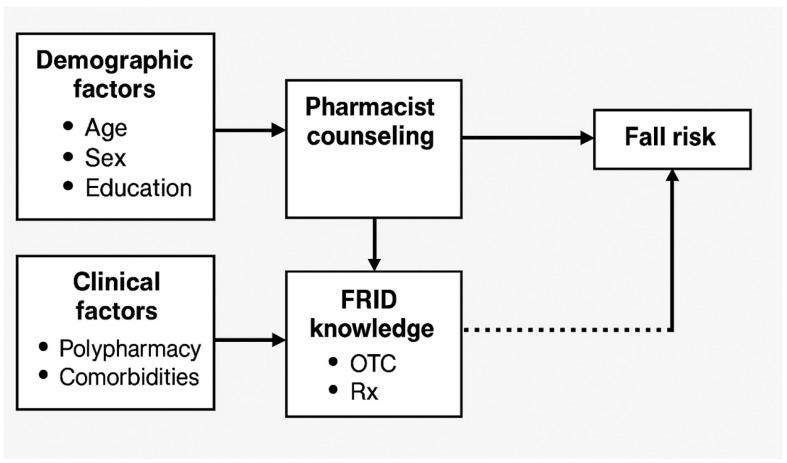
Falls pose a significant health risk to older adults, with a reported prevalence of 31.6% among Saudi older adults. Medication-related falls are a preventable cause of morbidity and mortality. This study aimed to assess fall risk, evaluate knowledge of fall-risk-increasing drugs, and examine the impact of pharmacist counseling on community-dwelling older adults in Jazan, Saudi Arabia. A cross-sectional survey was conducted from December 2023 to March 2024 among 391 community-dwelling individuals aged ≥60 years in Jazan, Saudi Arabia. Fall risk was assessed using the Arabic Stay Independent screening tool, which remains unvalidated in Arabic-speaking populations. Participants answered demographic questions and reported any pharmacist counseling on medication in the past six months. Knowledge of prescription and over-the-counter fall-risk-increasing drugs was evaluated. Multivariable logistic regression and ordered probit models were used to analyze factors associated with fall risk and drug knowledge. Approximately 57% of the participants were at risk of falling. Only 11.5% demonstrated good knowledge of prescription fall-risk-increasing drugs, whereas 24.6% showed good knowledge of over-the-counter fall-risk-increasing drugs. Age (OR, 1.07; 95% CI, 1.00-1.14; = 0.05), arthritis (OR, 5.73; 95% CI, 2.51-13.06; < 0.001), obesity (OR, 6.00; 95% CI, 2.33-15.46; < 0.001) and diabetes (OR, 2.79; 95% CI, 1.38-5.64; = 0.004) were associated with increased fall risk. Those who received pharmacist counseling had a greater likelihood (95% CI, 0.020-0.167; = 0.01) of being in the very likely category of willingness to discuss medication changes. The findings highlight the role of pharmacist counseling and recommend improving fall prevention through medication reviews for arthritis and diabetes patients, standardized counseling protocols, and implementation of the Stay Independent screening tool for risk assessment in older adults.
跌倒对老年人构成重大健康风险,据报道沙特老年人群中的跌倒患病率为31.6%。与药物相关的跌倒是发病率和死亡率的一个可预防原因。本研究旨在评估沙特阿拉伯吉赞地区社区居住老年人的跌倒风险,评估对增加跌倒风险药物的认知,并研究药剂师咨询的影响。2023年12月至2024年3月,在沙特阿拉伯吉赞地区对391名年龄≥60岁的社区居住个体进行了横断面调查。使用阿拉伯语版的“保持独立”筛查工具评估跌倒风险,该工具在说阿拉伯语的人群中尚未经过验证。参与者回答了人口统计学问题,并报告了过去六个月内是否接受过药剂师关于药物的咨询。评估了对处方药和非处方药增加跌倒风险的认知。使用多变量逻辑回归和有序概率模型分析与跌倒风险和药物知识相关的因素。约57%的参与者有跌倒风险。只有11.5%的人对增加跌倒风险的处方药有良好认知,而24.6%的人对增加跌倒风险的非处方药有良好认知。年龄(比值比[OR],1.07;95%置信区间[CI],1.00 - 1.14;P = 0.05)、关节炎(OR,5.73;95% CI,2.51 - 13.06;P < 0.001)、肥胖(OR,6.00;95% CI,2.33 - 15.46;P < 0.001)和糖尿病(OR,2.79;95% CI,1.38 - 5.64;P = 0.004)与跌倒风险增加相关联。接受药剂师咨询的人更有可能(95% CI,0.020 - 0.167;P = 0.01)处于非常愿意讨论药物变化的类别。研究结果凸显了药剂师咨询的作用,并建议通过对关节炎和糖尿病患者进行药物审查、标准化咨询方案以及实施“保持独立”筛查工具对老年人进行风险评估来改善跌倒预防。
 Zotero 插件