Stăncioiu Andra-Alexandra, Motofelea Alexandru Cătălin, Hușanu Anca Adriana, Vasica Lorena, Popa Adelina, Nagib Riham, Szuhanek Camelia
Orthodontic Research Center ORTHO-CENTER, Discipline of Orthodontics I, Faculty of Dental Medicine, "Victor Babes" University of Medicine and Pharmacy Timisoara, 9 No., Revolutiei Bv., 300041 Timisoara, Romania.
Dental Clinic Arad, Vicentiu Babes Sq., 310029 Arad, Romania.
J Clin Med. 2025 Jun 23;14(13):4458. doi: 10.3390/jcm14134458.
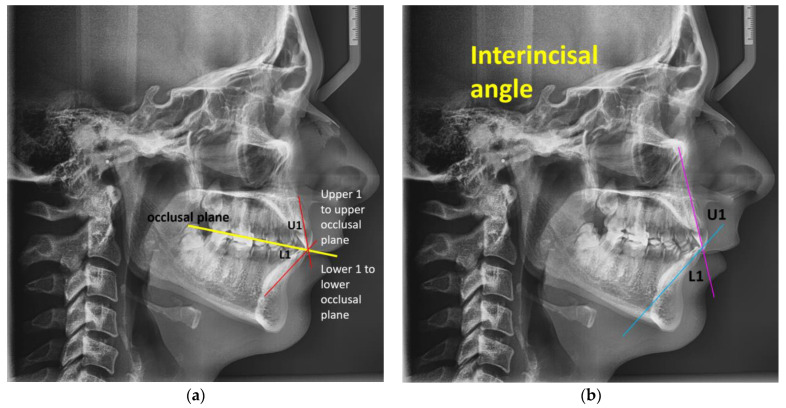
This study aims to investigate the correlation between facial soft tissues, teeth, and skeletal growth patterns in order to provide an accurate diagnosis and orthodontic treatment plan using digital examination of lateral cephalograms. Achieving the best orthodontic outcome begins with an accurate, timely, and thorough diagnosis before starting the treatment phase. This cross-sectional study investigated the correlation between facial soft tissues, dental hard tissues, and skeletal growth patterns in 100 Romanian orthodontic patients (52 females, 48 males; median age 26 years) using digital lateral cephalograms. The measurements included skeletal parameters (ANB angle, FMA, Wits appraisal), dental parameters (inclinations of upper and lower incisors, interincisal angle), and soft tissue parameters (nasolabial angle, upper and lower lip positions relative to E-plane), all assessed using the AI-powered WEBCEPH software. Statistical analysis was conducted using RStudio (version 4.3.1). A total of 100 subjects (52% female; median age, 26 years [range, 19-32 years]) were evaluated. No significant gender-based differences were found across cephalometric, soft tissue, or dental parameters. When stratified by ANB classification (Class I, 41%; Class II, 48%; Class III, 11%), significant differences emerged in the interincisal angle ( = 0.047), L1-to-LOP measurement ( < 0.001), lip-to-E-plane distances ( ≤ 0.009), Wits appraisal ( < 0.001), and the ANB angle itself ( < 0.001). Furthermore, stratification by FMA classification revealed expected differences in FMA values ( < 0.001) and a significant variation in the distribution of ANB classes ( = 0.042). All other cephalometric and soft tissue parameters remained comparable across FMA categories. The study highlights the importance of integrating hard and soft tissue analyses in orthodontic diagnosis and treatment planning to achieve optimal aesthetic and functional outcomes.
本研究旨在调查面部软组织、牙齿和骨骼生长模式之间的相关性,以便通过数字化的头颅侧位片检查提供准确的诊断和正畸治疗方案。在开始治疗阶段之前,实现最佳的正畸效果始于准确、及时和全面的诊断。这项横断面研究使用数字化头颅侧位片调查了100名罗马尼亚正畸患者(52名女性,48名男性;中位年龄26岁)面部软组织、牙硬组织和骨骼生长模式之间的相关性。测量包括骨骼参数(ANB角、FMA、Wits评估)、牙齿参数(上下切牙倾斜度、切牙间角)和软组织参数(鼻唇角、上下唇相对于E平面的位置),所有这些均使用人工智能驱动的WEBCEPH软件进行评估。使用RStudio(版本4.3.1)进行统计分析。共评估了100名受试者(52%为女性;中位年龄26岁[范围19 - 32岁])。在头影测量、软组织或牙齿参数方面未发现显著的性别差异。按ANB分类(I类,41%;II类,48%;III类,11%)分层时,切牙间角(P = 0.047)、L1至LOP测量值(P < 0.001)、唇至E平面距离(P ≤ 0.009)、Wits评估(P < 0.001)以及ANB角本身(P < 0.001)出现了显著差异。此外,按FMA分类分层显示FMA值存在预期差异(P < 0.001),且ANB分类的分布存在显著差异(P = 0.042)。所有其他头影测量和软组织参数在FMA类别之间保持可比。该研究强调了在正畸诊断和治疗计划中整合硬组织和软组织分析以实现最佳美学和功能结果的重要性。