Sharan Smitha, Venkatachalapathy Sri R, Walia Nidhi, Sayed Arshad J, Priyanka Lakshmi, Gnanasagar W R
Department of Prosthodontics Including Crown and Bridge, Dayananda Sagar College of Dental Sciences, Bengaluru, Karnataka, India.
Department of Dentistry, Trichy SRM Medical College Hospital and Research Centre, Trichy, Tamil Nadu, India.
J Pharm Bioallied Sci. 2025 Jun;17(Suppl 2):S1229-S1232. doi: 10.4103/jpbs.jpbs_1640_24. Epub 2025 Jun 18.
This systematic review aimed to evaluate the effectiveness of dynamic computer-aided surgery (DCAS) for zygomatic implant placement by analyzing implant placement accuracy, clinical outcomes, and postoperative complications.
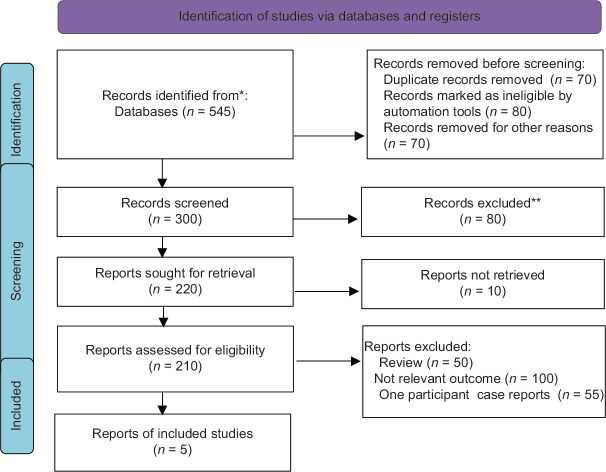
A comprehensive search of databases was conducted on studies published between 2000 and 2024 comparing DCAS-assisted zygomatic implant placement with traditional methods, extracting data and assessing quality.
Five studies were included. DCAS significantly enhances implant placement accuracy, reduces complications, and increases patient satisfaction, with robotic systems demonstrating superior accuracy and stability compared to dynamic navigation systems.
DCAS offers a promising approach for zygomatic implant placement, enhancing accuracy, safety, and patient outcomes. Further research is needed to explore long-term benefits and limitations.
本系统评价旨在通过分析种植体植入准确性、临床结果和术后并发症,评估动态计算机辅助手术(DCAS)在颧种植体植入中的有效性。
对2000年至2024年发表的比较DCAS辅助颧种植体植入与传统方法的研究进行全面的数据库检索,提取数据并评估质量。
纳入五项研究。DCAS显著提高了种植体植入的准确性,减少了并发症,并提高了患者满意度,与动态导航系统相比,机器人系统显示出更高的准确性和稳定性。
DCAS为颧种植体植入提供了一种有前景的方法,提高了准确性、安全性和患者预后。需要进一步研究以探索其长期益处和局限性。