
颈动脉硬化与常见脑微血管病变及冠状动脉钙化的关联。
Association of cervical artery stenosis with common cerebral microvascular lesions and coronary artery calcifications.
作者信息
Louizi Chiheb, Khadhraoui Eya, Lotz Joachim, Behme Daniel, Fuchs Erelle, Kowallick Johannes T, Müller Sebastian J
机构信息
Institute of Diagnostic and Interventional Radiology, University Medical Center, Göttingen, Germany.
Institute of Neuroradiology, University Medical Center, Göttingen, Germany.
出版信息
Front Neuroimaging. 2025 Jun 27;4:1559481. doi: 10.3389/fnimg.2025.1559481. eCollection 2025.
BACKGROUND
A connection between cerebral white matter hyperintensities and coronary artery disease is widely discussed. Both conditions are more prevalent in the elderly. While white matter hyperintensities are often associated with small vessel disease, atherosclerosis is the primary cause of coronary artery disease.
METHODS
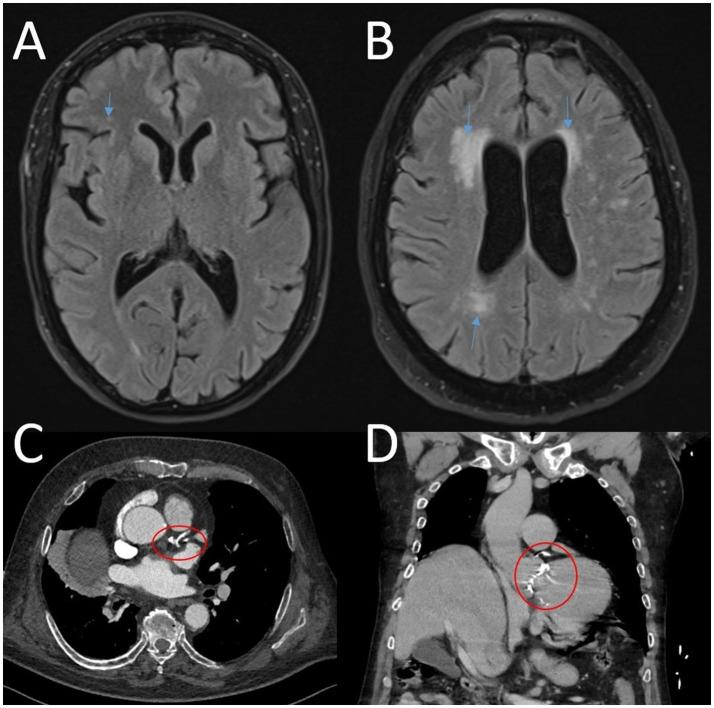
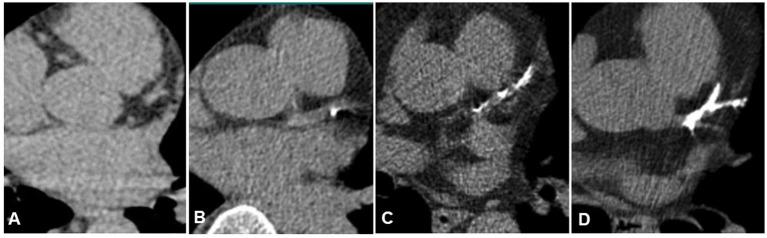
We evaluated staging CT scans of the body and staging brain MRIs from patients with newly diagnosed malignant melanoma (without metastasis) between 01/01/2015 and 06/30/2023. CT scans were assessed for coronary artery disease using a modified overall visual assessment. Fazekas scores were used to evaluate the MRI for white matter changes. Additional clinical data were obtained from digital patient records.
RESULTS
We analyzed data from 120 patients (57 females, mean age 68 years, standard deviation 14 years) and found a correlation between coronary artery disease and both age ( = 0.48, = 0.04) and Fazekas score (periventricular r = 0.46, subcortical and deep white matter r = 0.55). A linear model including age, coronary artery disease, diabetes and arterial hypertension served as a predictor for white matter disease and showed significant correlations. Adding (1) atherosclerosis as well as (2) carotid stenosis to the model resulted in (1) a slight decrease in significance and (2) the unmasking of a potential spurious correlation with carotid stenosis.
CONCLUSION
There is a significant correlation between white matter hyperintensities and both carotid stenoses and coronary artery disease. This finding is clinically relevant: in patients with white matter hyperintensities and coronary artery disease, carotid stenosis should be ruled out.
背景
脑白质高信号与冠状动脉疾病之间的关联受到广泛讨论。这两种情况在老年人中更为普遍。虽然白质高信号通常与小血管疾病有关,但动脉粥样硬化是冠状动脉疾病的主要原因。
方法
我们评估了2015年1月1日至2023年6月30日期间新诊断的恶性黑色素瘤(无转移)患者的全身分期CT扫描和脑部分期MRI。使用改良的整体视觉评估对CT扫描评估冠状动脉疾病。采用Fazekas评分评估MRI的白质变化。从数字患者记录中获取其他临床数据。
结果
我们分析了120例患者(57名女性,平均年龄68岁,标准差14岁)的数据,发现冠状动脉疾病与年龄(r = 0.48,p = 0.04)和Fazekas评分(脑室周围r = 0.46,皮质下和深部白质r = 0.55)之间存在相关性。一个包括年龄、冠状动脉疾病、糖尿病和动脉高血压的线性模型作为白质疾病的预测指标,并显示出显著相关性。在模型中加入(1)动脉粥样硬化以及(2)颈动脉狭窄导致(1)显著性略有下降,(2)揭示了与颈动脉狭窄的潜在虚假相关性。
结论
白质高信号与颈动脉狭窄和冠状动脉疾病之间存在显著相关性。这一发现具有临床相关性:在患有白质高信号和冠状动脉疾病的患者中,应排除颈动脉狭窄。


 Zotero 插件