Sukhina Alisa, Queriault Clemence, Roy Saptarshi, Hall Elise, Rome Kelly, Aggarwal Muskaan, Nunn Elizabeth, Weiss Ashley, Nguyen Janet, Bennett F Chris, Bailis Will
Department of Pathology and Laboratory Medicine, Children's Hospital of Philadelphia, Philadelphia, United States.
Department of Pathology and Laboratory Medicine, Perelman School of Medicine, University of Pennsylvania, Philadelphia, United States.
Elife. 2025 Jul 15;13:RP101670. doi: 10.7554/eLife.101670.
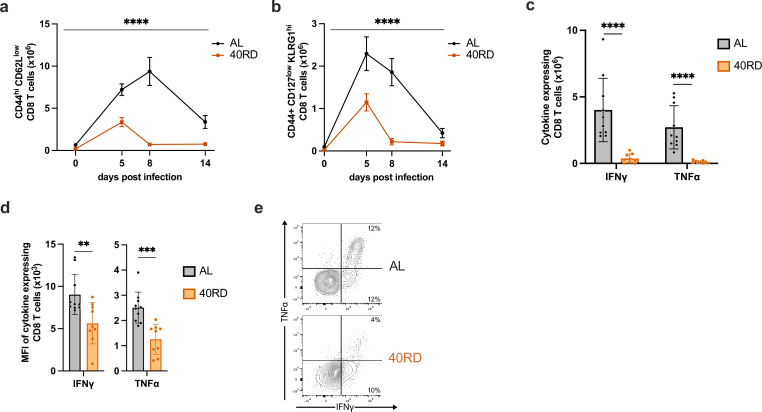
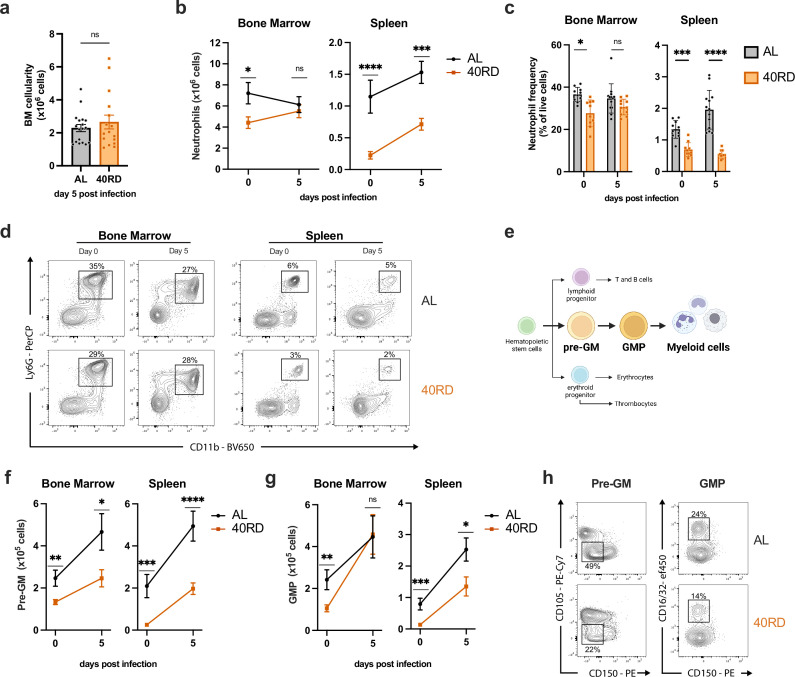
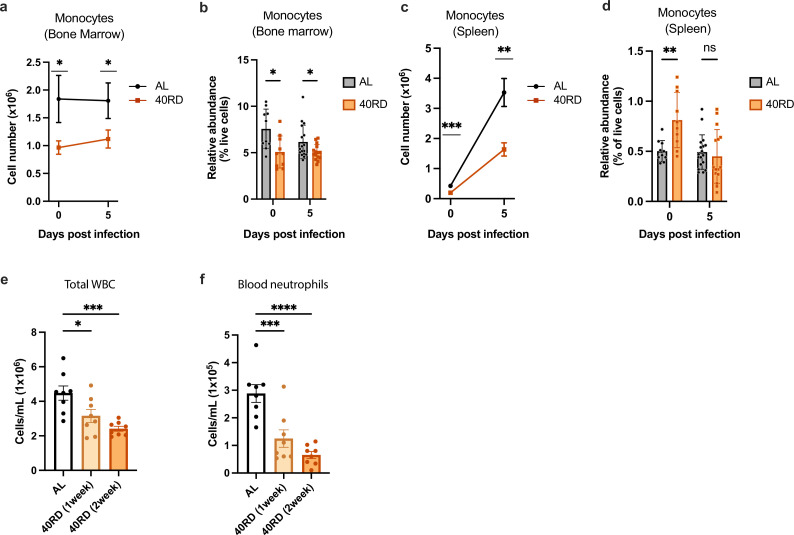
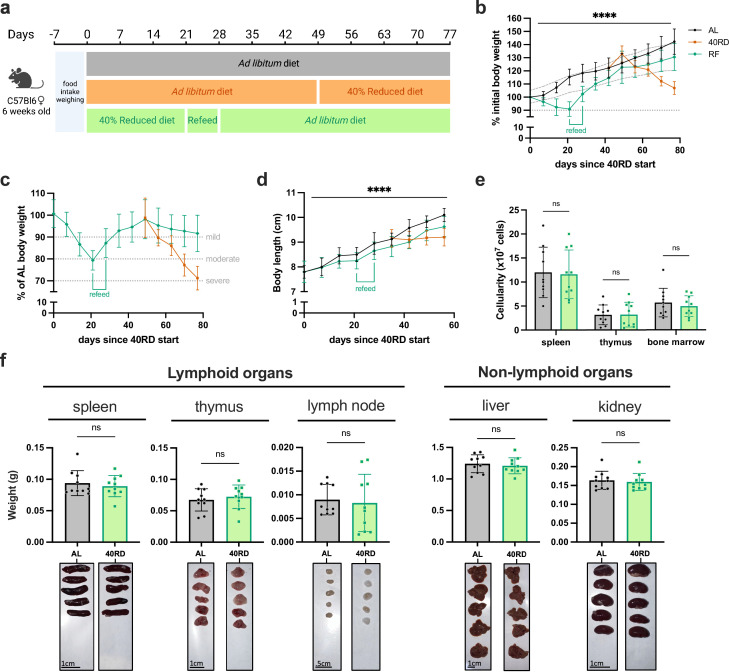
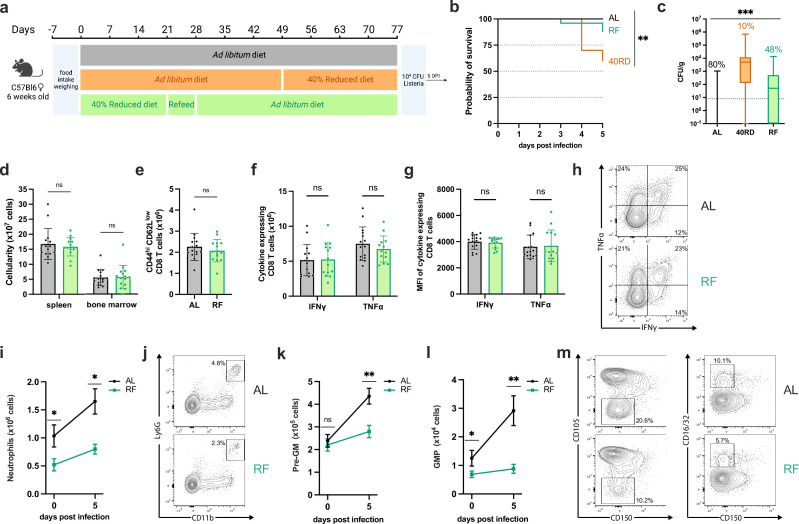
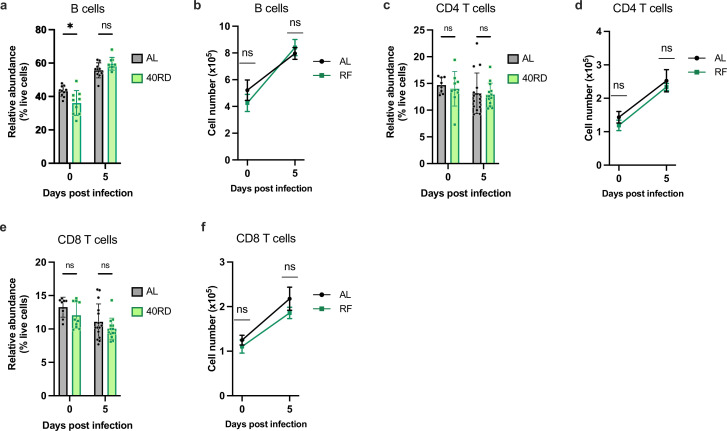
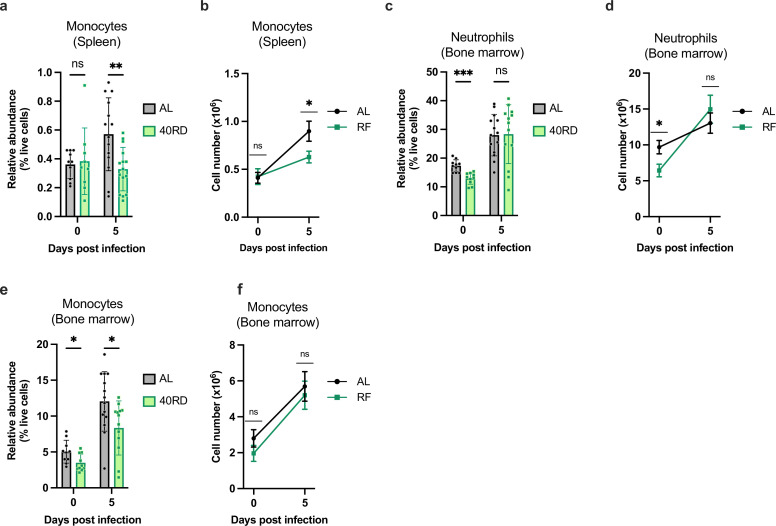
Undernutrition remains a major global health crisis, with nearly 1 billion people experiencing severe food insecurity. Malnourished individuals are especially vulnerable to infectious diseases, which is the leading cause of morbidity and mortality for this population. Despite the known link between undernutrition and infection susceptibility, the mechanisms remain poorly understood, and it is unclear whether refeeding can reverse nutritionally acquired immunodeficiency. Here, we investigate how malnutrition leads to immune dysfunction and the ability of refeeding to repair it. Malnourished mice show an inability to control sublethal infection, reduced immune cell function and expansion, and early contraction before pathogen clearance. Myelopoiesis is particularly affected, with fewer neutrophils and monocytes present both before and after infection in malnourished mice. While refeeding restores body mass, lymphoid organ cellularity, and T cell responses, refed mice remain susceptible to infection, revealing that recovery from lymphoid atrophy alone is not sufficient to restore protective immunity. Accordingly, peripheral neutrophils and monocytes fail to fully recover, and emergency myelopoiesis remains impaired in refed animals. Altogether, this work identifies dysregulated myelopoiesis as a link between prior nutritional state and immunocompetency, indicating that food scarcity is an immunologic risk factor, even after nutritional recovery.
营养不良仍然是一个重大的全球健康危机,近10亿人面临严重的粮食不安全问题。营养不良的个体特别容易感染传染病,这是该人群发病和死亡的主要原因。尽管营养不良与感染易感性之间的联系已为人所知,但其机制仍知之甚少,而且不清楚再喂养是否能逆转营养性获得性免疫缺陷。在此,我们研究营养不良如何导致免疫功能障碍以及再喂养修复免疫功能的能力。营养不良的小鼠表现出无法控制亚致死性感染、免疫细胞功能和增殖降低,以及在病原体清除之前就出现早期收缩。骨髓生成受到特别影响,营养不良小鼠在感染前后中性粒细胞和单核细胞数量均减少。虽然再喂养可恢复体重、淋巴器官细胞数量和T细胞反应,但再喂养的小鼠仍然易受感染,这表明仅从淋巴萎缩中恢复不足以恢复保护性免疫。因此,外周中性粒细胞和单核细胞未能完全恢复,再喂养动物的应急骨髓生成仍然受损。总之,这项研究确定骨髓生成失调是先前营养状态与免疫能力之间的联系,表明即使在营养恢复后,食物短缺仍是一个免疫风险因素。