Hall Philippa K, Cassani Natasha, Jardim Ana Carolina Gomes, Rowlands David J, Kingston Natalie J, Stonehouse Nicola J
Astbury Centre for Structural Molecular Biology, School of Molecular and Cellular Biology, Faculty of Biological Sciences, University of Leeds, Leeds, UK.
Laboratory of Antiviral Research, Institute of Biomedical Science - ICBIM, Federal University of Uberlândia - UFU, Uberlândia, MG, Brazil.
bioRxiv. 2025 Jul 11:2025.07.11.664324. doi: 10.1101/2025.07.11.664324.
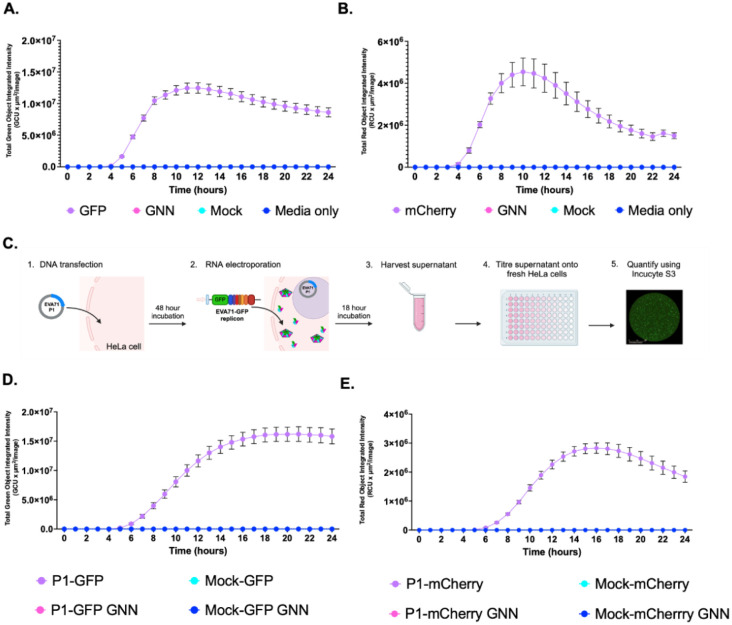
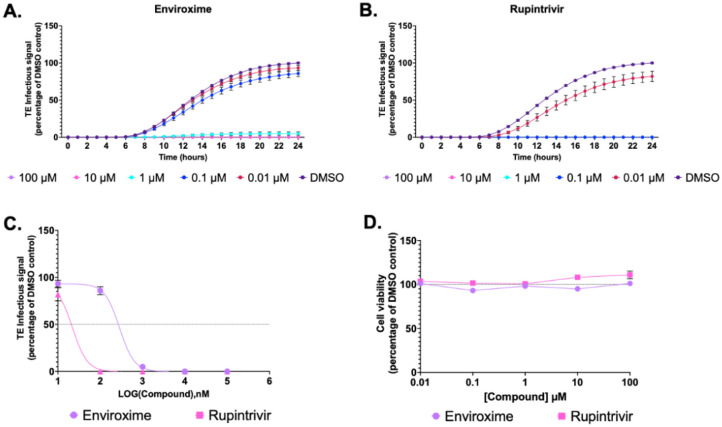
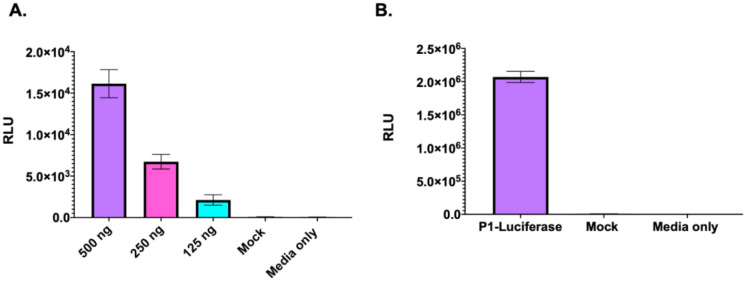
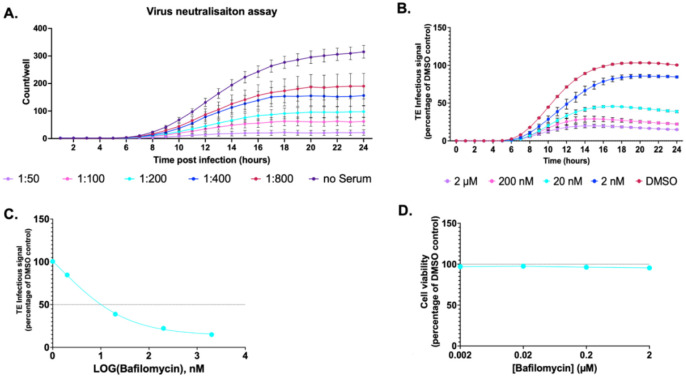
Enteroviruses (EVs) are globally important human and animal pathogens which cause a diverse spectrum of disease, ranging from febrile illness to paralysis. Despite decades of research, parts of the EV lifecycle remain poorly understood. Replicons, in which reporter genes replace the structural protein coding region, have proved useful for the study of EV biology. However, it is not possible to study the molecular mechanism(s) of entry, capsid uncoating and genome release without the production of virus particles. To utilise the benefits provided by replicons for the study of viral cell entry, it would be necessary to supply the structural proteins in trans. Here, we present an EV trans-encapsidation (TE) system in which reporter replicons are transfected into cells modified to express the viral structural proteins. The nascent replicons are packaged to form virus particles containing fluorescent or luminescent replicon genomes. This enables the real-time assessment of EV entry and replication through quantification of fluorescence using live-cell imaging. We demonstrate that these TE particles are biologically accurate proxies to EVA71 virions and show utility for the study of EV entry, uncoating and replication. Additionally, we demonstrate the use of TE particles as platforms for drug discovery and immunological screening, applicable to the development of antiviral therapeutics and assessment of immunisation outcomes.
肠道病毒(EVs)是全球范围内重要的人类和动物病原体,可引发从发热性疾病到麻痹等多种疾病。尽管经过数十年研究,但肠道病毒生命周期的某些部分仍了解不足。用报告基因取代结构蛋白编码区的复制子已被证明对肠道病毒生物学研究有用。然而,不产生病毒颗粒就无法研究病毒进入、衣壳解聚和基因组释放的分子机制。为利用复制子在病毒细胞进入研究中的优势,有必要通过反式提供结构蛋白。在此,我们提出一种肠道病毒反式包装(TE)系统,其中将报告复制子转染到经修饰以表达病毒结构蛋白的细胞中。新生复制子被包装形成含有荧光或发光复制子基因组的病毒颗粒。这使得能够通过使用活细胞成像对荧光进行定量来实时评估肠道病毒的进入和复制。我们证明这些TE颗粒是肠道病毒71型(EVA71)病毒体生物学上准确的替代物,并显示出在肠道病毒进入、解聚和复制研究中的效用。此外,我们展示了将TE颗粒用作药物发现和免疫筛选平台,适用于抗病毒治疗药物的开发和免疫效果评估。