Pan Guoqing, Zhang Yi, Kang Ju-Jiao, Jiang Yuchao, Zhang Wei, Ren Peng, You Jia, Gong Weikang, Yu Jin-Tai, Feng Jian-Feng, Zhang Xuejuan, Cheng Wei, Wang Linbo
Institute of Science and Technology for Brain-Inspired Intelligence, Fudan University, Shanghai, China.
School of Mathematical Sciences, Zhejiang Normal University, Jinhua, Zhejiang Province, China.
NPJ Aging. 2025 Jul 17;11(1):67. doi: 10.1038/s41514-025-00255-8.
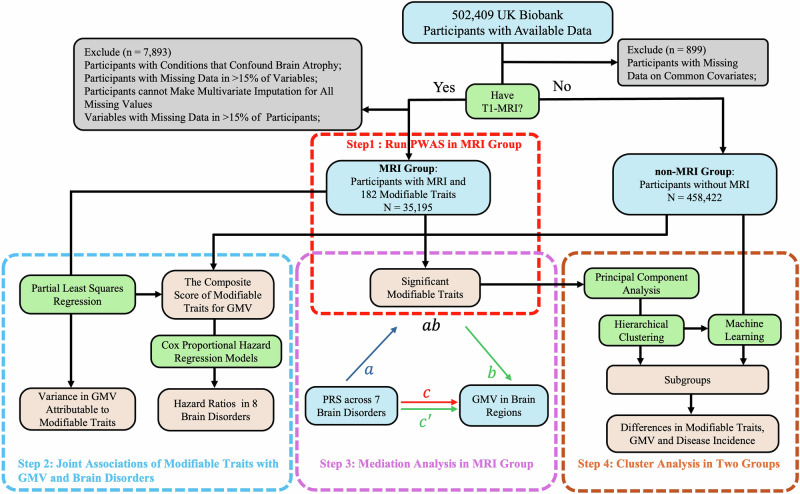
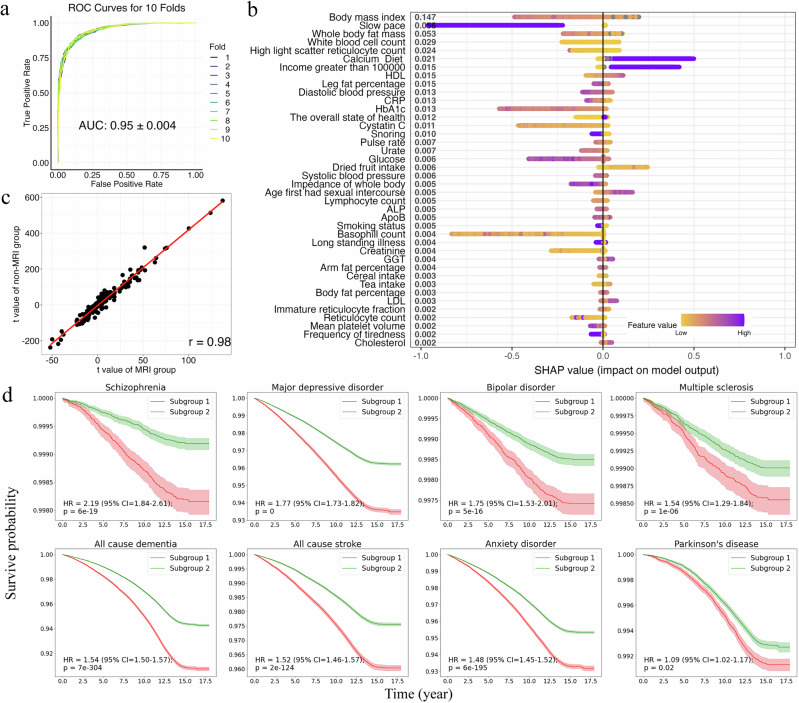
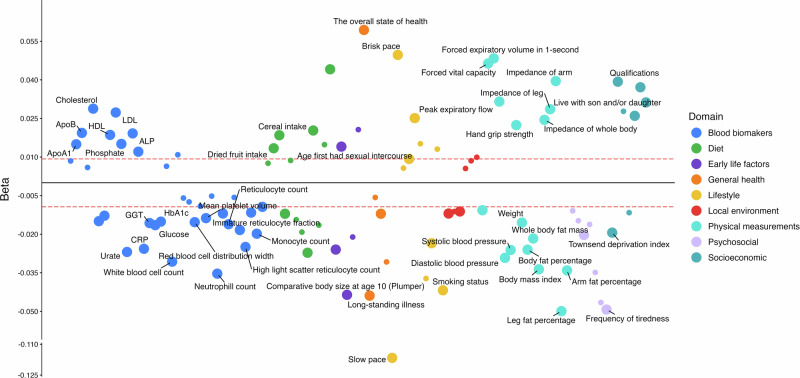
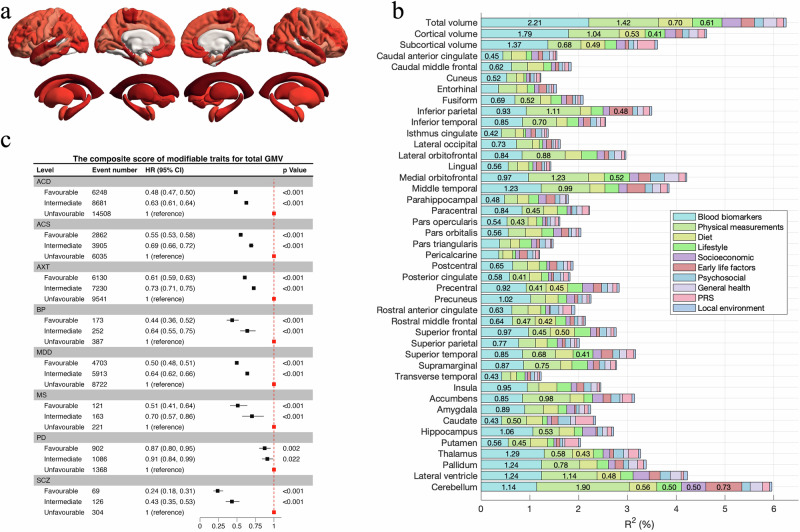
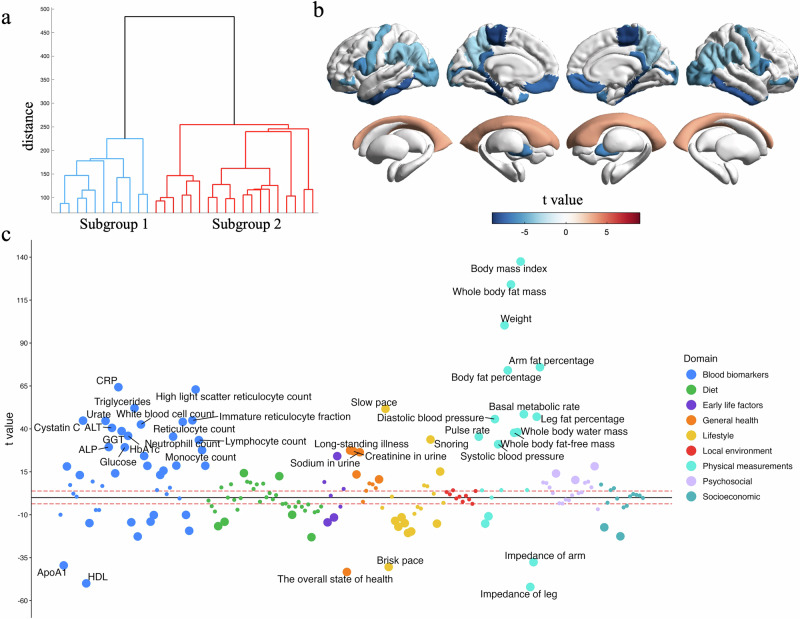
Given the growing global elderly population and the accelerating decrease in grey matter volume (GMV) with age, understanding healthy brain aging is increasingly important. This study investigates whether variations in modifiable traits can account for differences in GMV and whether these traits can inform strategies to mitigate risks of future brain disorders. We identified 66 traits significantly associated with total GMV. Further, we examined the joint contributions of different domain traits to the GMV variance, finding that blood biomarkers and physical measurements accounted for the largest proportion of GMV variance. Some traits mediated the relationship between the genetic risk for brain disorders and GMV. Moreover, the identified traits divided the population into two subgroups, with significant differences in GMV and incidences of brain disorders. Our findings underscore the importance of modifiable traits in supporting healthy brain aging and reducing the risk of brain disorders, suggesting potential targets for intervention.
鉴于全球老年人口不断增加,且灰质体积(GMV)随年龄增长加速减少,了解健康的大脑衰老变得越来越重要。本研究调查了可改变特征的变化是否能解释GMV的差异,以及这些特征是否能为降低未来脑部疾病风险的策略提供依据。我们确定了66个与总GMV显著相关的特征。此外,我们研究了不同领域特征对GMV方差的联合贡献,发现血液生物标志物和身体测量占GMV方差的比例最大。一些特征介导了脑部疾病遗传风险与GMV之间的关系。此外,所确定的特征将人群分为两个亚组,在GMV和脑部疾病发病率方面存在显著差异。我们的研究结果强调了可改变特征在支持健康大脑衰老和降低脑部疾病风险方面的重要性,为干预提供了潜在靶点。