Guo Yaqi, Mou Shan, Suo Litao, Zhou Yingqian, Wu Shuang, Xie Xinfang, Sun Di, Wang Bingqian, Wang Zhenxing, Horch Raymund E, Yang Jie, Sun Jiaming
Department of Plastic Surgery, Union Hospital, Tongji Medical College, Huazhong University of Science and Technology, Wuhan, 430022, People's Republic of China.
Wuhan Clinical Research Center for Superficial Organ Reconstruction, Wuhan, 430022, People's Republic of China.
Mater Today Bio. 2025 Jun 20;33:102006. doi: 10.1016/j.mtbio.2025.102006. eCollection 2025 Aug.
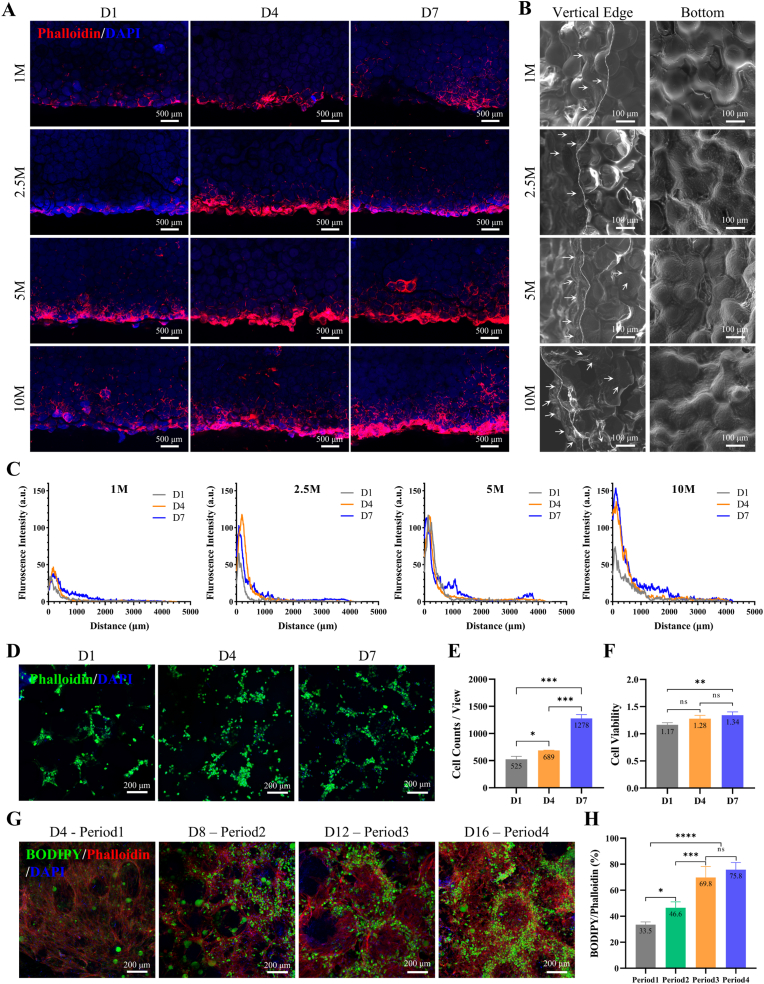
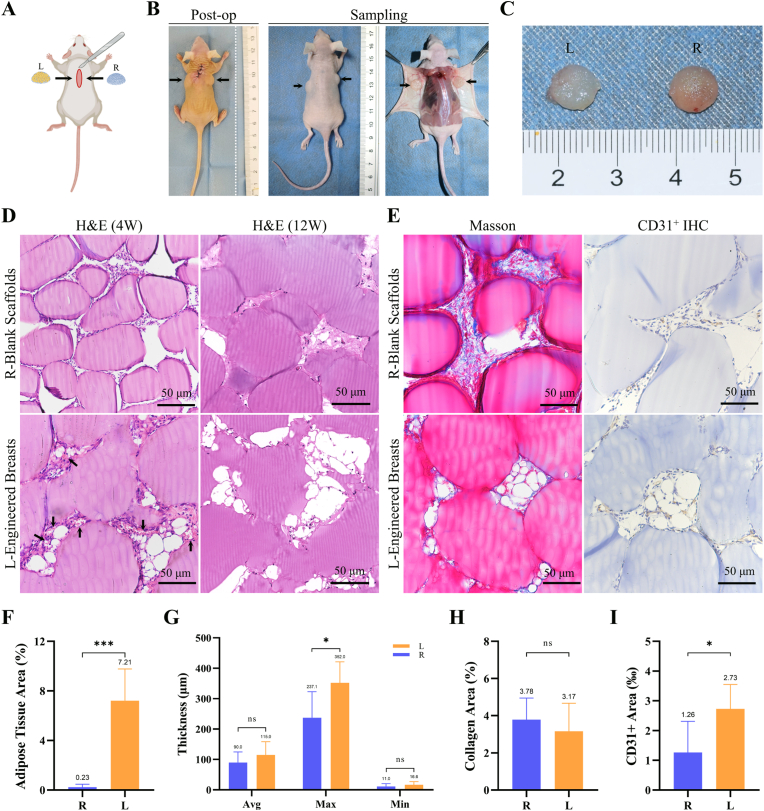
Hydrogel scaffolds play a crucial role in tissue engineering; however, traditional bulk hydrogel scaffolds (BHS) often suffer from insufficiently sized pores (nanoscales), impeding cellular infiltration, development, and expansion. This limitation affects oxygen and nutrient exchange efficiency, in which case it relies extensively on liquid permeation and bulk hydrogels swelling. In contrast, hydrogel microparticles (HMPs) have proven to be both printable and injectable, allowing the development of modular thick constructs with interconnected pores. This study introduces a novel method of fabricating porous granular hydrogel scaffolds (GHS) by printing thermo-crosslinked gelatin methacryloyl (GelMA) HMPs granular hydrogels before chemical crosslinking (dual-crosslinking). The scaffolds exhibit an average pore fraction ranging from 14 % to 23 % and an average pore size varying from 4923 μm to 8185 μm (with equivalent circular diameter of 80-102 μm). experiments demonstrated the effective infiltration, adhesion, proliferation, and adipogenic differentiation of human adipose-derived stem cells (hADSCs) within the scaffold pores. Additionally, observations confirmed the presence of differentiated adipose cells within the central pores after 4 weeks. These results collectively suggest the proposed microspheres printing technique holds significant promise for fabricating microporous scaffolds and further applications in tissue engineering.
水凝胶支架在组织工程中起着至关重要的作用;然而,传统的块状水凝胶支架(BHS)往往存在孔隙尺寸不足(纳米级)的问题,阻碍了细胞的浸润、发育和扩展。这种限制影响了氧气和营养物质的交换效率,在这种情况下,它很大程度上依赖于液体渗透和块状水凝胶的膨胀。相比之下,水凝胶微粒(HMPs)已被证明既可以打印又可以注射,能够开发出具有相互连接孔隙的模块化厚结构。本研究介绍了一种通过在化学交联(双重交联)之前打印热交联甲基丙烯酰化明胶(GelMA)HMPs颗粒水凝胶来制造多孔颗粒水凝胶支架(GHS)的新方法。这些支架的平均孔隙率在14%至23%之间,平均孔径在4923μm至8185μm之间(等效圆直径为80 - 102μm)。实验证明了人脂肪来源干细胞(hADSCs)在支架孔隙内的有效浸润、黏附、增殖和成脂分化。此外,观察证实4周后中央孔隙内存在分化的脂肪细胞。这些结果共同表明,所提出的微球打印技术在制造微孔支架及组织工程的进一步应用方面具有巨大潜力。