Gaire Bhakta Prasad, Koronyo Yosef, Vit Jean-Philippe, Hutton Alexandre, Swerdlow Natalie, Fuchs Dieu-Trang, Rentsendorj Altan, Subedi Lalita, Robinson Edward, Ljubimov Alexander V, Schneider Lon S, Hawes Debra, Graham Stuart L, Gupta Vivek K, Mirzaei Mehdi, Black Keith L, Meyer Jesse G, Arditi Moshe, Crother Timothy R, Koronyo-Hamaoui Maya
Department of Neurosurgery, Maxine Dunitz Neurosurgical Research Institute, Cedars-Sinai Medical Center, Los Angeles, CA, USA.
Department of Computational Biomedicine, Cedars-Sinai Medical Center, Los Angeles, CA, USA.
Res Sq. 2025 Jun 26:rs.3.rs-6658954. doi: 10.21203/rs.3.rs-6658954/v1.
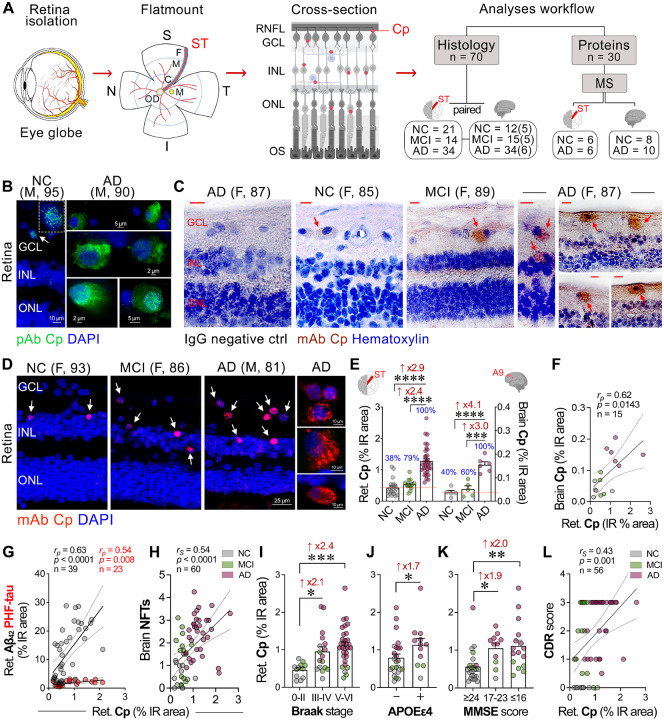
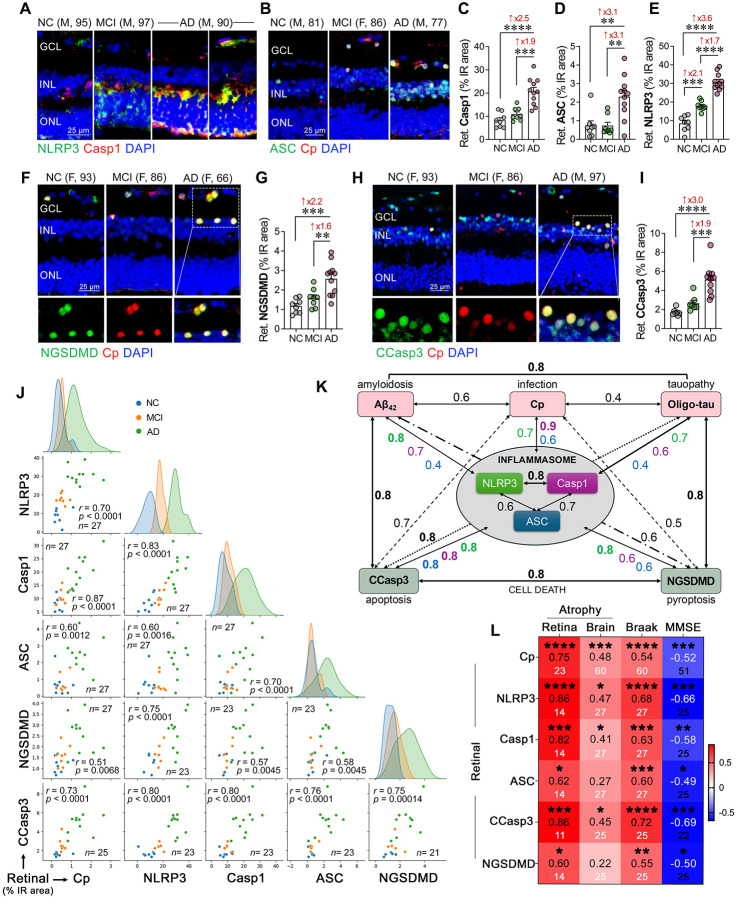
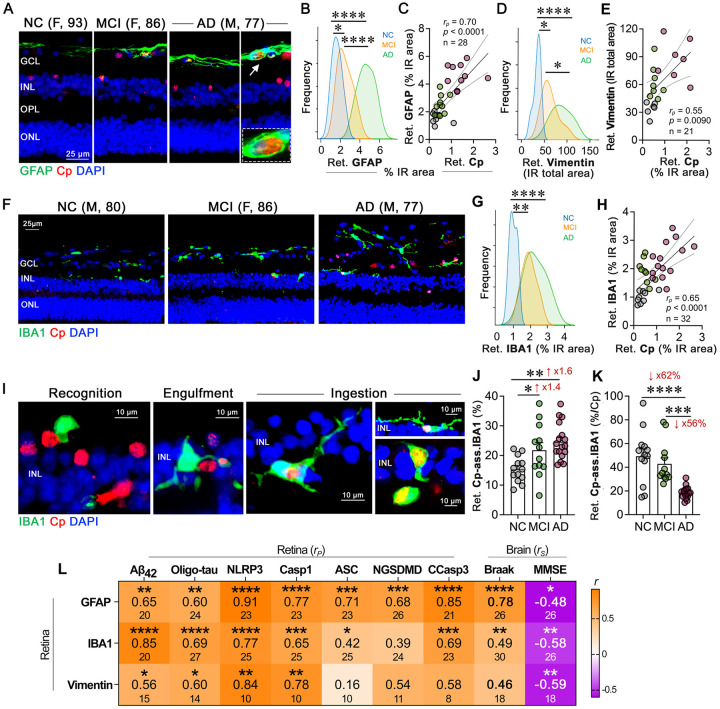
Emerging evidence implicates bacterial infections, including (Cp), a gram-negative obligate intracellular bacterium responsible for community-acquired pneumonia, in Alzheimer's disease (AD) pathogenesis. However, the involvement of Cp in early and advanced AD in the retina is unknown. Here, we identified the existence and distribution of intracellular Cp inclusions and related NLRP3 inflammasome activation and neurodegeneration in postmortem retinas and brains from 95 human donors. Histological analysis in neuropathologically-confirmed MCI and AD patients compared with cognitively normal individuals (n=70), revealed 2.9-4.1-fold increases of Cp inclusions in AD retinas and brains, respectively, with no significant increases in MCI retinas or brains. Mass spectrometry-based proteomics in additional cohorts (n=30), revealed dysregulated brain and retinal bacterial infection-related proteins and inflammasome-associated pathways. Retinal Cp was strongly linked to Aβ, caspase-1 and NLRP3-inflammasome activation components, as well as cleaved caspase-3 apoptosis and cleaved gasdermin D pyroptotic cell death. Despite increased IBA1 microgliosis in the AD retina, the Cp-associated microglial population was reduced by 62%, suggesting impaired microglial phagocytosis. Higher retinal Cp burden correlated with APOEε4 status, advanced Braak stage, and cognitive decline. Machine learning models revealed that retinal Cp or NLRP3, in combination with retinal Aβ, effectively predicted AD diagnosis, Braak stage, and cognition. These findings suggest that Cp infection contributes to AD dementia but is unlikely to initiate AD pathological changes, whereas elevated retinal NLRP3 may serve as an early AD marker. These results underscore the need for future studies investigating Cp's role in AD dementia and testing early antibiotic or inflammasome-targeting therapies.
新出现的证据表明,包括肺炎衣原体(Cp)在内的细菌感染与阿尔茨海默病(AD)的发病机制有关,肺炎衣原体是一种革兰氏阴性专性细胞内细菌,可导致社区获得性肺炎。然而,Cp在视网膜早期和晚期AD中的作用尚不清楚。在这里,我们在95名人类供体的死后视网膜和大脑中鉴定了细胞内Cp包涵体的存在和分布,以及相关的NLRP3炎性小体激活和神经退行性变。对经神经病理学确诊的轻度认知障碍(MCI)和AD患者与认知正常个体(n = 70)进行的组织学分析显示,AD视网膜和大脑中Cp包涵体分别增加了2.9至4.1倍,而MCI视网膜或大脑中没有显著增加。在另外的队列(n = 30)中基于质谱的蛋白质组学分析显示,大脑和视网膜中与细菌感染相关的蛋白质以及炎性小体相关途径失调。视网膜Cp与淀粉样β蛋白(Aβ)、半胱天冬酶-1和NLRP3炎性小体激活成分以及裂解的半胱天冬酶-3凋亡和裂解的gasdermin D焦亡细胞死亡密切相关。尽管AD视网膜中离子钙结合衔接分子1(IBA1)介导的小胶质细胞增多,但与Cp相关的小胶质细胞群体减少了62%,这表明小胶质细胞吞噬功能受损。更高的视网膜Cp负荷与APOEε4状态、更高的Braak分期和认知能力下降相关。机器学习模型显示,视网膜Cp或NLRP3与视网膜Aβ结合,可有效预测AD诊断、Braak分期和认知情况。这些发现表明,Cp感染会导致AD痴呆,但不太可能引发AD的病理变化,而视网膜NLRP3升高可能是AD的早期标志物。这些结果强调了未来需要研究Cp在AD痴呆中的作用,并测试早期抗生素或针对炎性小体的疗法。