Kancharla Papireddy, Dodean Rozalia A, Li Yuexin, Zhang Xiaowei, Kelly Sean, Charlton Jordan, Binauhan Angley, Garcia Laurize, Caridha Diana, Madejczyk Michael S, Jin Xiannu, Dennis William E, Kudyba Karl, McEnearney Sharon, Lee Partricia J, Blount Cameron, DeLuca Jesse, Vuong Chua, Pannone Kristina, Dinh Hieu T, Mdaki Kennedy, Leed Susan, Martin Monica L, Pybus Brandon S, Chimong Anongruk, Cui Liwang, Vega-Rodriguez Joel, Okitwi Martin, Kreutzfeld Oriana, Docan Christina, Green Carol, Liu Ying, Agulay Aaron, Mirsalis Jon, Farrell Sarah N, McFadden Geoffrey I, Goodman Christopher D, Probst Alexandra S, Nilsen Aaron, Catteruccia Flaminia, Rosenthal Philip J, Riscoe Michael, Cooper Roland, Roth Alison, Kelly Jane
Department of Chemistry, Portland State University, Portland, Oregon 97201, United States.
Department of Veterans Affairs Medical Center, Portland, Oregon 97239, United States.
Res Sq. 2025 Jun 27:rs.3.rs-6858328. doi: 10.21203/rs.3.rs-6858328/v1.
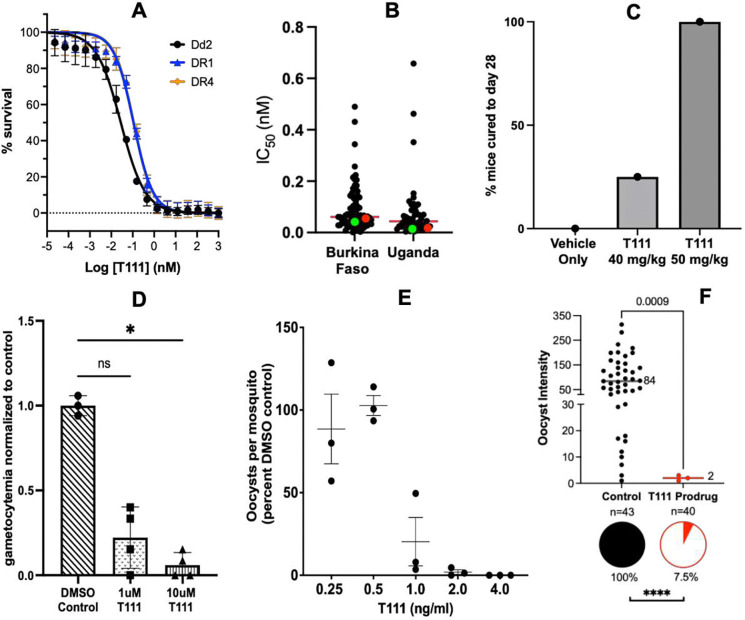
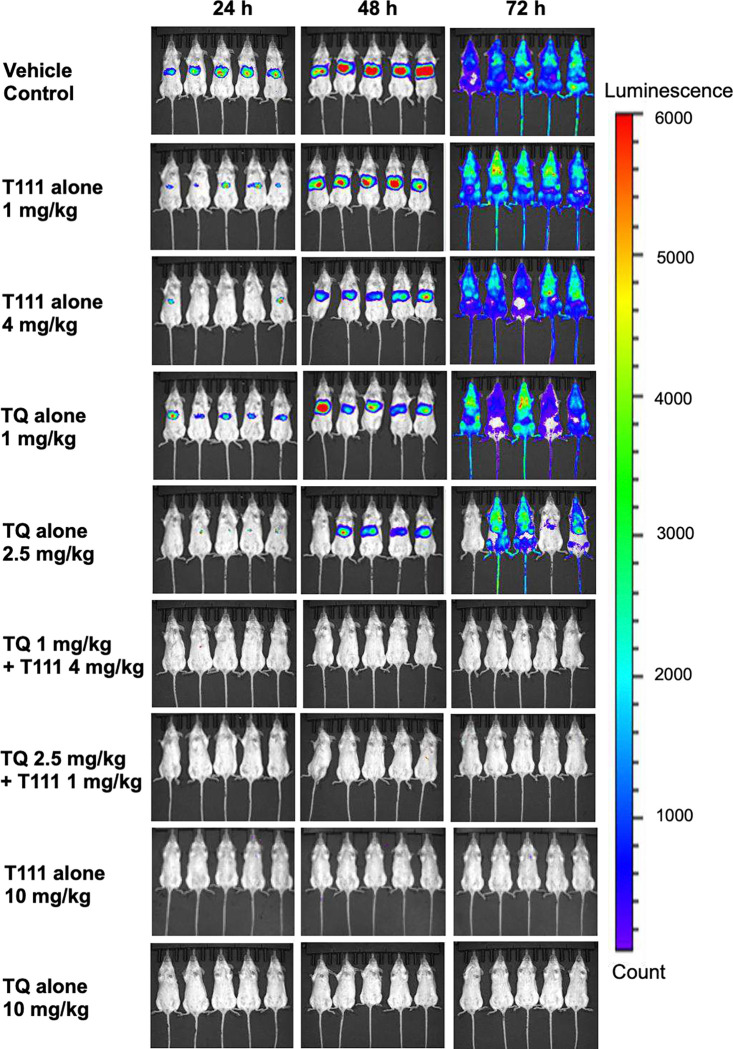
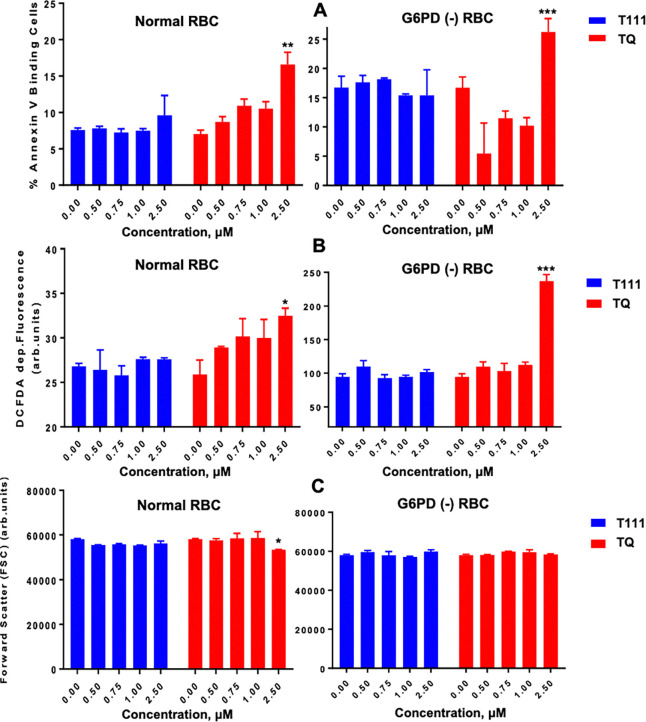
New antimalarial therapeutics ideally should target all three major life cycle stages. Here we present an acridone antimalarial chemotype that is potent against blood, liver, and mosquito stages of malaria parasites, with the potential for single-dose cure of bloodstream infections, radical cure of liver infections, and blocking of transmission to mosquitoes. Attributes of lead candidate T111 include potent in vitro activity against cultured parasites, ex vivo activity against clinical isolates, oral single dose cure in an asexual blood stage rodent model, inhibition of sexual blood stage parasites, activity against relapsing parasites in non-human primate liver cells, prevention of parasite development in mosquitoes, and synergy in combination with tafenoquine against blood and liver stage parasites. Analysis of parasites selected for resistance to T111 suggested inhibition of the mitochondrial electron transport chain, with a mechanism distinct from that of other antimalarials in use or under development. Safety profiles, including toxicology evaluations in rats, showed a favorable therapeutic index. Overall, T111 emerges as a promising candidate for treatment and prevention of malaria.
理想的新型抗疟疗法应针对所有三个主要生命周期阶段。在此,我们展示了一种吖啶酮抗疟化学类型,它对疟原虫的血液、肝脏和蚊子阶段均有强效作用,具有单剂量治愈血流感染、根治肝脏感染以及阻断向蚊子传播的潜力。先导候选物T111的特性包括对培养的寄生虫具有强大的体外活性、对临床分离株具有体外活性、在无性血液阶段啮齿动物模型中口服单剂量治愈、抑制有性血液阶段寄生虫、对非人类灵长类动物肝细胞中复发的寄生虫具有活性、防止寄生虫在蚊子中发育,以及与tafenoquine联合使用时对血液和肝脏阶段寄生虫具有协同作用。对选择出的对T111耐药的寄生虫进行分析表明,其抑制线粒体电子传递链,其机制与其他正在使用或研发中的抗疟药不同。包括大鼠毒理学评估在内的安全性概况显示出良好的治疗指数。总体而言,T111成为治疗和预防疟疾的有前景的候选物。