Islam Shahidul M, Stennett Jahlana, Hasan Md Mehedi, Shah Khushi
Department of Chemistry, Delaware State University, Dover, Delaware 19901, United States.
ACS Omega. 2025 Jul 2;10(27):29209-29223. doi: 10.1021/acsomega.5c01993. eCollection 2025 Jul 15.
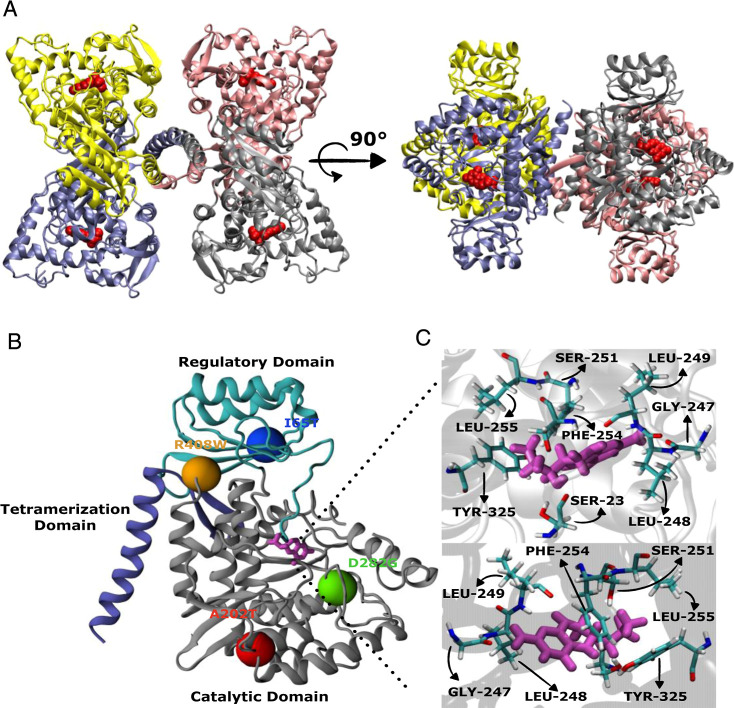
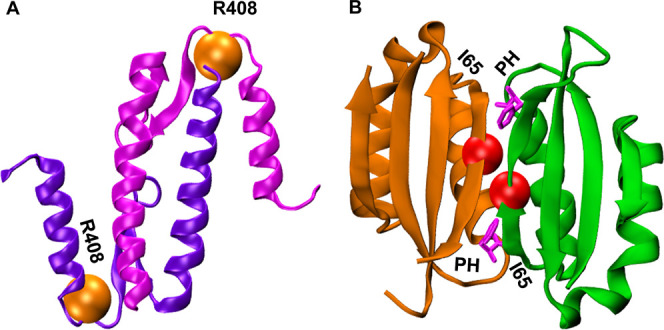
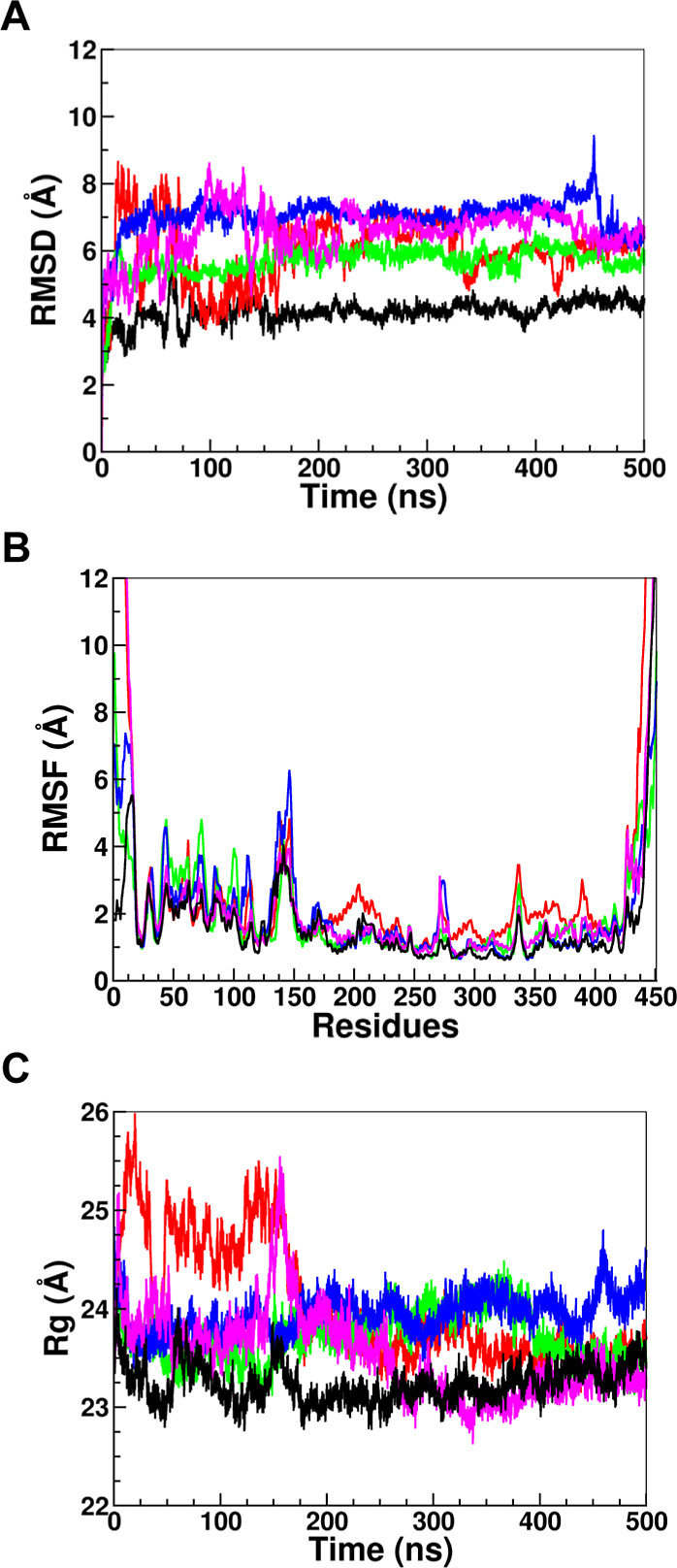
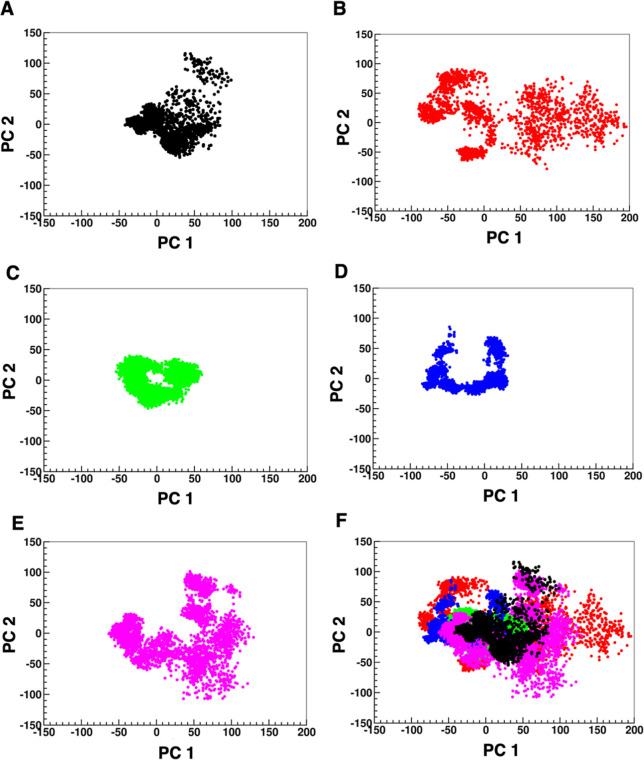
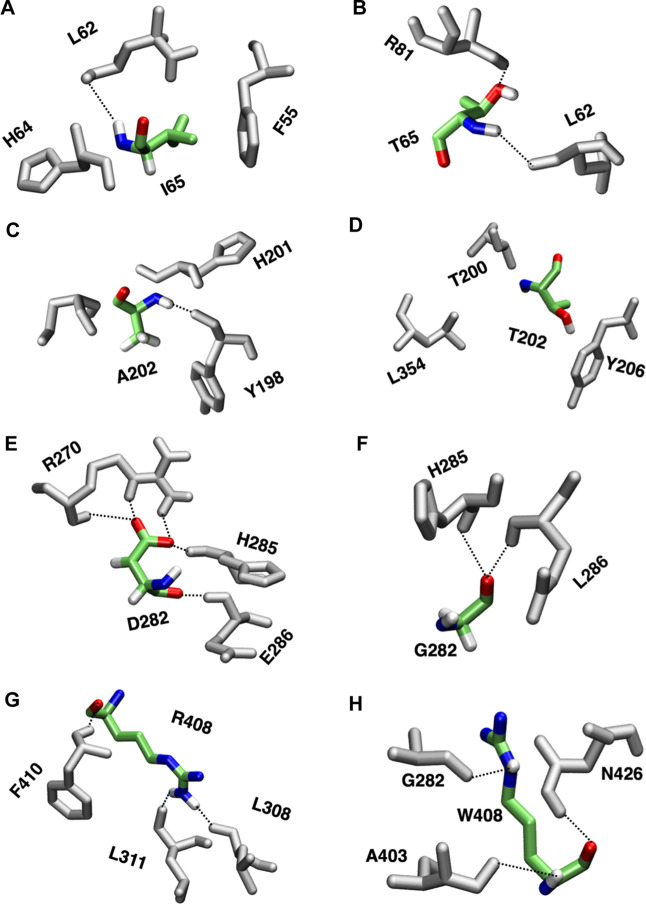
The phenylalanine-4-hydroxylase (PAH) gene encodes the PAH enzyme, which is necessary for the conversion of l-phenylalanine (l-Phe) to l-tyrosine (l-Tyr). Deleterious mutations in PAH can disrupt its function, leading to the toxic buildup of phenylalanine in the brain and causing the inherited genetic disorder phenylketonuria (PKU). This condition results in behavioral issues, epilepsy, and intellectual disability. This in silico study has been conducted to investigate the structure and dynamics of both wild-type PAH and its variants, including I65T and R408W, which are prevalent in U.S. patients, as well as D282G and A202T, commonly observed in PKU patients from China and Korea. SIFT, PolyPhen-2, PhD-SNP, and MutPred2 methods, which utilize either sequence-based or machine learning algorithms, predicted the four mutations to be disease-causing and deleterious with the potential to disrupt the PAH structure and impair its function, thereby confirming their association with PKU. Four replicates of 500 ns molecular dynamics (MD) simulations resulting in a cumulative simulation time of 2 μs for all variants demonstrated that all these variants adversely affect the PAH structure and dynamics. The MM/GBSA binding free energy of I65T with BH, a crucial cofactor in the hydroxylation of l-Phe to l-Tyr, is found to be -12.8 kcal/mol compared to -16.5 kcal/mol for the wild type. Similarly, the R408W variant decreased BH binding with a calculated free energy of -11.4 kcal/mol. Additionally, the binding affinity of the tetramerization domains in R408W significantly reduced by at least 26.7 kcal/mol compared to the wild type. This study highlights how different pathogenic mutations in PAH impact the protein's structure, dynamics, and binding affinity, possibly leading to advancements in targeted drug development for PKU.
苯丙氨酸 -4- 羟化酶(PAH)基因编码PAH酶,该酶是将L-苯丙氨酸(L-Phe)转化为L-酪氨酸(L-Tyr)所必需的。PAH中的有害突变会破坏其功能,导致苯丙氨酸在大脑中有毒性积累,并引发遗传性疾病苯丙酮尿症(PKU)。这种病症会导致行为问题、癫痫和智力残疾。本计算机模拟研究旨在调查野生型PAH及其变体的结构和动力学,这些变体包括在美国患者中普遍存在的I65T和R408W,以及在中国和韩国的PKU患者中常见的D282G和A202T。利用基于序列或机器学习算法的SIFT、PolyPhen-2、PhD-SNP和MutPred2方法预测这四种突变具有致病性且有害,有可能破坏PAH结构并损害其功能,从而证实了它们与PKU的关联。对所有变体进行的4次500纳秒分子动力学(MD)模拟,累积模拟时间为2微秒,结果表明所有这些变体均对PAH结构和动力学产生不利影响。发现I65T与BH(L-Phe羟化为L-Tyr过程中的关键辅因子)的MM/GBSA结合自由能为-12.8千卡/摩尔,而野生型为-16.5千卡/摩尔。同样,R408W变体降低了与BH的结合,计算出的自由能为-11.4千卡/摩尔。此外,与野生型相比,R408W中四聚化结构域的结合亲和力显著降低了至少26.7千卡/摩尔。这项研究突出了PAH中不同的致病突变如何影响蛋白质的结构、动力学和结合亲和力,可能会推动PKU靶向药物开发的进展。